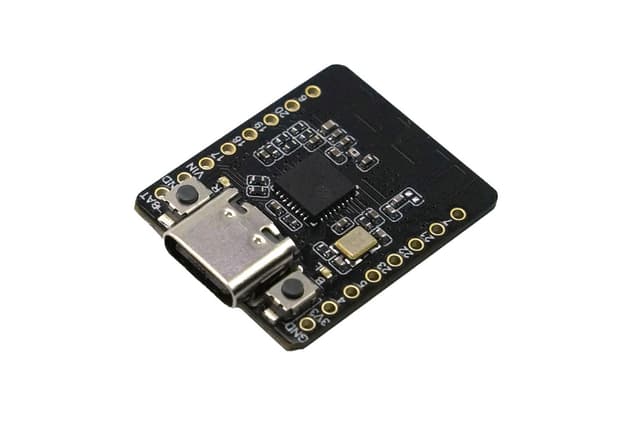
DFRobot FireBeetle 2 ESP32-C6
Low-cost ESP32-C6 IoT board with WiFi 6, BLE 5, Thread, Zigbee, Matter, solar panel charging with MPPT, and ultra-low 16µA deep sleep — for $5.90.
$5.90
Tap any value to browse matching devices
Specifications
Components
Espressif ESP32-C6 with RISC-V @ 160MHz, 512KB SRAM, 4MB flash, WiFi 6, BLE 5, Zigbee, Thread, and Matter support.
Integrated solar panel MPPT charging circuit with simultaneous USB/VIN/solar input, 0.5A max charge current, and deep sleep at 16µA.
Bus Interfaces
GPIO Map
Overview
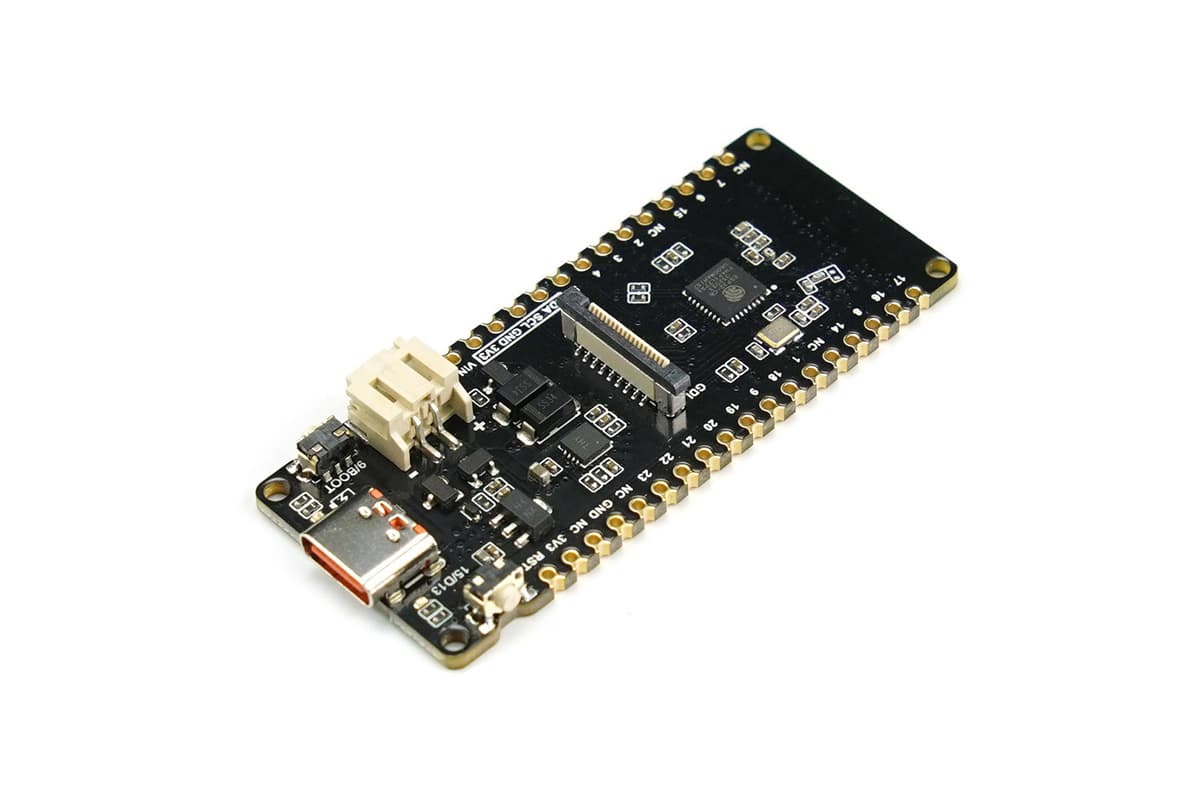
The DFRobot FireBeetle 2 ESP32-C6 is an ultra-affordable IoT development board that combines WiFi 6, Bluetooth 5, Zigbee 3.0, Thread 1.3, and Matter into a compact 25.4×60mm form factor for just $5.90. Built around the Espressif ESP32-C6 RISC-V SoC running at 160MHz with 4MB flash and 512KB SRAM, it packs professional-grade wireless capabilities at hobbyist pricing.
A standout feature is the integrated solar power management with MPPT (Maximum Power Point Tracking) — the same algorithm used in DFRobot's dedicated Solar Power Manager. This allows the board to be powered and charged simultaneously from a solar panel while maintaining optimal energy harvesting under varying light conditions. Combined with deep sleep current as low as 16µA, this makes it ideal for outdoor solar-powered Matter/Thread sensor nodes.
The board supports three charging inputs: USB-C, 5V DC VIN header, and solar panel. All three can charge an external LiPo battery connected via the onboard JST connector. Programming is via Arduino IDE or MicroPython, and it is compatible with DFRobot's Gravity and Fermion sensor ecosystems through standard GPIO headers.
With 19 GPIO, 7-channel 12-bit ADC, 6-channel PWM, I2C, SPI, UART, I2S, and IR transceiver capabilities, the FireBeetle 2 ESP32-C6 covers most IoT sensor node requirements while keeping costs minimal.
Use Cases
9Matter Smart Home
Building Matter-compatible smart home devices that work across ecosystems like Apple Home, Google Home, and Amazon Alexa.
Matter Smart Home
Building Matter-compatible smart home devices that work across ecosystems like Apple Home, Google Home, and Amazon Alexa.
Solar-Powered Sensor Node
Building battery-powered sensor nodes with solar charging for remote, off-grid environmental and agricultural monitoring.
Solar-Powered IoT Node
An IoT sensor or communication node powered by solar panels for maintenance-free outdoor deployments.
Battery Powered Sensor Node
Low-power sensor nodes running on battery for wireless data collection and monitoring.
Smart Home
Home automation devices for controlling lighting, climate, security, and appliances.
IoT
Internet of Things applications including connected sensors, actuators, and smart devices that communicate over WiFi, BLE, LoRa, or other wireless protocols.
Environmental Monitoring
Monitoring environmental conditions like temperature, humidity, air quality, and weather data using remote sensors.
Prototyping
Rapid hardware prototyping and proof-of-concept development with breadboard-friendly form factors and accessible development environments.
Where to Buy
Explore more of the directory — popular use cases, firmware, and specs to browse next.