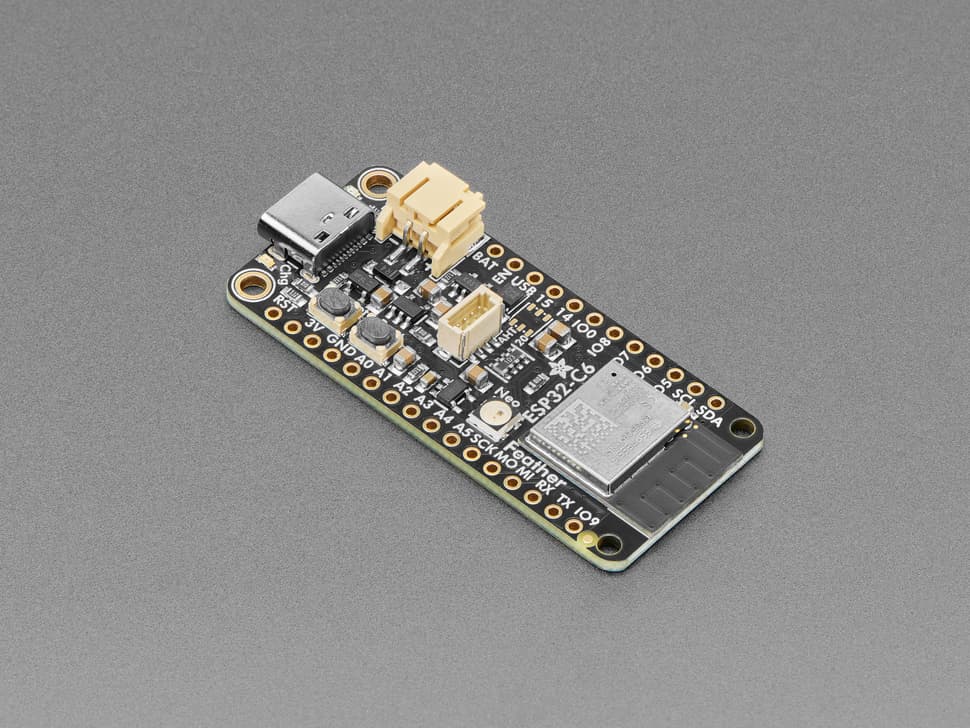
Adafruit ESP32-C6 Feather
Open-source Feather-form-factor ESP32-C6 board with WiFi 6, BLE 5, Thread, Zigbee, STEMMA QT, NeoPixel, LiPo charging with MAX17048, and CircuitPython support — $14.95.
$14.95
Tap any value to browse matching devices
Specifications
Components
Espressif ESP32-C6 @ 160MHz, 4MB flash, WiFi 6, BLE 5, Zigbee, Thread 1.3, and Matter support.
Maxim MAX17048 I2C fuel gauge for accurate LiPo battery state-of-charge measurement.
Onboard USB-C LiPo charger via JST 2-PH connector with peripheral power control pin.
Bus Interfaces
GPIO Map
Overview
The Adafruit ESP32-C6 Feather brings WiFi 6, Bluetooth 5 LE, Zigbee, and Thread (802.15.4) connectivity to the well-loved Feather form factor. Released as open-source hardware under Creative Commons, PCB files are freely available on GitHub. It runs the ESP32-C6 RISC-V SoC at 160MHz with 4MB flash and is fully compatible with the broad ecosystem of Feather Wings and add-ons.
The board includes a STEMMA QT connector for quick plug-and-play I2C sensor integration, a built-in RGB NeoPixel for status indication, and a LiPoly JST connector with USB-C charging managed by a MAX17048 fuel gauge. A dedicated NEOPIXEL_I2C_POWER pin allows software control of peripheral power, enabling deep sleep down to approximately 17µA.
Firmware support spans CircuitPython (official board support via circuitpython.org), Arduino IDE via the Espressif board support package, MicroPython, ESPHome (via OpenThread component for Thread/Matter), and full ESP-IDF support. Note that unlike ESP32-S2/S3, the C6 does not have native USB — programming requires a USB-to-serial connection.
With 22 GPIO, 6 analog inputs, SPI, I2C, UART, and PWM, it covers all standard sensor and actuator interfacing needs. Its Thread/802.15.4 support makes it suitable for Matter device prototyping alongside WiFi 6 for direct IP connectivity.
Use Cases
8Matter Smart Home
Building Matter-compatible smart home devices that work across ecosystems like Apple Home, Google Home, and Amazon Alexa.
Matter Smart Home
Building Matter-compatible smart home devices that work across ecosystems like Apple Home, Google Home, and Amazon Alexa.
Smart Home
Home automation devices for controlling lighting, climate, security, and appliances.
Thread Mesh Network
Low-power mesh networking using Thread protocol for smart home and IoT devices.
IoT
Internet of Things applications including connected sensors, actuators, and smart devices that communicate over WiFi, BLE, LoRa, or other wireless protocols.
Prototyping
Rapid hardware prototyping and proof-of-concept development with breadboard-friendly form factors and accessible development environments.
Battery Powered Sensor Node
Low-power sensor nodes running on battery for wireless data collection and monitoring.
CircuitPython Learning
Educational platforms for learning CircuitPython programming with hands-on hardware projects.
Resources
Where to Buy
Explore more of the directory — popular use cases, firmware, and specs to browse next.