Waveshare UGV Rover
Open-source 6-wheel 4WD AI robot platform with dual-controller architecture (ESP32 + Raspberry Pi), computer vision, pan-tilt camera, ESP-NOW communication, and ROS2 support for robotics education and autonomous navigation.
$244.99
Tap any value to browse matching devices
Specifications
Components
Dual-core WiFi & BT sub-controller for motion and sensor processing
Dual H-bridge MOSFET motor driver, 1.2A continuous per channel
6-axis IMU (accelerometer + gyroscope) for motion sensing
3-axis electronic compass for heading detection
I2C voltage/current/power monitor for battery management
USB-to-UART bridge for programming (x2 on board)
0.96" 128x64 OLED display controller for status monitoring
Serial bus servo for pan-tilt, 30 kg.cm torque
5MP ultra-wide-angle camera with 160 degree FOV for computer vision
Bus Interfaces
GPIO Map
Waveshare UGV Rover
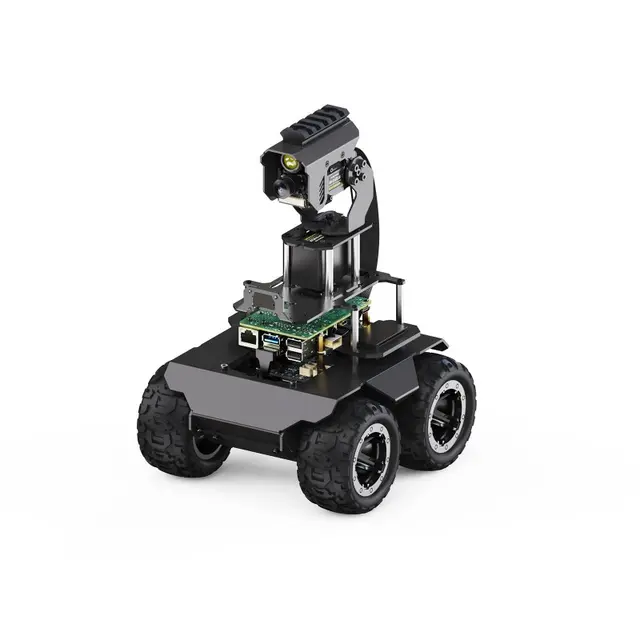
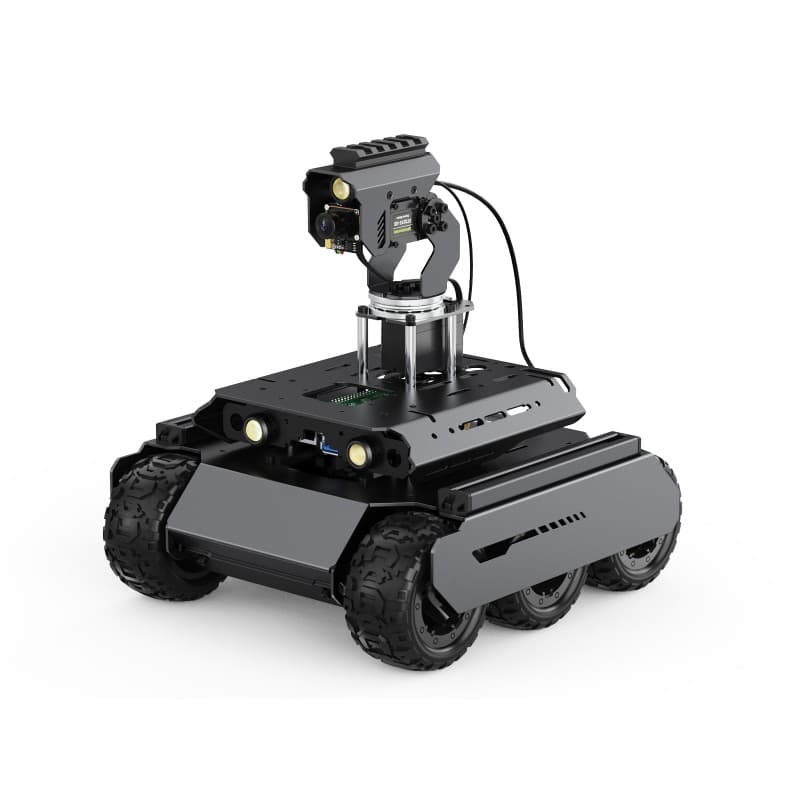
The Waveshare UGV Rover is an open-source 6-wheel 4WD AI robot platform built around a dual-controller architecture. An ESP32-WROOM-32 handles real-time motion control, sensor fusion, and motor driving, while a Raspberry Pi 4B or 5 serves as the host computer for AI workloads, computer vision, and ROS2 integration.
Architecture
The dual-controller design cleanly separates concerns: the ESP32 sub-controller manages motors (via TB6612FNG), reads encoders, processes IMU data (QMI8658C + AK09918C), monitors battery voltage (INA219), and handles ESP-NOW wireless communication. The Raspberry Pi host runs Debian Bookworm with ROS2 Humble LTS, OpenCV, MediaPipe, and a Flask-based web control interface with WebRTC video streaming.
Mechanical Design
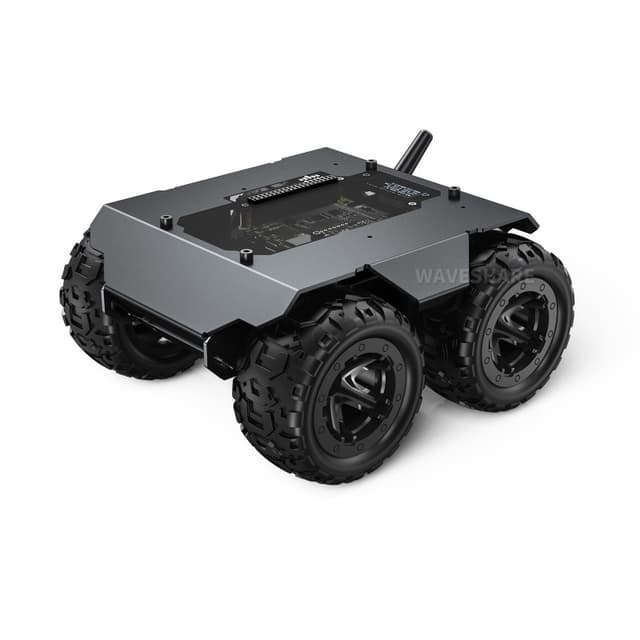
The all-metal chassis features 6 wheels (80mm diameter, 42.5mm width) in a 4WD configuration with zero-radius turning capability. An optional 2-DOF pan-tilt module uses ST3215 bus servos (30 kg.cm torque) with IMU-based stabilization. The chassis includes two 1020 European aluminum profile rails and a multi-functional mounting plate with M2.5 holes for LIDAR modules (D500, STL27L) and other peripherals.
Computer Vision
The 5MP ultra-wide-angle camera (160 degree FOV) enables color recognition, face detection with auto photo/video capture, object recognition, gesture recognition via MediaPipe, and vision-based line tracking for autonomous driving. All vision features are accessible through Jupyter Lab or the web interface.
Communication
Beyond standard WiFi and Bluetooth, the ESP-NOW protocol enables robot-to-robot wireless communication with approximately 100-microsecond latency, supporting leader-follower formations and swarm behaviors. The web application provides control without installing any software, and a wireless gamepad is included.
Power System
A 3S UPS module accepts three 18650 lithium batteries (sold separately) with INA219-based real-time voltage and current monitoring. An XH2.54 interface allows connection of larger external battery packs. The system supports 7-13V input.
GPIO & Expansion
The 40-pin Raspberry Pi-compatible header provides full GPIO access. The ESP32 exposes motor control (PWM on GPIO25/26), encoder inputs (GPIO34/35, GPIO16/27), I2C bus (GPIO32 SDA, GPIO33 SCL), servo UART (GPIO18 RX, GPIO19 TX), and LED/PWM outputs (GPIO4, GPIO5). An SD card slot and OLED display (SSD1306, 128x64) are also onboard.
Software Ecosystem
The open-source firmware supports Arduino IDE, ESP-IDF, and MicroPython for the ESP32 sub-controller. The Raspberry Pi host supports ROS2, Python, OpenCV, and MediaPipe. Interactive programming is available through Jupyter Lab (port 8888), and the web control interface runs on port 5000.
Use Cases
7Mobile Robot
Wheeled or tracked robot platforms for navigation, obstacle avoidance, and autonomous driving.
Computer Vision
Image recognition, object detection, and ML inference using embedded cameras and AI-capable processors.
autonomous-navigation
stem-kit
telepresence-robot
surveillance-robot
ros2-robot
Resources
Where to Buy
Available Software
2Explore more of the directory — popular use cases, firmware, and specs to browse next.