Heltec Vision Master E213
ESP32-S3 development board with 2.13-inch E-Paper display and optional SX1262 LoRa radio, supporting Meshtastic, LoRaWAN, Arduino, and MicroPython. Features WiFi, BLE 5.0, ultra-low 20uA deep sleep, lithium battery management, and dual SH2.0 sensor ports.
Tap any value to browse matching devices
Specifications
Components
Espressif ESP32-S3R8 with dual-core Xtensa LX7 processor at 240MHz, 512KB SRAM, integrated 8MB PSRAM, WiFi 802.11 b/g/n, Bluetooth 5.0 LE, hardware crypto acceleration (AES/SHA/RSA), and 16KB RTC SRAM for deep sleep retention.
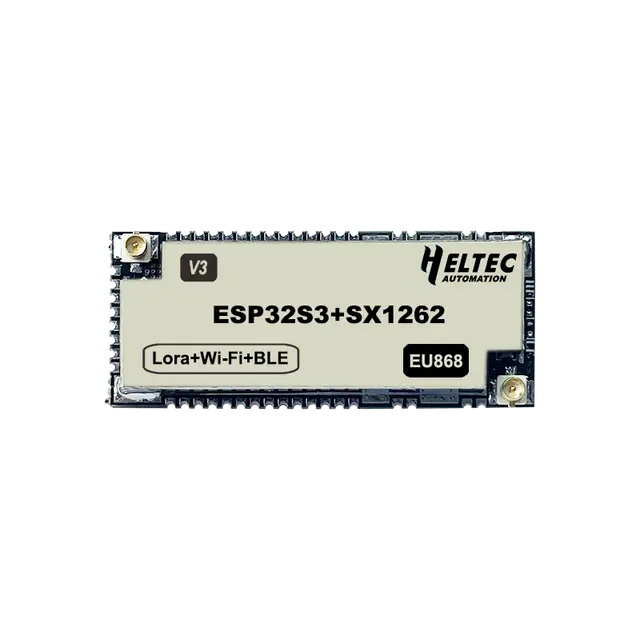
Semtech SX1262 LoRa transceiver supporting 433/868/915MHz frequency bands with +21dBm TX power and -136dBm RX sensitivity at SF12/BW125kHz. Integrated via Heltec HT-RA62 module.
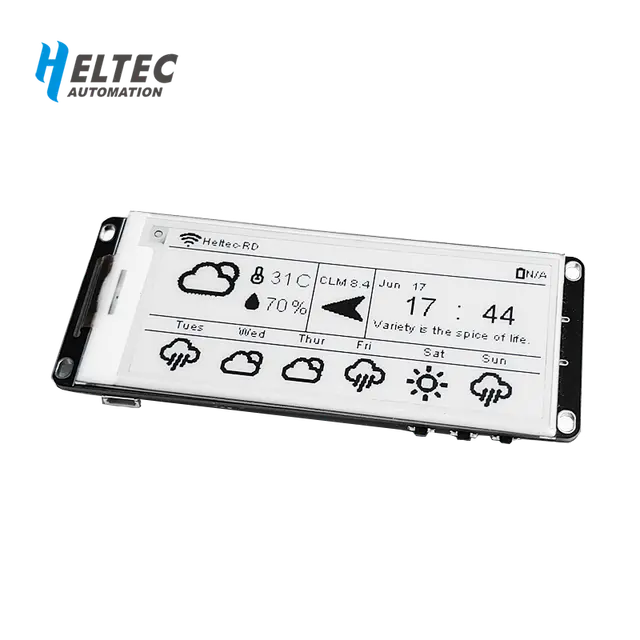
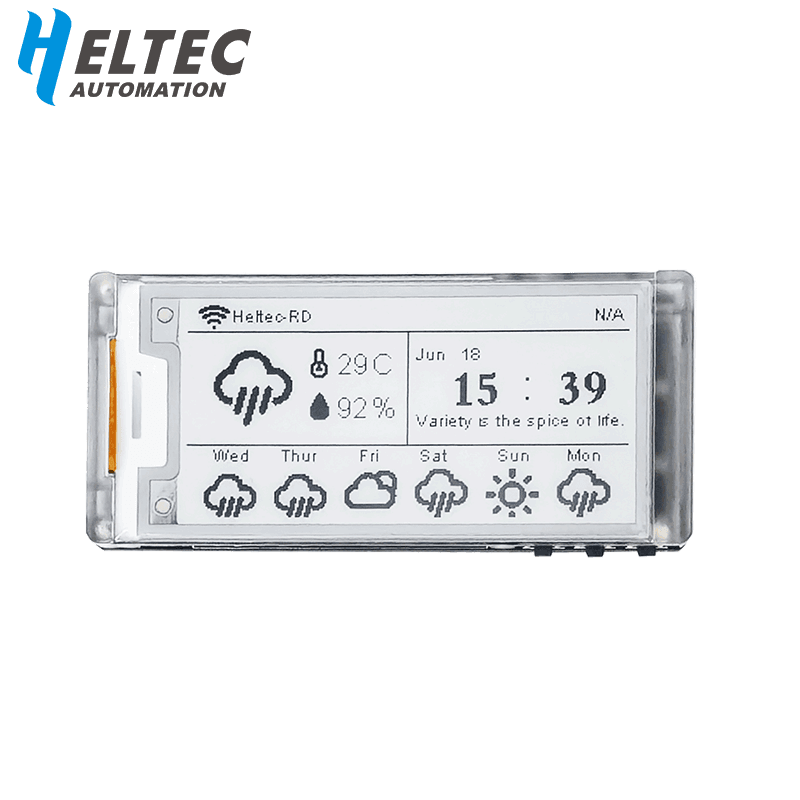
2.13-inch black-and-white E-Ink display with 250x122 pixel resolution, supporting partial refresh and 180-day image retention without power. Connected via SPI interface.
Bus Interfaces
GPIO Map
Overview
The Heltec Vision Master E213 (HT-VME213) is a compact IoT development board built around the ESP32-S3R8 microcontroller, featuring a 2.13-inch black-and-white E-Paper display with 250x122 pixel resolution. The E-Ink screen supports partial refresh and retains its displayed image for up to 180 days after power loss, making it ideal for low-power information displays, electronic labels, and always-on status panels.
The board integrates WiFi 802.11 b/g/n, Bluetooth 5.0 LE, and an optional SX1262 LoRa radio module supporting multiple frequency bands (433MHz, 470-510MHz, 863-928MHz). This triple-wireless capability enables versatile IoT deployments from short-range BLE beacons to long-range LoRa mesh networks. The board is officially compatible with Meshtastic firmware for off-grid text messaging and mesh networking.
Power management is a strong suit of the E213, with integrated lithium battery charge/discharge circuitry and a deep sleep current of just 20uA. The SH1.25-2P battery connector accepts standard 3.7V LiPo cells, while USB-C provides both charging and programming. Two SH2.0-4P sensor interfaces offer plug-and-play connectivity with Heltec's QuickLink sensor ecosystem, and dual 18-pin headers expose GPIO for custom hardware integration.
Development is supported through Arduino, PlatformIO, MicroPython, and Espressif IDF. The board's combination of E-Paper display, LoRa radio, and ultra-low-power design makes it particularly well-suited for Meshtastic mesh nodes, LoRaWAN sensor endpoints, electronic shelf labels, remote environmental monitors, and battery-powered IoT deployments that need to run for months on a single charge.
Use Cases
6LoRa Mesh Networking
Building off-grid mesh communication networks using LoRa radio for text messaging, location sharing, and sensor data relay without cellular or internet infrastructure.
Electronic Label / E-Ink Tag
E-Paper-based electronic shelf labels, name badges, or information tags that display content without continuous power.
LoRaWAN Node
A LoRaWAN end device that transmits sensor data to a LoRaWAN gateway for long-range, low-power IoT applications.
Remote Sensor Nodes
Deploy wireless sensor nodes in remote locations using LoRa, NB-IoT, or cellular connectivity.
Environmental Monitoring
Monitoring environmental conditions like temperature, humidity, air quality, and weather data using remote sensors.
Battery Powered Sensor Node
Low-power sensor nodes running on battery for wireless data collection and monitoring.
Resources
Where to Buy

Explore more of the directory — popular use cases, firmware, and specs to browse next.