Heltec Vision Master E290
ESP32-S3 development board with 2.9-inch e-ink display and optional SX1262 LoRa radio, featuring Raspberry Pi GPIO header, Meshtastic support, and 18uA deep sleep for battery-powered IoT and mesh networking applications.
$19.90
Tap any value to browse matching devices
Specifications
Components
Espressif ESP32-S3R8 with Xtensa LX7 dual-core processor at 240MHz, 512KB SRAM, 8MB OPI PSRAM, WiFi 802.11 b/g/n, and Bluetooth LE 5.0. Features hardware AES/SHA crypto acceleration, 20 ADC channels, 14 touch inputs, and ULP co-processor for deep sleep operation.
Semtech SX1262 LoRa transceiver supporting 433/868/915MHz bands with +22dBm TX power and -136dBm RX sensitivity at SF12/125kHz. Integrated via Heltec HT-RA62 module.
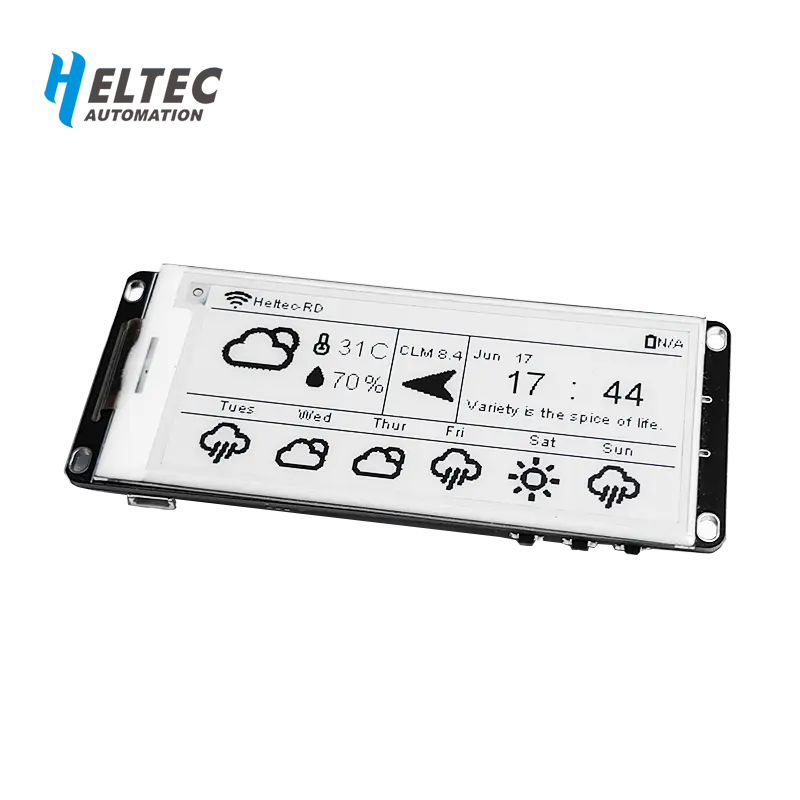
Good Display 2.9-inch black and white e-paper module with 128x296 pixel resolution, SPI interface, and partial refresh support. Retains image for 180+ days without power.
Winbond W25Q128 16MB serial NOR flash memory providing firmware and data storage via QSPI interface.
Bus Interfaces
GPIO Map
Overview
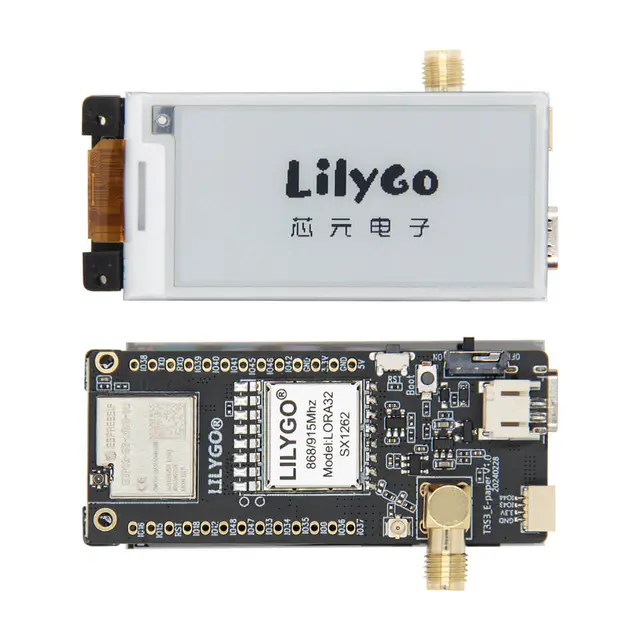
The Heltec Vision Master E290 (HT-VME290) is a compact ESP32-S3 development board built around a 2.9-inch black and white e-ink display. It combines WiFi, Bluetooth LE 5.0, and an optional SX1262 LoRa transceiver into a slim 88 x 37 x 12mm form factor with integrated lithium battery management. The board draws just 18 microamps in deep sleep while the e-ink display retains its image for up to 180 days without power, making it ideal for battery-powered deployments.
The board exposes a Raspberry Pi-compatible 2x20 pin female header providing access to GPIO, SPI, I2C, UART, ADC, and touch inputs. A QuickLink-compatible SH2.0-4P sensor port simplifies connecting external sensors. Both WiFi and LoRa antennas connect via IPEX/U.FL connectors, allowing external antenna upgrades for improved range.
Firmware options span Arduino, PlatformIO, MicroPython, CircuitPython, and ESPHome. The board is officially supported by Meshtastic for off-grid mesh communication, and the Heltec ESP32 Arduino framework provides ready-to-use libraries for LoRaWAN networking. Community projects include Meshtastic mesh nodes, electronic shelf labels, environmental sensor displays, and portable LoRa messengers.
Use Cases
9LoRa Mesh Networking
Building off-grid mesh communication networks using LoRa radio for text messaging, location sharing, and sensor data relay without cellular or internet infrastructure.
Off-Grid Communication
Text messaging and data exchange in areas without cellular or internet coverage.
Meshtastic Mesh
Off-grid mesh communication using Meshtastic firmware over LoRa radio.
Electronic Shelf Labels
Wireless e-paper price tags and information labels for retail shelves, warehouses, and inventory management.
E-Paper Display
Applications using e-paper (e-ink) displays for low-power information panels and dashboards.
E-Ink Name Badge
Wearable or clip-on electronic name badge using an e-ink display that retains the image without power.
Environmental Monitoring
Monitoring environmental conditions like temperature, humidity, air quality, and weather data using remote sensors.
Battery Powered Sensor Node
Low-power sensor nodes running on battery for wireless data collection and monitoring.
LoRaWAN Node
A LoRaWAN end device that transmits sensor data to a LoRaWAN gateway for long-range, low-power IoT applications.
Resources
Where to Buy

Explore more of the directory — popular use cases, firmware, and specs to browse next.