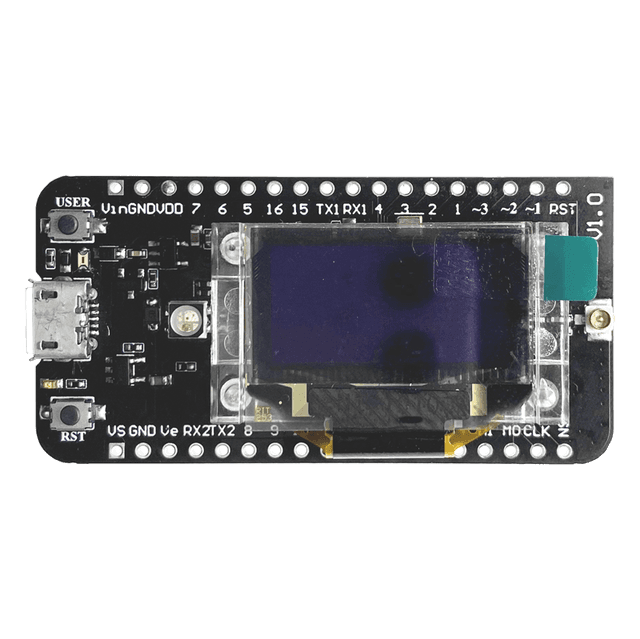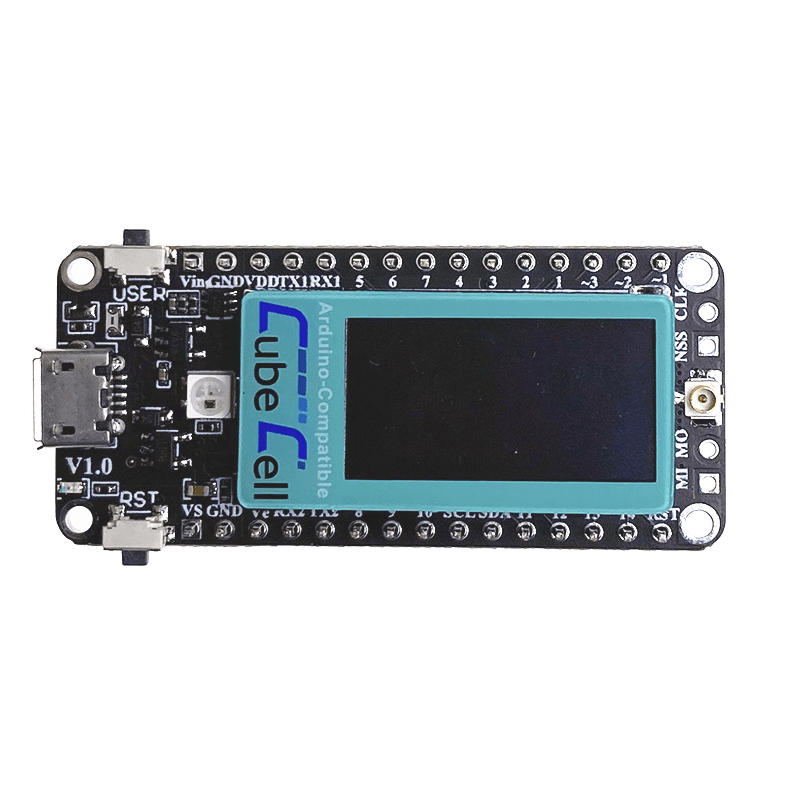
CubeCell Dev-Board Plus (HTCC-AB02)
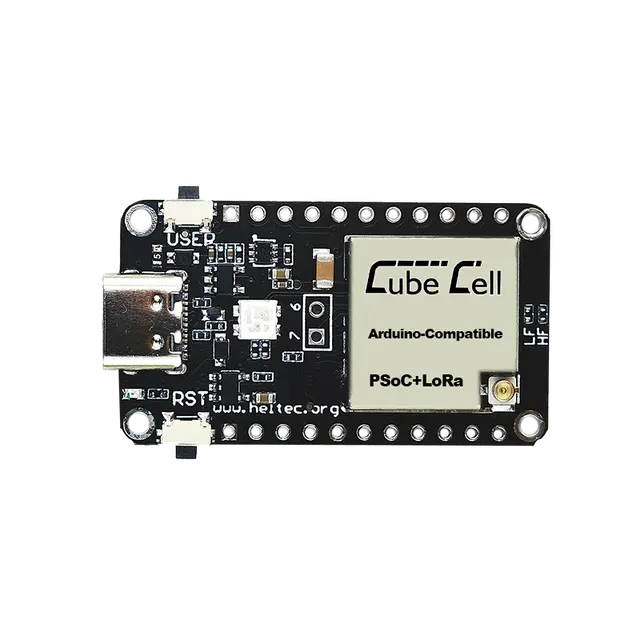
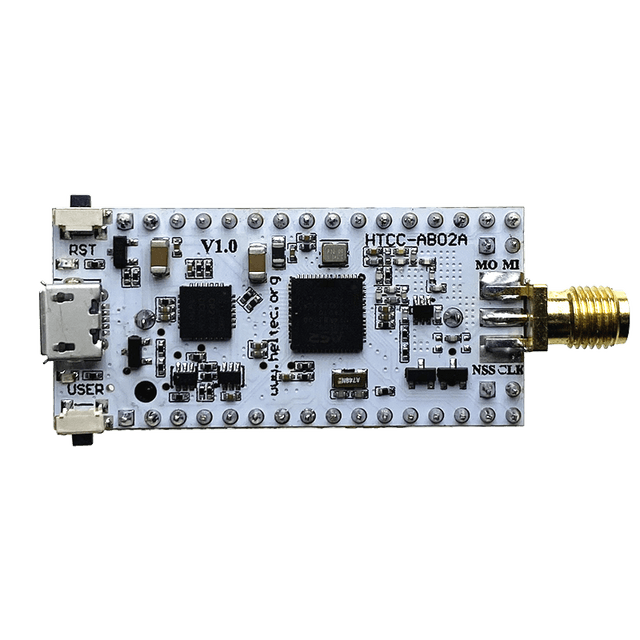
Heltec CubeCell HTCC-AB02 is an ultra-low-power LoRa/LoRaWAN development board based on the ASR6502 SoC (ARM Cortex-M0+ with integrated SX1262), featuring a 0.96" OLED display, solar panel input, and lithium battery management. Ideal for long-range IoT sensor nodes and agricultural monitoring.
$15.50
Tap any value to browse matching devices
Specifications
Certifications
Components
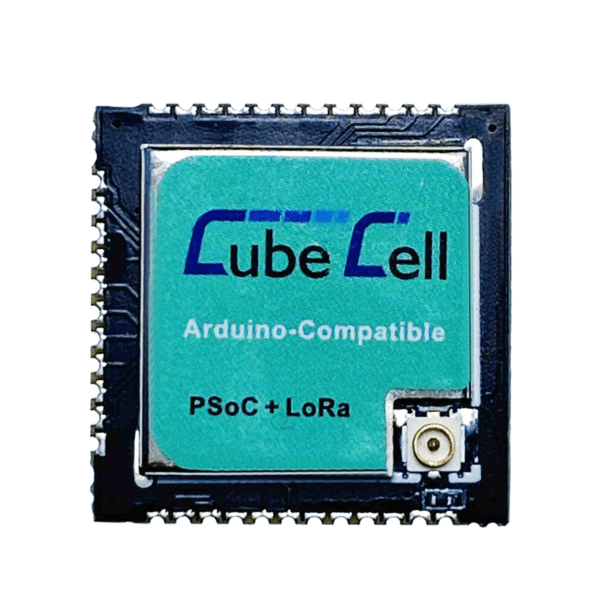
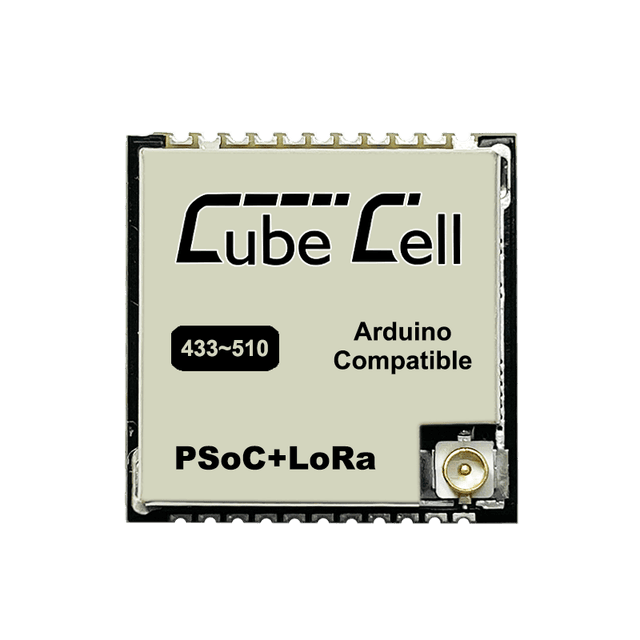
48MHz ARM Cortex-M0+ MCU (PSoC 4000 series) with integrated SX1262 LoRa transceiver, 128KB flash, 16KB SRAM, 8-channel DMA, and ultra-low-power design with 3.5uA deep sleep.
Semtech SX1262 long-range, low-power sub-GHz RF transceiver supporting LoRa and (G)FSK modulation, 150-960MHz ISM bands, +22dBm TX power, -135dBm receive sensitivity.
Solomon Systech SSD1306 OLED driver IC controlling the built-in 0.96-inch 128x64 monochrome OLED display, connected via I2C (SDA0/SCL0). Used for debugging info, battery status, and sensor readout.
Silicon Labs CP2102 single-chip USB-to-UART bridge providing serial programming and debug interface via Micro-USB connector. Royalty-free VCP drivers available for Windows, Mac, and Linux.
Integrated lithium battery management system with charge/discharge control, overcharge protection, battery voltage detection (VBAT_ADC), and automatic USB/battery/solar power switching. Supports 5.5-7V solar panel input.
Bus Interfaces
GPIO Map
Overview
The Heltec CubeCell Dev-Board Plus (HTCC-AB02) is a compact LoRa/LoRaWAN development board built around the ASR6502 system-on-chip, which integrates an ARM Cortex-M0+ processor running at 48MHz with a Semtech SX1262 LoRa transceiver on a single die. This tight integration yields exceptional power efficiency, with deep sleep current as low as 3.5 microamps — making it one of the most power-efficient LoRa development boards available.
The board ships with a 0.96-inch OLED display (SSD1306, 128x64 pixels) for on-device debugging and status readout, and includes a built-in lithium battery management system with charge/discharge control, overcharge protection, and automatic USB/battery power switching. A dedicated solar panel input (5.5-7V) enables fully autonomous deployments in remote locations without access to mains power.
With 16 GPIO pins, three 12-bit ADC channels, dual UART/SPI/I2C interfaces, and full Arduino compatibility via the CubeCell-Arduino framework, the HTCC-AB02 serves as a versatile platform for building LoRaWAN sensor nodes, agricultural monitors, environmental data loggers, and other long-range IoT applications. The board supports LoRaWAN 1.0.2 protocol and operates across 433/868/915MHz frequency bands, covering global LoRaWAN deployments on networks like The Things Network and Helium.
Community projects demonstrate real-world use cases including solar-powered compost heap temperature monitoring, soil moisture sensing for smart irrigation, and LoRa APRS tracking — all leveraging the board's ultra-low power consumption and long-range communication capabilities.
Use Cases
8LoRaWAN Node
A LoRaWAN end device that transmits sensor data to a LoRaWAN gateway for long-range, low-power IoT applications.
LoRaWAN Sensor Node
Build a long-range, low-power sensor node that communicates over LoRaWAN networks like The Things Network or Helium.
Battery Powered Sensor Node
Low-power sensor nodes running on battery for wireless data collection and monitoring.
Solar-Powered Sensor Node
Building battery-powered sensor nodes with solar charging for remote, off-grid environmental and agricultural monitoring.
Weather Station
A device that displays current weather conditions and forecasts, typically using WiFi to fetch data from weather APIs.
Soil Monitoring
Monitors soil moisture, temperature, and nutrient levels for agriculture and gardening applications.
Compost Monitor
Monitor compost heap temperature and decomposition progress remotely using LoRa-connected temperature sensors.
Remote Sensor Nodes
Deploy wireless sensor nodes in remote locations using LoRa, NB-IoT, or cellular connectivity.
Resources

Explore more of the directory — popular use cases, firmware, and specs to browse next.