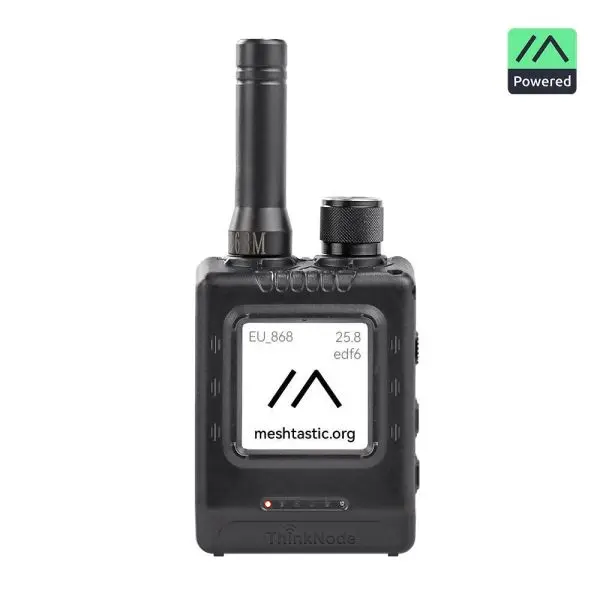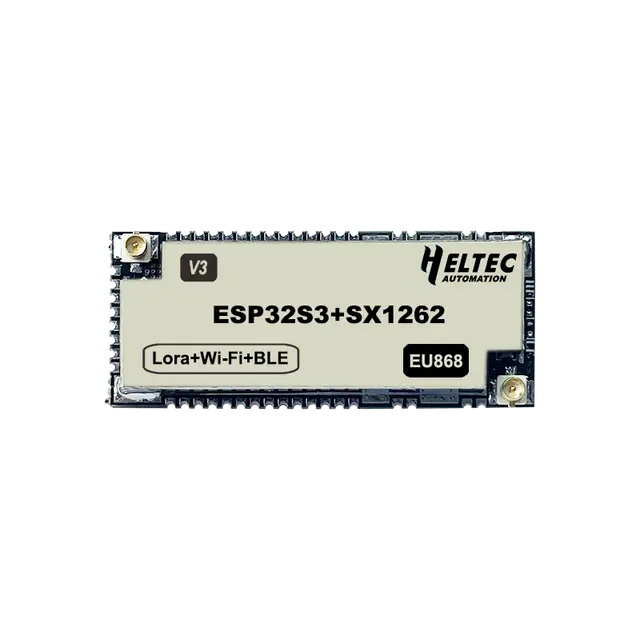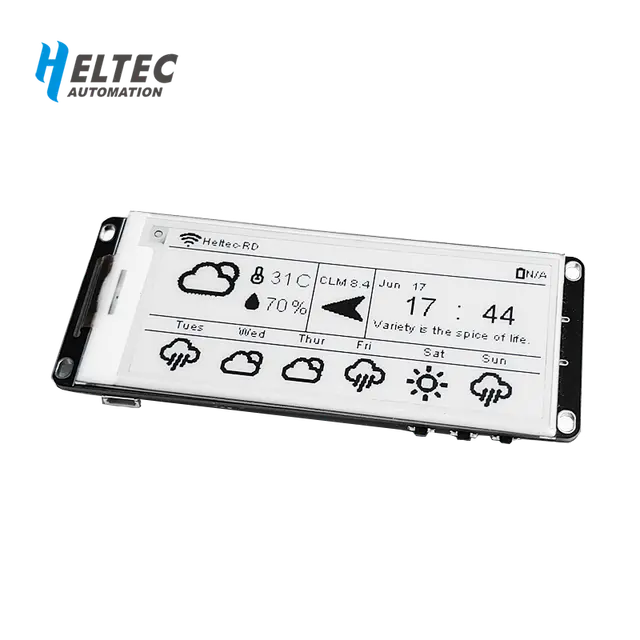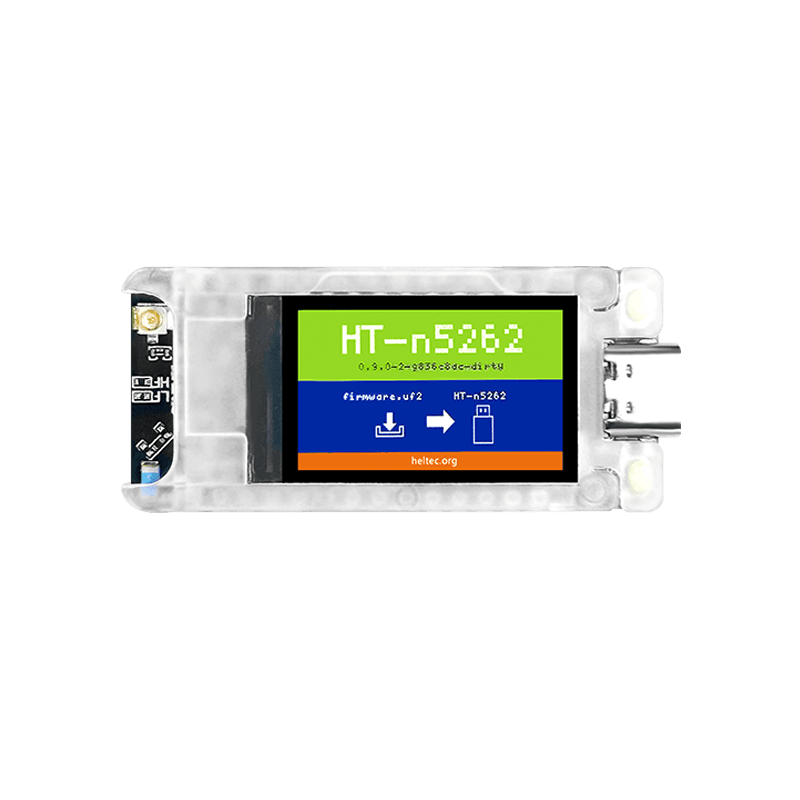
Heltec Mesh Node T114
Compact nRF52840 + SX1262 LoRa development board with BLE 5.0, optional 1.14" TFT display and L76K GPS module. Designed for Meshtastic mesh networking, LoRaWAN, and battery-powered IoT deployments with ultra-low 11uA deep sleep current and solar panel support.
$17.90
Tap any value to browse matching devices
Specifications
Components
Nordic Semiconductor nRF52840 SoC with ARM Cortex-M4F @ 64MHz, 1MB flash, 256KB SRAM, BLE 5.0, Bluetooth Mesh, 802.15.4, and CryptoCell-310 hardware crypto engine.
Semtech SX1262 LoRa transceiver supporting 150-960MHz frequency range with up to +22dBm TX power and -135dBm RX sensitivity at SF12/125kHz.
Quectel L76K GNSS module supporting GPS, BeiDou, GLONASS, and QZSS constellations. Connected via UART and optional 8-pin 1.25mm connector.
Sitronix ST7789 TFT LCD controller driving a 135x240 pixel display with 262K colors over SPI interface.
Macronix MX25R1635F 16Mbit (2MB) serial NOR flash with QSPI interface, ultra-low power consumption, and wide voltage range (1.65-3.6V).
NXP PCF8563 RTC footprint on I2C bus 0 (P0.26/P0.27). Not populated on V1 boards but available for future revisions or manual soldering.
Two SK6812 NeoPixel addressable RGB LEDs on GPIO14 for programmable status indication and visual feedback.
Bus Interfaces
GPIO Map
Overview
The Heltec Mesh Node T114 (Rev. 2.0) is a compact, low-power development board built around the Nordic nRF52840 SoC and Semtech SX1262 LoRa transceiver. It is purpose-built for long-range mesh communication using Meshtastic and MeshCore firmware, as well as LoRaWAN applications via Heltec's nRF52 Arduino framework. The board measures just 50.80 x 22.86mm yet packs BLE 5.0, LoRa sub-GHz radio, and an onboard 2.4GHz ceramic antenna into a breadboard-friendly form factor.
Power efficiency is a standout feature, with deep sleep current as low as 11uA (or 23uA in Meshtastic low-power mode), making it ideal for battery and solar-powered field deployments. The board accepts power from USB-C, a 3.7V LiPo battery via SH1.25 connector, or a 5-6.5V solar panel. An optional 1.14-inch TFT-LCD (135x240, 262K colors, ST7789 driver) and Quectel L76K GNSS module can be added for display and GPS tracking capabilities.
The board includes 2MB external QSPI flash (MX25R1635F), a PCF8563 RTC footprint for timekeeping, two SK6812 NeoPixel RGB LEDs, and two I2C buses for sensor expansion. LoRa frequency options span 433MHz, 470-510MHz, 863-870MHz, and 902-928MHz bands with up to +22dBm transmit power and -135dBm receive sensitivity. Firmware can be flashed easily via UF2 bootloader by double-clicking the reset button, making it accessible for both beginners and advanced users building off-grid communication networks, GPS trackers, and remote IoT sensor nodes.
Use Cases
7Meshtastic Mesh
Off-grid mesh communication using Meshtastic firmware over LoRa radio.
LoRa Mesh Networking
Building off-grid mesh communication networks using LoRa radio for text messaging, location sharing, and sensor data relay without cellular or internet infrastructure.
GPS Tracking
Location tracking and navigation using GNSS satellite receivers.
LoRaWAN Node
A LoRaWAN end device that transmits sensor data to a LoRaWAN gateway for long-range, low-power IoT applications.
Off-Grid Communication
Text messaging and data exchange in areas without cellular or internet coverage.
Solar-Powered IoT Node
An IoT sensor or communication node powered by solar panels for maintenance-free outdoor deployments.
Asset Tracking
Tracking the location and status of physical assets like vehicles, packages, and equipment.
Resources
Where to Buy

Explore more of the directory — popular use cases, firmware, and specs to browse next.