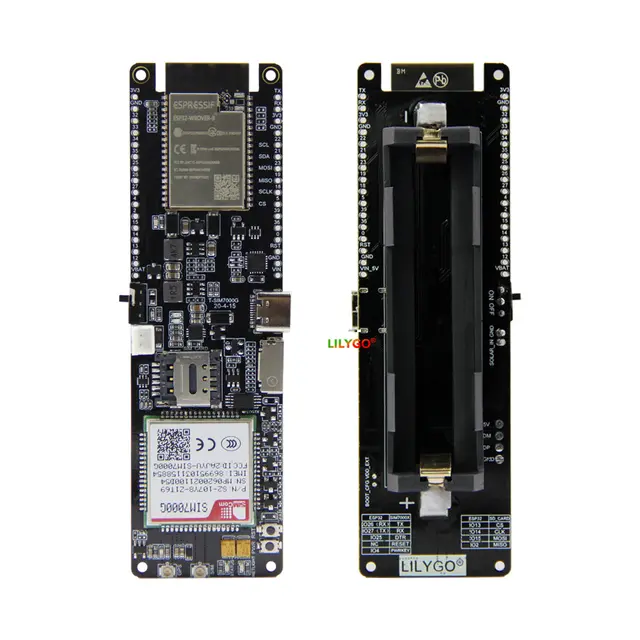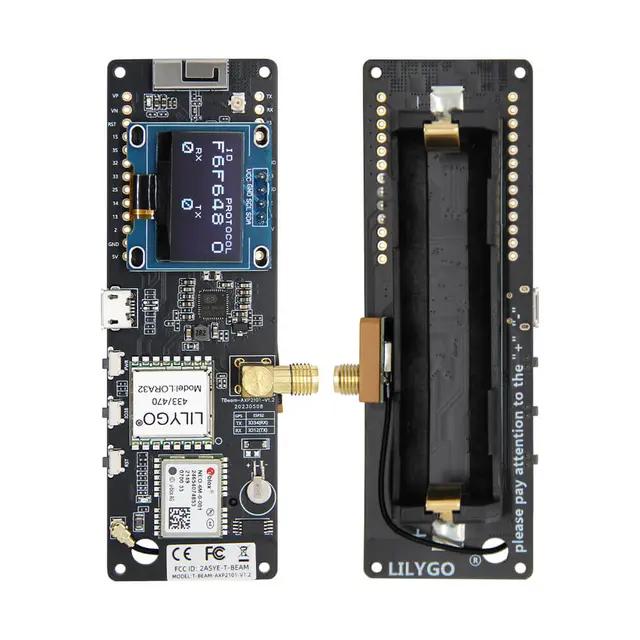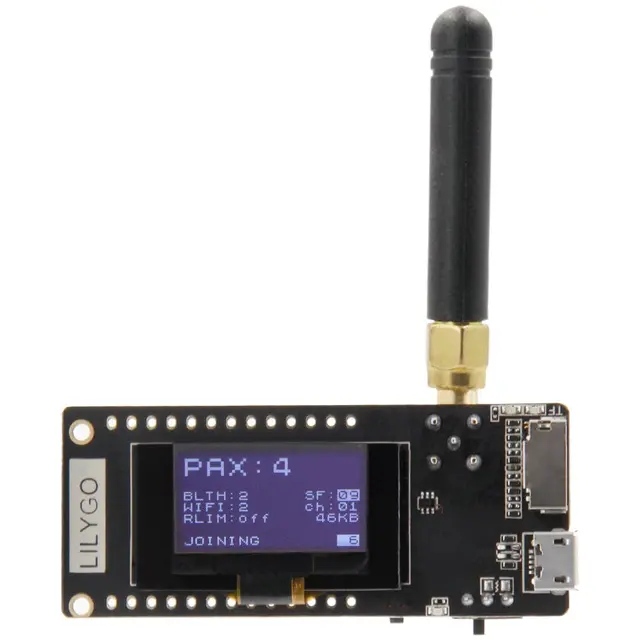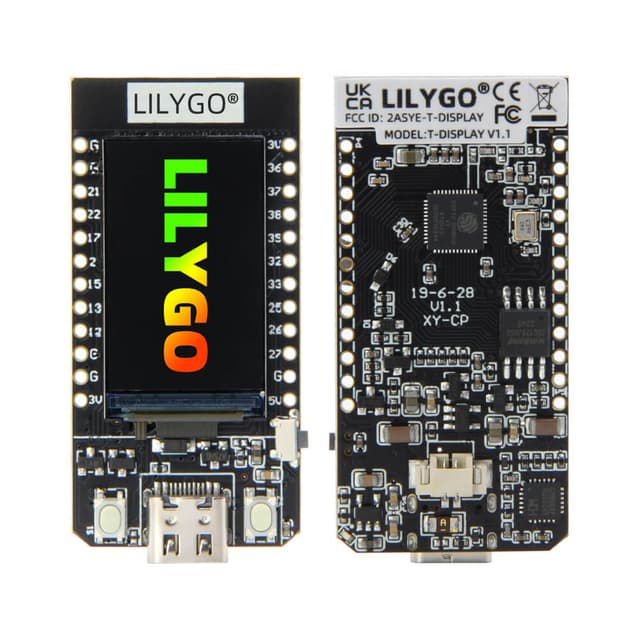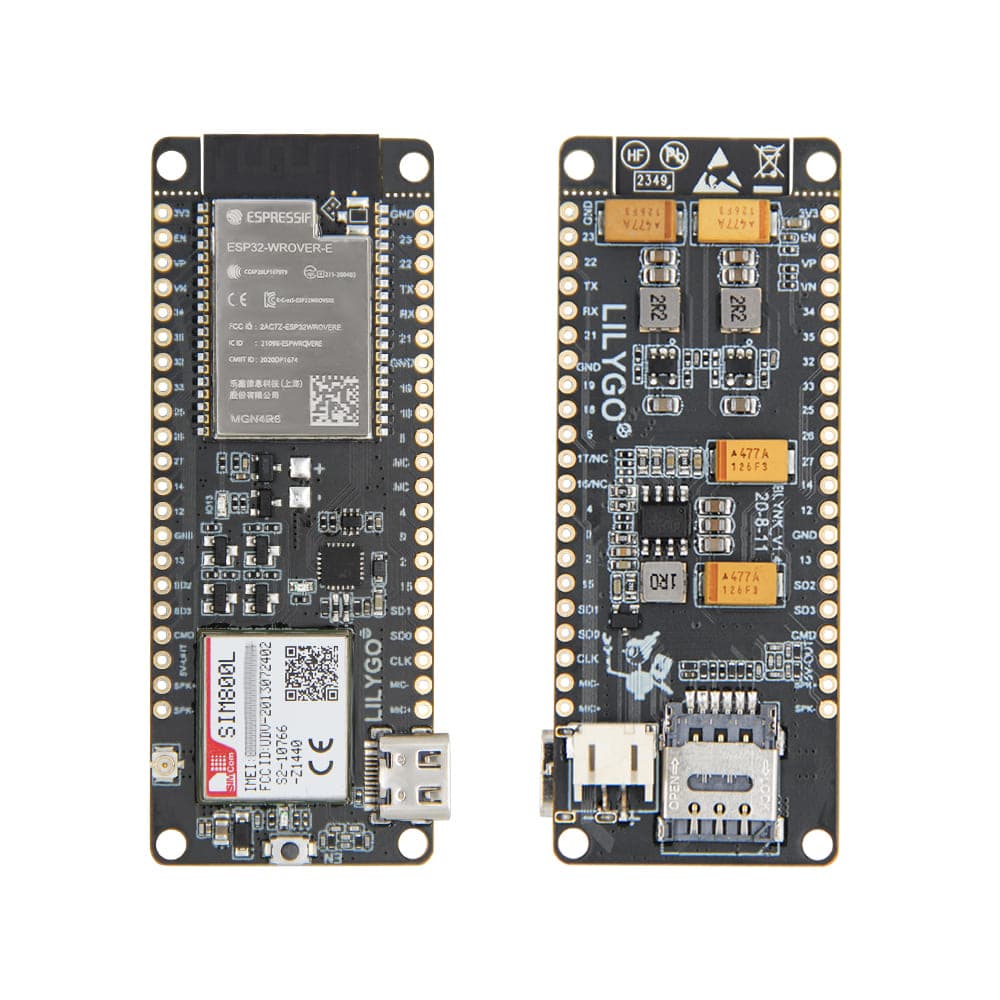
LILYGO T-Call SIM800
ESP32 board with SIM800L 2G GSM/GPRS modem for SMS alerts, voice calls, and cellular data — ideal for remote monitoring and IoT projects needing cellular fallback on a budget.
$16.51
Tap any value to browse matching devices
Specifications
Components
Espressif ESP32-D0WDQ6 dual-core Xtensa LX6 at 240MHz with WiFi and Bluetooth 4.2/BLE.
SIMCom SIM800L quad-band GSM/GPRS modem supporting SMS, voice calls, and GPRS data up to 85.6 kbps.
INJOINIC IP5306 2A LiPo charger and boost converter with battery level indication.
WCH CH9102 USB-to-UART converter for programming and serial debug.
Bus Interfaces
GPIO Map
Overview
The LILYGO T-Call combines the Espressif ESP32 dual-core processor with a SIMCom SIM800L quad-band 2G GSM/GPRS modem, enabling SMS messaging, voice calls, and GPRS data communication in a compact development board. While 2G networks are legacy in some regions, the SIM800L remains widely useful for IoT applications that require low-data remote connectivity, SMS alerts, or operation in areas where only 2G coverage exists.
The board provides 4MB or 8MB flash options, 8MB PSRAM, WiFi 802.11 b/g/n, and Bluetooth 4.2 via the ESP32, allowing it to bridge cellular data to local wireless networks. The IP5306 power management IC handles LiPo battery charging and output, making the board suitable for battery-backed standalone deployments with a user-supplied LiPo cell.
A USB-C port with CH9102 serial bridge enables programming, while standard 0.1-inch headers expose I2C, SPI, UART, I2S, and CAN interfaces. The T-Call is popular for DIY GPS trackers, automated SMS alert systems, and agricultural monitoring nodes where cellular data is preferred over WiFi.
Use Cases
4Cellular IoT
Devices designed for IoT deployments using cellular (2G/3G/LTE) connectivity where WiFi is unavailable.
Environmental Monitoring
Monitoring environmental conditions like temperature, humidity, air quality, and weather data using remote sensors.
Asset Tracking
Tracking the location and status of physical assets like vehicles, packages, and equipment.
IoT
Internet of Things applications including connected sensors, actuators, and smart devices that communicate over WiFi, BLE, LoRa, or other wireless protocols.
Resources
Where to Buy
Explore more of the directory — popular use cases, firmware, and specs to browse next.