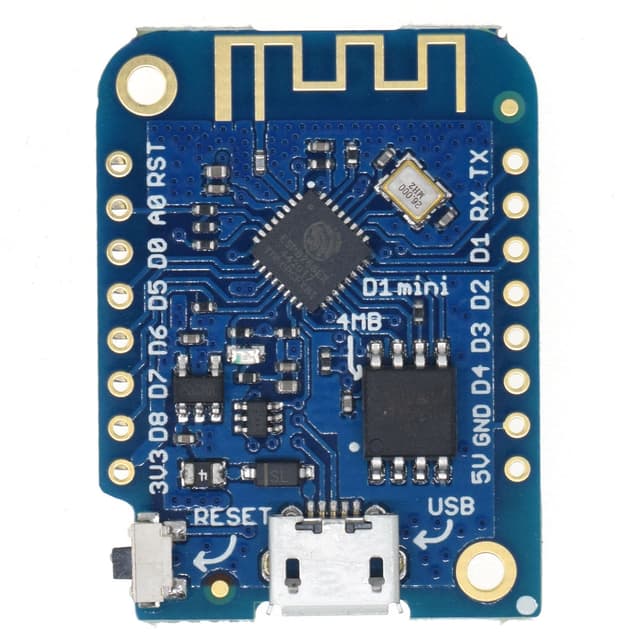
Wemos D1 Mini (ESP8266)
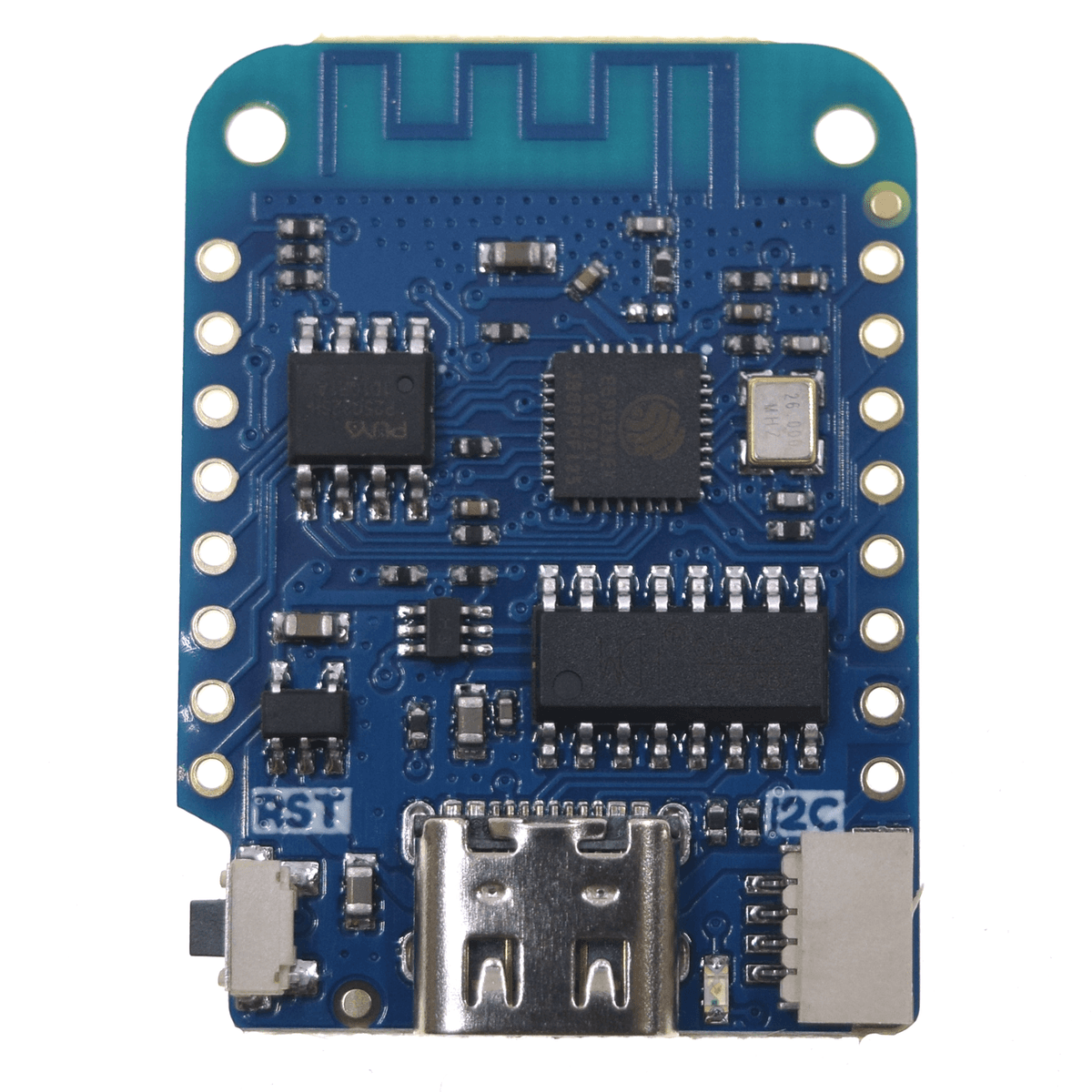
Compact ESP8266-based WiFi development board with 4MB flash, 11 digital I/O pins, micro-USB, and a rich shield ecosystem. The most popular board for Tasmota and ESPHome DIY home automation projects.
$3.50
Tap any value to browse matching devices
Specifications
Components
USB to serial UART interface chip for programming and debugging via micro-USB connection
Bus Interfaces
Wemos D1 Mini (ESP8266)
The Wemos D1 Mini is the de facto standard board for Tasmota and ESPHome-based home automation projects. Its compact size, low cost (~$3), breadboard-friendly layout, and extensive shield ecosystem make it the most widely used ESP8266 board in the DIY smart home community.
Key Features
- ESP8266EX SoC running at 80/160MHz with WiFi 802.11 b/g/n
- 4MB flash (enough for Tasmota with all features)
- 11 digital I/O pins, 1 analog input (A0, 3.3V max)
- Micro-USB for power and programming (CH340G USB-serial)
- 3.3V and 5V power pins for sensors
- Deep sleep support via D0-RST jumper
Shield Ecosystem
One of the D1 Mini's greatest strengths is its stackable shield system:
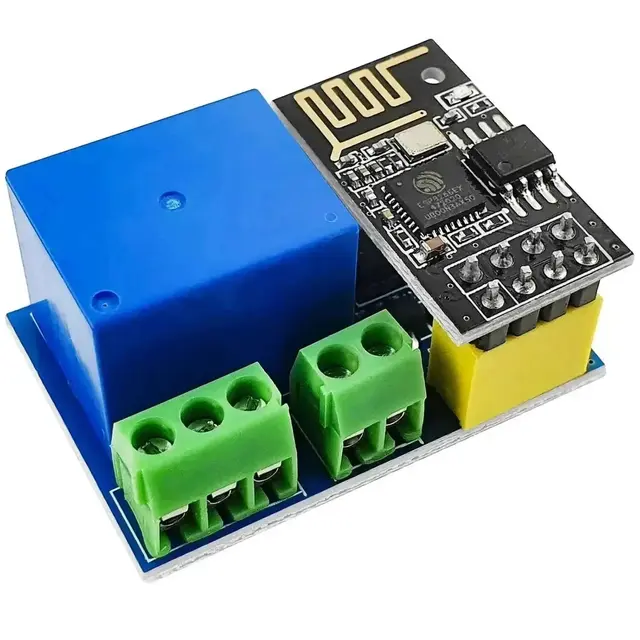
- Relay Shield — 5V 1A relay for switching mains loads
- DHT Shield — DHT11/DHT22 temperature and humidity
- OLED Shield — 0.66" SSD1306 64x48 I2C display
- WS2812B RGB Shield — addressable LED ring
- Motor Shield — dual DC motor or single stepper
- Battery Shield — LiPo charging and boost converter
- ProtoBoard Shield — custom circuit prototyping
- SD Card Shield — microSD via SPI
- Buzzer Shield — piezo buzzer
- Button Shield — momentary tactile switch
Tasmota Compatibility
The D1 Mini is one of the best-supported boards in Tasmota:
- Works with all standard Tasmota binaries (
tasmota.bin,tasmota-sensors.bin,tasmota-display.bin,tasmota-ir.bin) - Module type: Generic (18) with full GPIO mapping
- Flash via USB with Tasmotizer, esptool.py, or ESP Flasher
- All 11 GPIOs freely assignable to Tasmota functions
Common Tasmota Projects
- Temperature/humidity monitoring (DHT22, BME280, DS18B20)
- Motion sensor nodes (AM312, HC-SR501 PIR)
- Air quality sensors (PMS5003, MH-Z19B CO2)
- Smart LED controllers (WS2812B, PWM dimming)
- IR remote control hubs (IR TX/RX)
- Power monitoring (PZEM-004T)
- Motorized blinds controller
- MQTT sensor bridges
Pin Mapping
| Pin | GPIO | Function | Notes |
|---|---|---|---|
| D0 | GPIO16 | Wake | No PWM/I2C, connect to RST for deep sleep |
| D1 | GPIO5 | SCL | Default I2C clock |
| D2 | GPIO4 | SDA | Default I2C data |
| D3 | GPIO0 | FLASH | Pull-up, boot mode select |
| D4 | GPIO2 | LED | Built-in LED (inverted), pull-up |
| D5 | GPIO14 | SCLK | SPI clock |
| D6 | GPIO12 | MISO | SPI data in |
| D7 | GPIO13 | MOSI | SPI data out |
| D8 | GPIO15 | CS | SPI chip select, pull-down |
| A0 | ADC0 | Analog | 0–3.3V input |
| TX | GPIO1 | TX | Serial transmit |
| RX | GPIO3 | RX | Serial receive |
Use Cases
6home-automation
IoT Sensor Node
Compact wireless sensor node for collecting and transmitting environmental or industrial data.
mqtt-bridge
smart-lighting
Environmental Monitoring
Monitoring environmental conditions like temperature, humidity, air quality, and weather data using remote sensors.
Prototyping
Rapid hardware prototyping and proof-of-concept development with breadboard-friendly form factors and accessible development environments.
Resources
Where to Buy
Explore more of the directory — popular use cases, firmware, and specs to browse next.