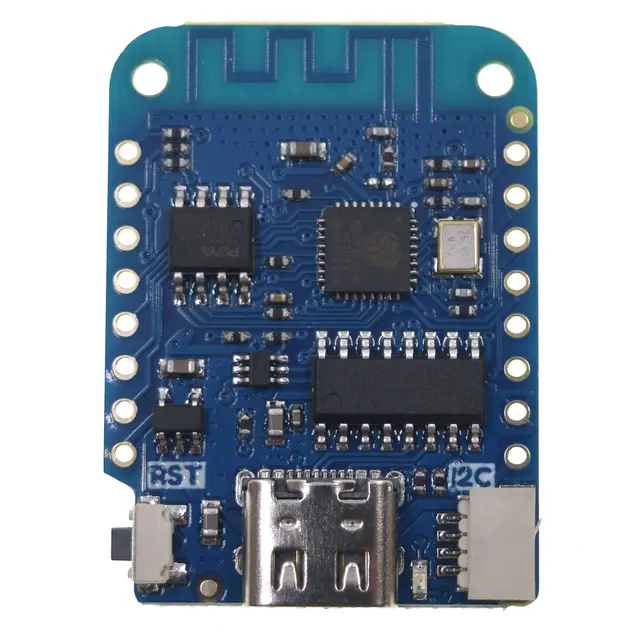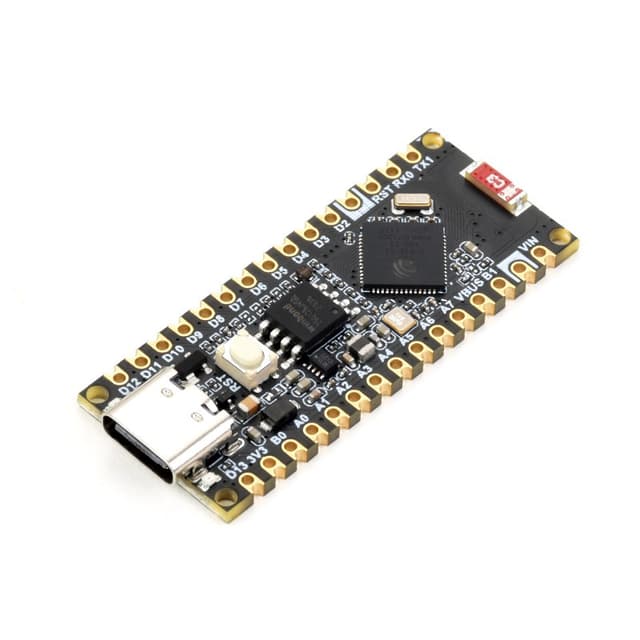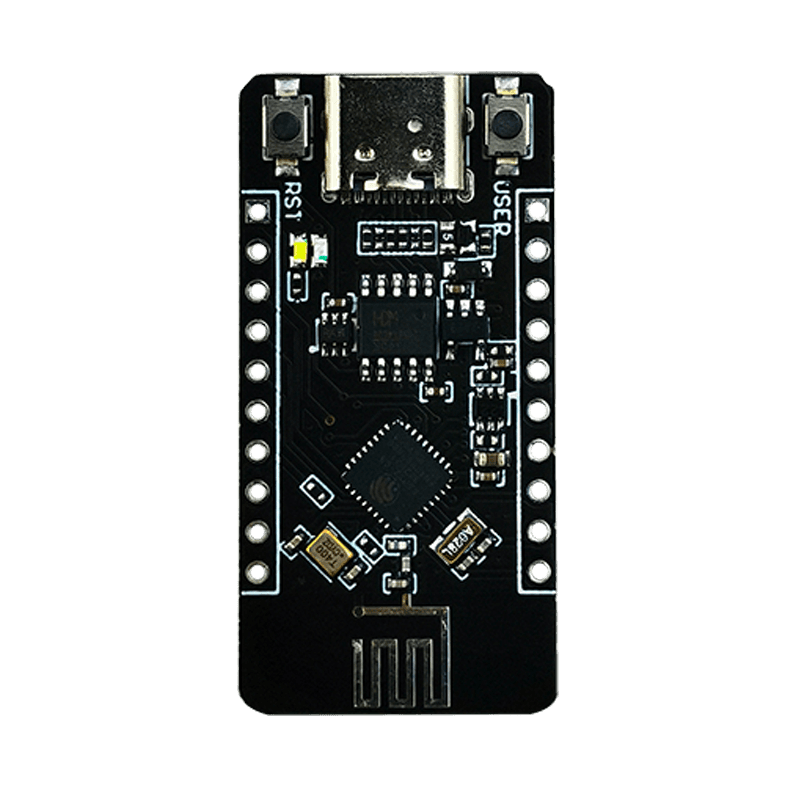
Heltec ESP32-C3 Arduino Development Board
Ultra-compact RISC-V development board with ESP32-C3FN4, WiFi, BLE 5.0, integrated battery management, and USB-C — ideal for low-power IoT sensor nodes and wireless prototyping.
$4.90
Tap any value to browse matching devices
Specifications
Components
Espressif RISC-V 32-bit single-core MCU at 160MHz with integrated 4MB flash, 802.11 b/g/n WiFi, BLE 5.0, and hardware crypto acceleration (AES/SHA/RSA/ECC).
Standalone constant-current/constant-voltage linear charger for single-cell lithium-ion batteries with programmable charge current up to 800mA and automatic termination.
USB to UART serial converter with integrated clock generator requiring no external crystal oscillator. Supports 5V, 3.3V, 2.5V, and 1.8V I/O with built-in diode protection.
Bus Interfaces
GPIO Map
Overview
The Heltec ESP32-C3 Arduino Development Board is a compact, low-power IoT development platform built around the Espressif ESP32-C3FN4 system-on-chip. Featuring a 32-bit RISC-V single-core processor clocked at up to 160 MHz, 4 MB of integrated flash, and dual-mode 2.4 GHz WiFi plus Bluetooth LE 5.0 connectivity, it provides a capable foundation for wireless sensor nodes, home automation endpoints, and battery-powered IoT devices.
The board stands out for its integrated lithium battery management with charge/discharge control and overcharge protection, making it immediately suitable for portable and battery-powered applications without requiring external power management circuitry. A USB Type-C port with CH340K serial converter handles both programming and charging, while the ultra-low deep sleep current of 3.5 microamps enables long-term battery-operated deployments.
Measuring just 40.64 x 20.32 mm and weighing only 15 grams, the board exposes 2x11 pin headers providing access to GPIO pins with ADC, SPI, I2C, UART, and PWM capabilities. It is compatible with Arduino, ESPHome, Tasmota, MicroPython, and other ESP32-C3 firmware platforms, giving developers wide flexibility in choosing their development environment. The board is well-suited for smart home sensors, environmental monitoring stations, wireless data loggers, and educational electronics projects.
Use Cases
8IoT
Internet of Things applications including connected sensors, actuators, and smart devices that communicate over WiFi, BLE, LoRa, or other wireless protocols.
Smart Home
Home automation devices for controlling lighting, climate, security, and appliances.
home-automation
Environmental Monitoring
Monitoring environmental conditions like temperature, humidity, air quality, and weather data using remote sensors.
Wireless Sensor Node
A compact wireless device that reads sensor data and transmits it over WiFi or other radio protocols to a central hub or cloud service.
Battery-Powered Sensor
An ultra-low-power sensor device designed to operate on batteries for months or years, ideal for remote deployments where mains power is unavailable.
Data Logging
Recording time-stamped sensor readings, environmental data, or system events to local storage.
Prototyping
Rapid hardware prototyping and proof-of-concept development with breadboard-friendly form factors and accessible development environments.
Resources
Where to Buy
Explore more of the directory — popular use cases, firmware, and specs to browse next.