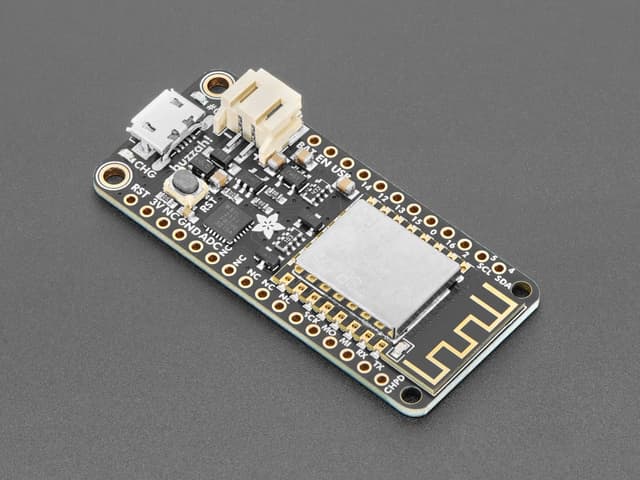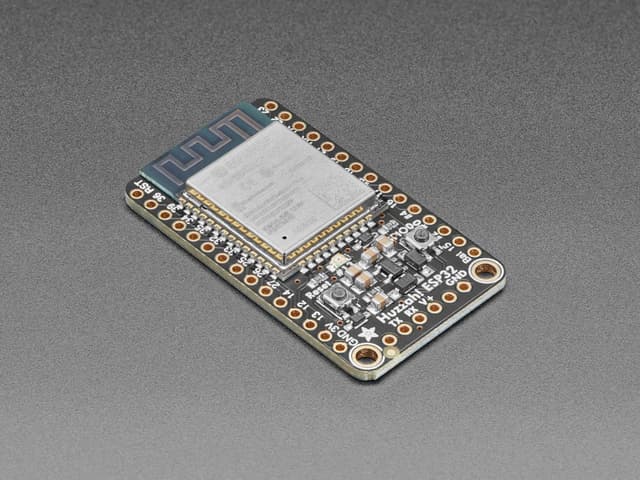
Adafruit HUZZAH ESP8266 Breakout
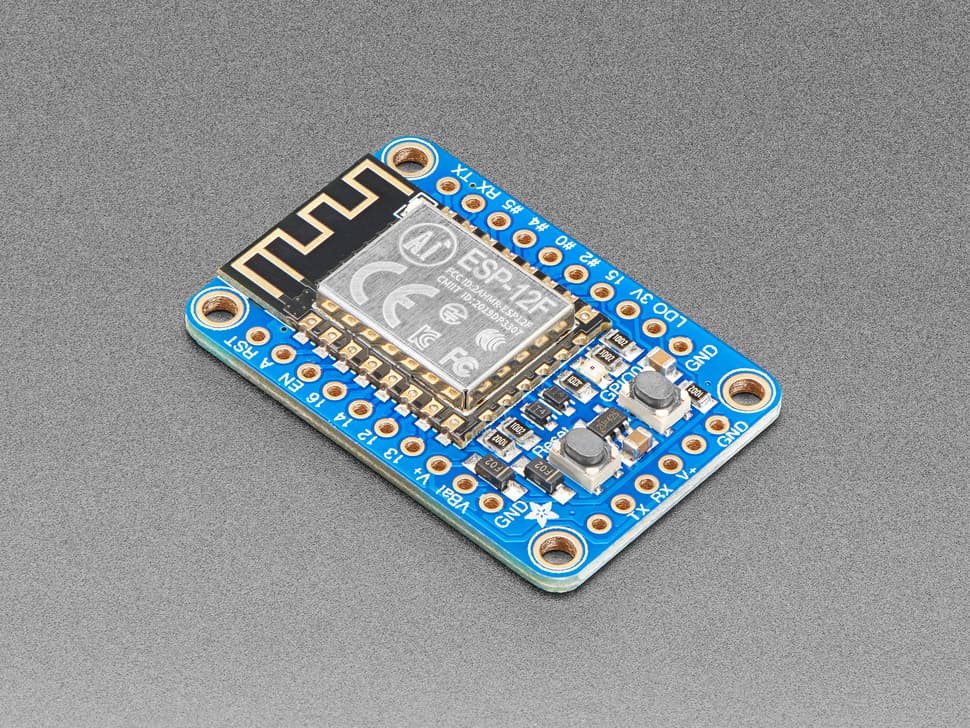
Breadboard-friendly ESP8266 WiFi breakout at 80 MHz with 802.11 b/g/n, 9 GPIO, 3.3V logic, 500mA regulator, and pre-loaded NodeMCU firmware — Adafruit's accessible entry point to ESP8266 development.
$9.95
Tap any value to browse matching devices
Specifications
Components
Bus Interfaces
GPIO Map
Overview
The Adafruit HUZZAH ESP8266 Breakout is a compact, breadboard-friendly development platform built around the Espressif ESP8266 WiFi microcontroller. Running at 80 MHz with a full 802.11 b/g/n WiFi stack (supporting both client and access point modes) and an integrated TCP/IP stack with DNS, it enables internet-connected embedded projects at a very low cost.
The breakout includes an onboard 3.3V regulator capable of 500mA output, accepting input from 3V to 6V batteries or USB power via two diode-protected power inputs. Level shifting on the UART and reset pins simplifies interfacing with 5V USB-serial adapters. The board comes pre-loaded with the NodeMCU Lua interpreter (v0.9.5), enabling immediate scripting without a separate development environment.
Nine GPIO pins are available (3.3V logic), along with one analog input limited to 1.0V maximum. Hardware I2C and SPI are supported through the GPIO pins. A red LED on GPIO0 and a reset button and user button (for bootload mode) are included for development convenience.
Programming support covers Arduino IDE (via the ESP8266 Arduino core), Lua scripting, and MicroPython. The board requires a separate FTDI cable or USB-to-serial adapter for programming since no USB port is included — a design choice that keeps the board minimal and flexible for battery-powered applications.
Use Cases
5IoT
Internet of Things applications including connected sensors, actuators, and smart devices that communicate over WiFi, BLE, LoRa, or other wireless protocols.
wifi-projects
home-automation
maker
Prototyping
Rapid hardware prototyping and proof-of-concept development with breadboard-friendly form factors and accessible development environments.
Where to Buy
Explore more of the directory — popular use cases, firmware, and specs to browse next.