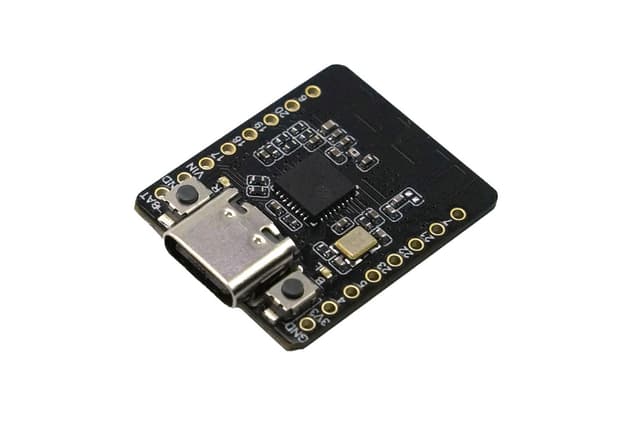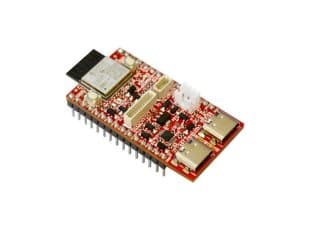
Olimex ESP32-H2-DevKit-LiPo
Ultra-affordable open-source ESP32-H2 dev board for Thread, Zigbee, and Matter — BLE 5, LiPo charging, Qwiic/Stemma, dual USB-C, for €5.95.
$6.50
Tap any value to browse matching devices
Specifications
Components
Espressif ESP32-H2 SoC with RISC-V @ 96MHz, 4MB flash, 320KB RAM, BLE 5, and IEEE 802.15.4 for Thread/Zigbee/Matter. No WiFi.
Onboard LiPo battery charger with JST connector and battery measurement circuitry.
Bus Interfaces
GPIO Map
Overview
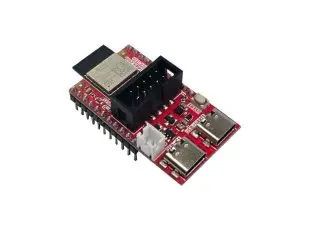
The Olimex ESP32-H2-DevKit-LiPo is one of the most affordable open-source hardware options for developing Thread, Zigbee, and Matter devices. At under €6, it delivers the Espressif ESP32-H2 SoC — a RISC-V core at 96MHz with IEEE 802.15.4 and BLE 5 connectivity — in a compact 48×25mm breadboard-friendly form factor.
Unlike ESP32-C6, the ESP32-H2 has no Wi-Fi radio, making it purpose-built for 802.15.4 mesh networks. This results in lower power consumption, with deep sleep current as low as 10µA, ideal for battery-powered Thread end devices and Zigbee sensors. The board integrates a LiPo battery charger and connector for portable deployments.
Two USB-C ports are provided — one with a serial converter for programming, one directly connected to the ESP32-H2's native USB/JTAG. A Qwiic/Stemma QT connector provides easy I2C sensor expansion, while the pUEXT connector supports the Olimex UEXT module ecosystem. Full hardware design files (schematics, KiCad sources) are on GitHub, and the board is OSHW certified (UID BG000098).
Compatible with ESP-IDF, Arduino IDE, and ESPHome (via OpenThread component for Thread/Matter integration).
Use Cases
8Matter Smart Home
Building Matter-compatible smart home devices that work across ecosystems like Apple Home, Google Home, and Amazon Alexa.
Matter Smart Home
Building Matter-compatible smart home devices that work across ecosystems like Apple Home, Google Home, and Amazon Alexa.
Smart Home
Home automation devices for controlling lighting, climate, security, and appliances.
Thread Mesh Network
Low-power mesh networking using Thread protocol for smart home and IoT devices.
IoT
Internet of Things applications including connected sensors, actuators, and smart devices that communicate over WiFi, BLE, LoRa, or other wireless protocols.
Prototyping
Rapid hardware prototyping and proof-of-concept development with breadboard-friendly form factors and accessible development environments.
Battery Powered Sensor Node
Low-power sensor nodes running on battery for wireless data collection and monitoring.
Zigbee Gateway
Serves as a Zigbee coordinator/gateway, connecting Zigbee 3.0 end-devices to home automation systems and IP networks.
Where to Buy
Explore more of the directory — popular use cases, firmware, and specs to browse next.