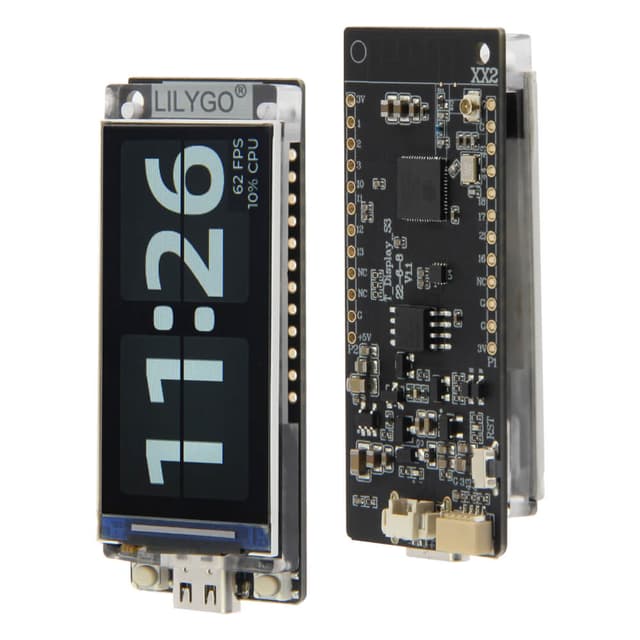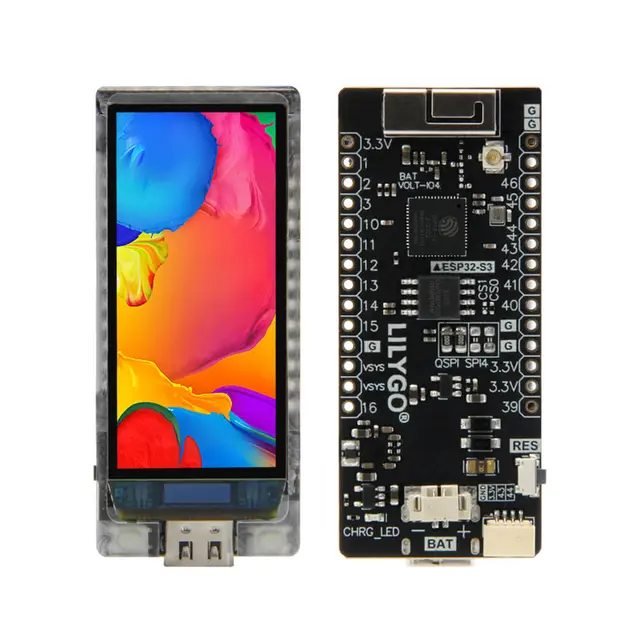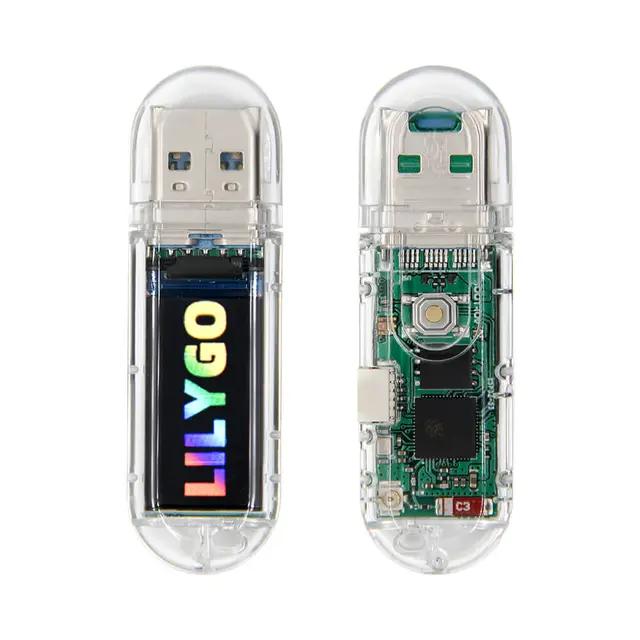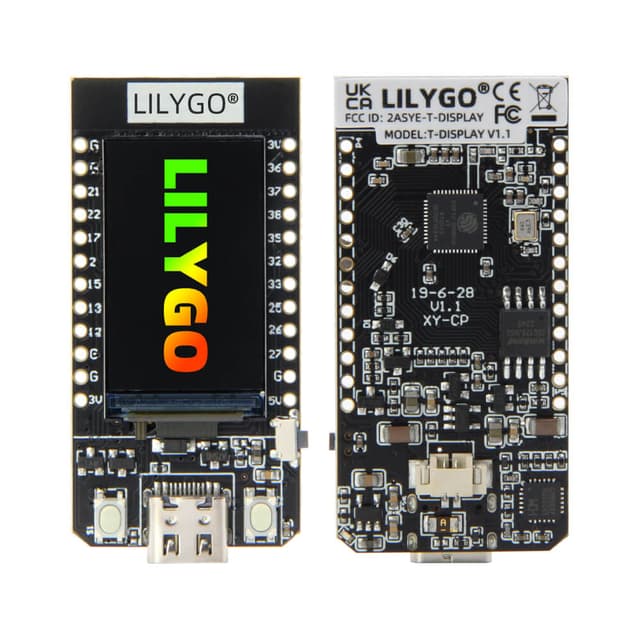
LILYGO T-HMI
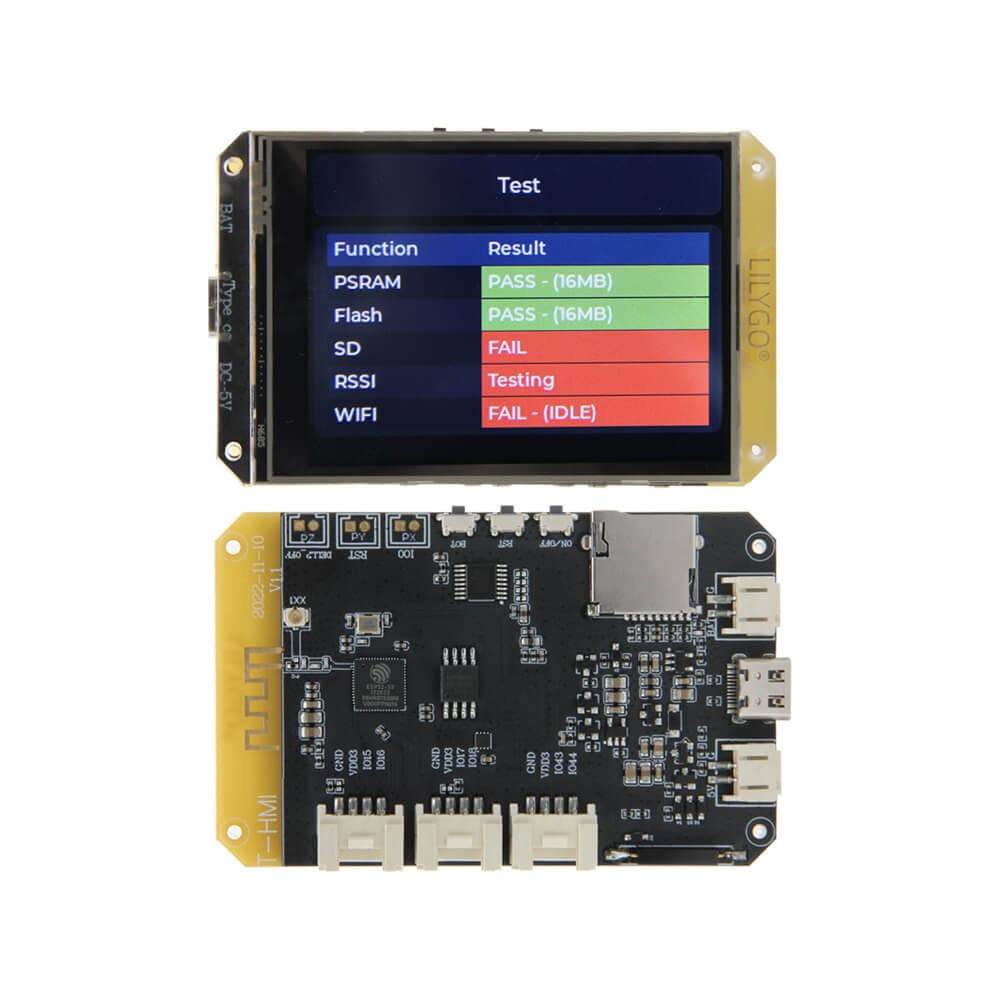
ESP32-S3 HMI development board with a 2.8-inch resistive touchscreen, GROVE connectors, 16MB flash, 8MB PSRAM, and USB-C — designed for industrial HMI panels and interactive control interfaces.
$17.99
Tap any value to browse matching devices
Specifications
Components
Espressif ESP32-S3R8 dual-core Xtensa LX7 at 240MHz with 8MB integrated PSRAM, WiFi, BLE 5.0, and USB OTG.
Sitronix ST7789V TFT LCD driver for the 2.8-inch 320×240 panel with resistive touch overlay.
Bus Interfaces
GPIO Map
Overview
The LILYGO T-HMI (Human Machine Interface) is an ESP32-S3 development board built around a 2.8-inch resistive touchscreen, targeted at industrial control panels, process monitoring displays, and interactive kiosk applications. GROVE connectors provide a standardized ecosystem for attaching sensors, actuators, and expansion modules without soldering.
The ESP32-S3 dual-core Xtensa LX7 at 240MHz with 16MB flash and 8MB PSRAM provides ample processing power for complex graphical interfaces, MQTT data visualization, and multi-sensor dashboards. WiFi 802.11 b/g/n enables remote monitoring and firmware updates over the network.
The USB-C port (note: works with USB-A to C cables; C-to-C may have compatibility issues on some revisions) provides programming and serial debug access. The resistive touch panel supports stylus or gloved-hand operation, making it suitable for industrial environments where capacitive touch is impractical. Supports Arduino IDE, PlatformIO, and MicroPython.
Use Cases
4Smart Home Dashboard
Wall-mounted or tabletop display showing Home Assistant dashboards, sensor readings, and smart home controls.
Weather Display
A dedicated screen that shows weather information including current conditions, temperature, humidity, pressure, and multi-day forecasts.
Digital Signage
Driving displays for advertising, information kiosks, or menu boards with 4K video and dynamic content.
IoT
Internet of Things applications including connected sensors, actuators, and smart devices that communicate over WiFi, BLE, LoRa, or other wireless protocols.
Resources
Where to Buy
Explore more of the directory — popular use cases, firmware, and specs to browse next.