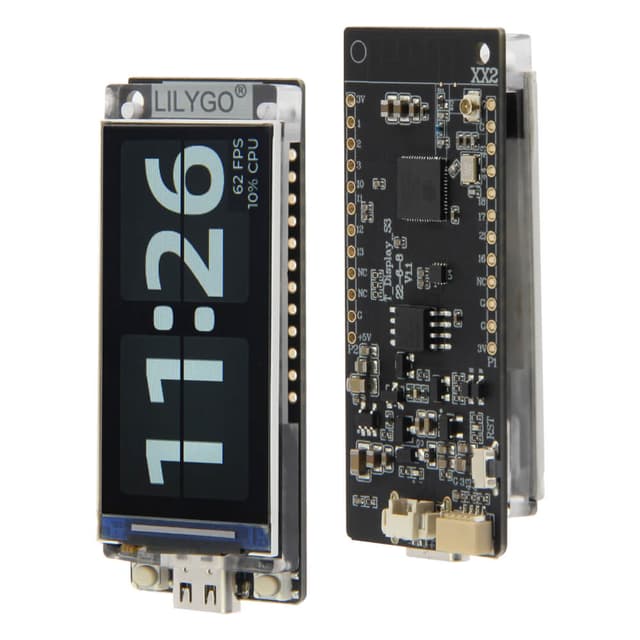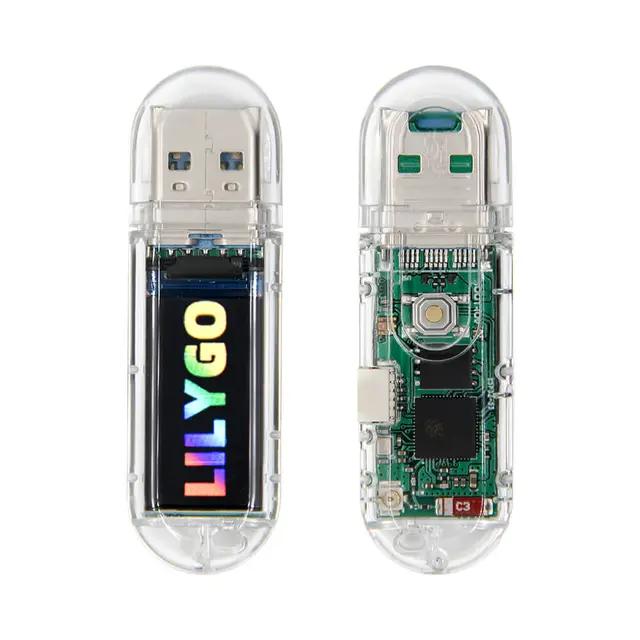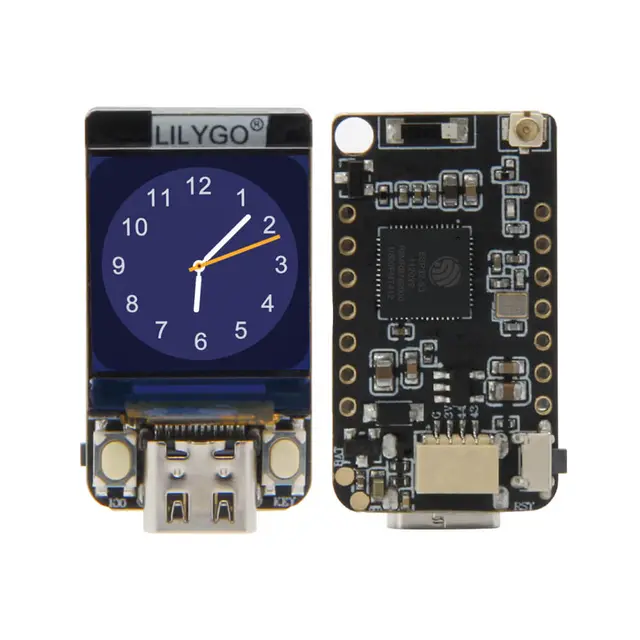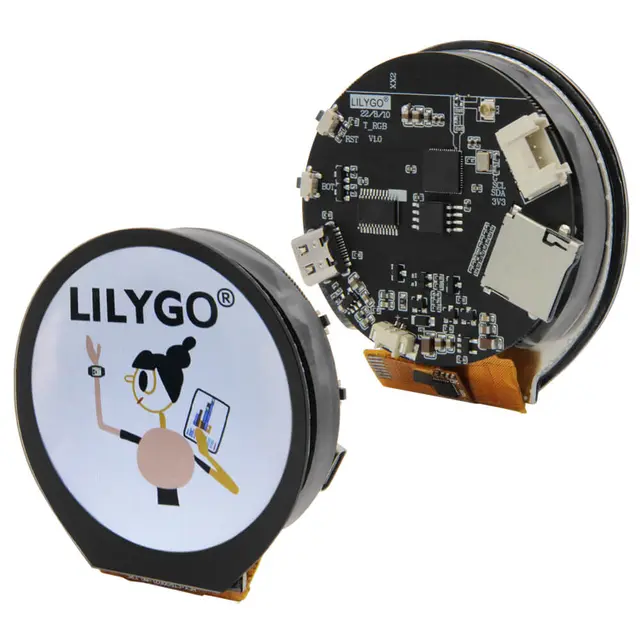
LILYGO T-Display S3 AMOLED
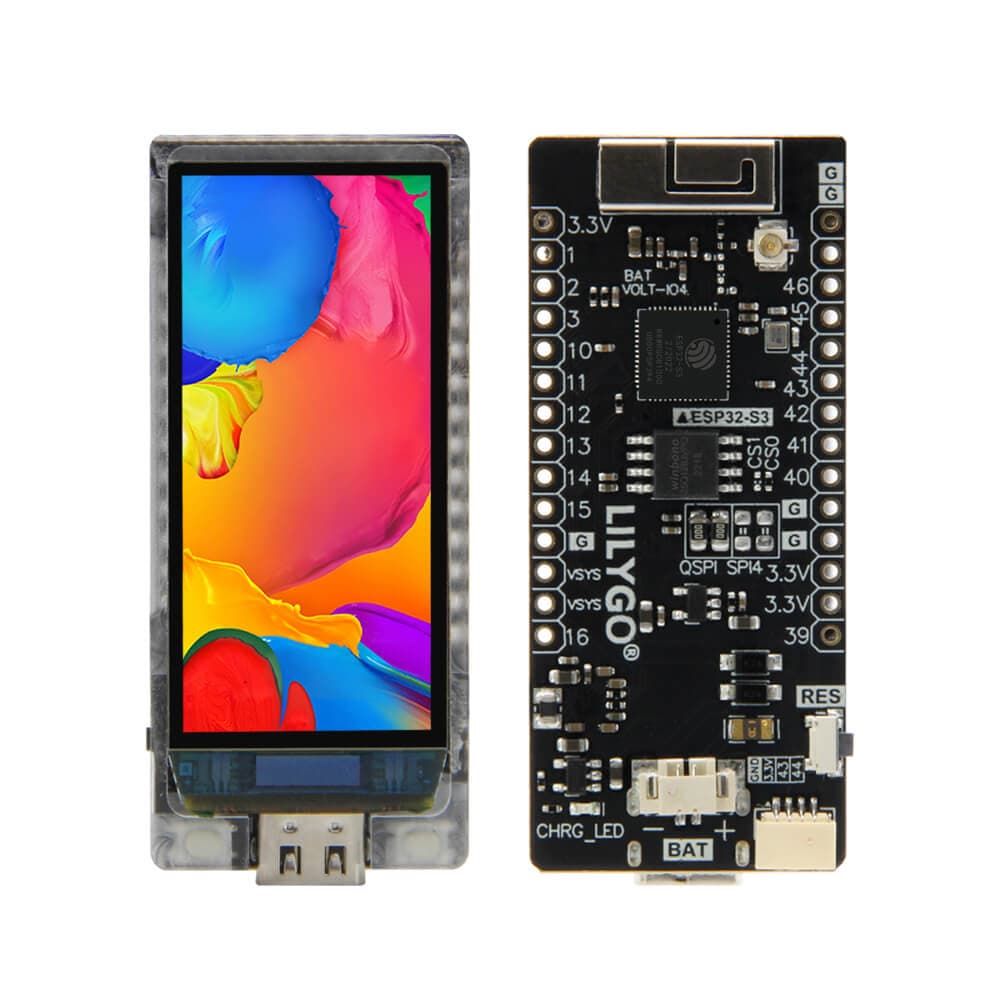
ESP32-S3 board with 1.91-inch RM67162 AMOLED display (240×536), optional touch, 16MB flash, 8MB PSRAM, and USB-C — delivering vivid OLED visuals for IoT dashboards and smart displays.
$26.44
Tap any value to browse matching devices
Specifications
Components
Espressif ESP32-S3R8 dual-core Xtensa LX7 at 240MHz with 8MB integrated PSRAM, WiFi, BLE 5.0, USB OTG.
Raydium RM67162 AMOLED display controller for the 1.91-inch 240×536 panel via QSPI interface.
Hynitron CST816S single-point touch controller with gesture recognition on touch variants.
Bus Interfaces
GPIO Map
Overview
The LILYGO T-Display S3 AMOLED features a 1.91-inch RM67162 AMOLED panel delivering 240×536 pixels at full IPS viewing angles, driven over a high-speed QSPI interface by the Espressif ESP32-S3R8. AMOLED technology provides true blacks, vibrant colors, and superior power efficiency on dark-background UIs compared to standard TFT displays, making it ideal for watch faces, notification panels, and status boards.
The ESP32-S3R8 brings dual-core Xtensa LX7 at 240MHz, 8MB integrated PSRAM, 16MB flash, WiFi 802.11 b/g/n, BLE 5.0, and native USB OTG. Touch variants add the CST816S capacitive touch controller for interactive applications. The board's compact form factor and the tall aspect ratio of the AMOLED panel make it well-suited for wearable devices, handheld gadgets, and IoT information panels.
The LILYGO AMOLED Series GitHub repository provides comprehensive examples for display graphics, touch interaction, and wireless communication using Arduino IDE or PlatformIO.
Use Cases
5Smart Home Dashboard
Wall-mounted or tabletop display showing Home Assistant dashboards, sensor readings, and smart home controls.
Weather Display
A dedicated screen that shows weather information including current conditions, temperature, humidity, pressure, and multi-day forecasts.
Digital Signage
Driving displays for advertising, information kiosks, or menu boards with 4K video and dynamic content.
Wearable
Body-worn computing devices including smartwatches, fitness bands, and health monitors.
IoT
Internet of Things applications including connected sensors, actuators, and smart devices that communicate over WiFi, BLE, LoRa, or other wireless protocols.
Resources
Where to Buy
Explore more of the directory — popular use cases, firmware, and specs to browse next.