LILYGO T-Deck
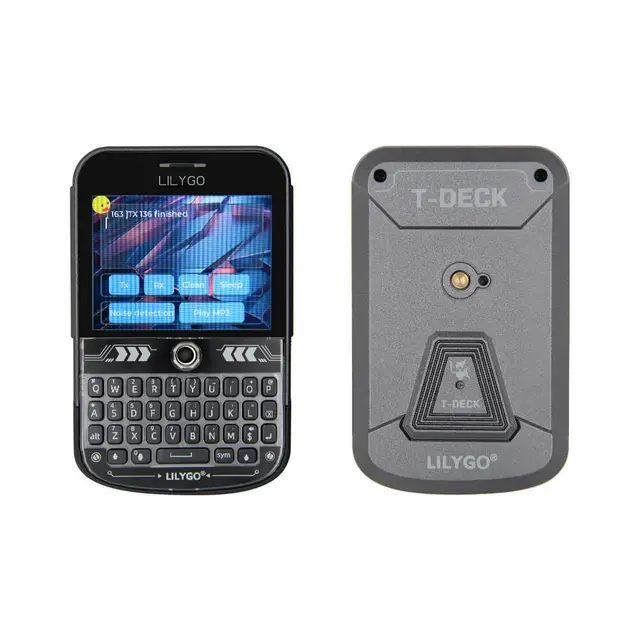
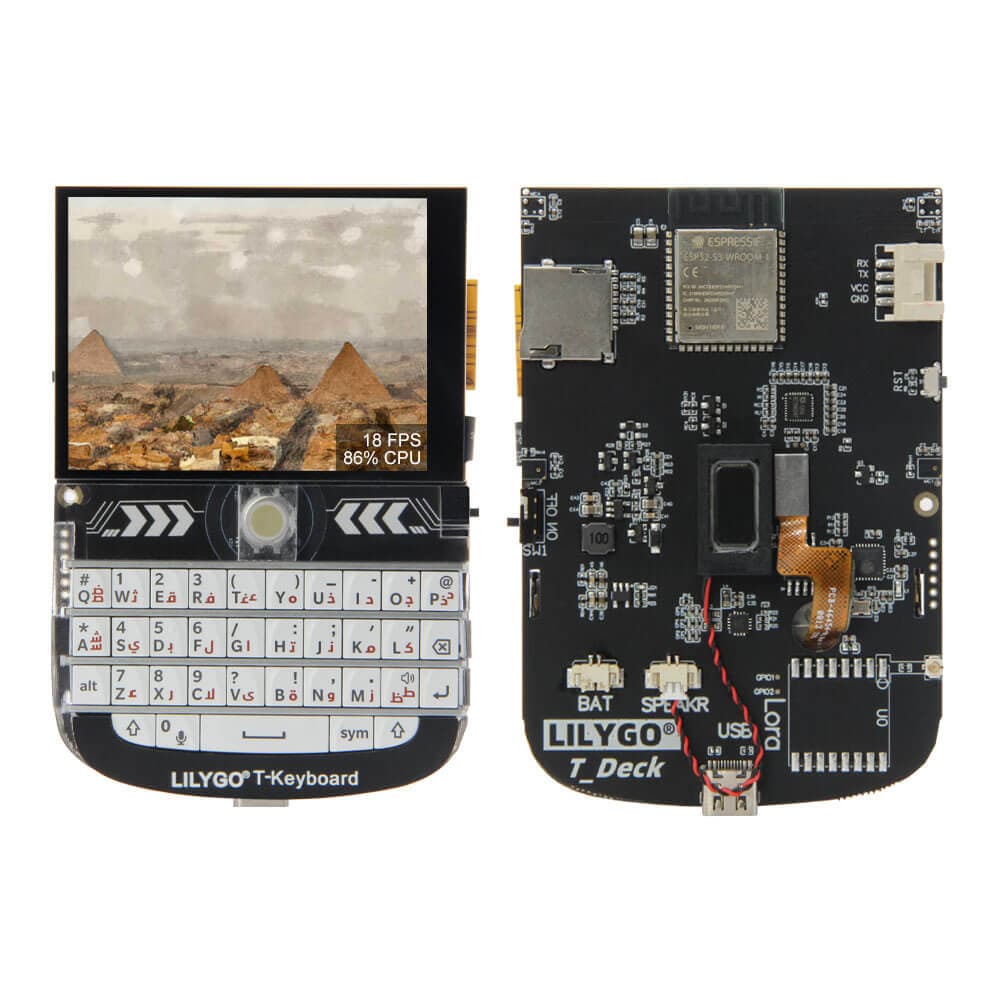
ESP32-S3 handheld terminal with 2.8-inch IPS display, mini QWERTY keyboard, trackball, optional SX1262 LoRa, speaker, and microphone — a self-contained portable communicator running Meshtastic and MeshCore.
$43.08
Tap any value to browse matching devices
Specifications
Certifications
Components
Espressif ESP32-S3FN16R8 dual-core Xtensa LX7 at 240MHz with 16MB flash, 8MB PSRAM, WiFi, BLE 5.0, and USB OTG.
Semtech SX1262 LoRa transceiver with +22 dBm output and -148 dBm sensitivity for long-range mesh networking.
Sitronix ST7789 TFT LCD driver for the 2.8-inch 320×240 IPS display over SPI interface.
Espressif ESP32-C3 dedicated keyboard matrix controller communicating with the main S3 via I2C.
Panasonic AN48841B hall effect sensors (4×) powering the trackball for directional navigation input.
Analog Devices MAX98357A I2S Class-D amplifier for onboard speaker output.
MEMS microphone for audio capture and voice input on the T-Deck.
Bus Interfaces
GPIO Map
Overview
The LILYGO T-Deck is a handheld portable terminal combining the ESP32-S3FN16R8 with a mini QWERTY keyboard, trackball navigation, and a 2.8-inch IPS display (320×240) into a pocket-sized device. With optional SX1262 LoRa radio (433/868/915 MHz), the T-Deck becomes a fully self-contained Meshtastic or MeshCore off-grid messenger — capable of sending and receiving text messages over kilometers without cellular or WiFi infrastructure.
The ESP32-S3 provides WiFi 802.11 b/g/n, BLE 5.0, 16MB flash, and 8MB PSRAM. A MAX98357A amplifier drives a speaker, and the MSM381A MEMS microphone enables voice input. Four AN48841B hall effect sensors power the trackball for cursor navigation. The keyboard controller is managed by a dedicated ESP32-C3 coprocessor over I2C, keeping the main S3 free for application logic.
Unlike the T-Deck Plus, the base T-Deck does not include a GPS module. A LiPo battery via JST connector powers portable operation. The board supports Arduino, MicroPython, and PlatformIO, with the official T-Deck GitHub repository providing examples for LoRa messaging, display, and keyboard integration.
Use Cases
4Portable Terminal
Handheld computing device with keyboard and display for field use and on-the-go interaction.
LoRa Mesh Networking
Building off-grid mesh communication networks using LoRa radio for text messaging, location sharing, and sensor data relay without cellular or internet infrastructure.
Off-Grid Communication
Text messaging and data exchange in areas without cellular or internet coverage.
IoT Gateway
Acting as a local IoT gateway that aggregates data from sensors, runs MQTT broker, Node-RED, or Home Assistant, and bridges to the cloud.
Resources
Where to Buy
Explore more of the directory — popular use cases, firmware, and specs to browse next.