duckyPad Pro
20-key open-source mechanical macropad with duckyScript engine, ESP32-S3, 1.5\" OLED, Bluetooth 5.0, hot-swap switches, dual rotary encoders, and microSD — a powerful Stream Deck alternative.
$84.99
Tap any value to browse matching devices
Specifications
Components
Espressif ESP32-S3FN4R2 dual-core Xtensa LX7 SoC at 240MHz with 4MB flash, 2MB PSRAM, WiFi 802.11 b/g/n, and Bluetooth 5.0 LE.
Solomon Systech SSD1306-compatible OLED display controller driving the 128x128 1.5-inch OLED via SPI interface with 256-step brightness control.
Two Bourns PEC12R series incremental rotary encoders with integrated tactile push-switch, supporting max 24mm knob diameter.
20 Kailh hot-swap sockets compatible with Cherry MX 3-pin and 5-pin mechanical switches for tool-free switch replacement.
20 north-facing WS2812B-compatible addressable RGB LEDs for per-key lighting, driven via ESP32-S3 RMT peripheral at 10MHz.
Bus Interfaces
GPIO Map
Overview
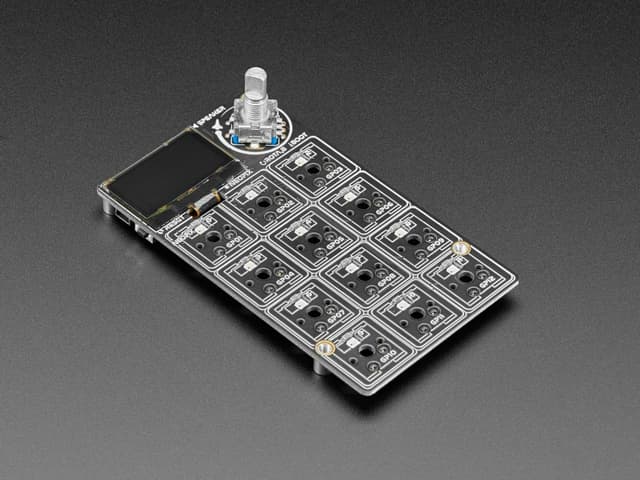
The duckyPad Pro is a 20-key programmable mechanical macropad built around the ESP32-S3 dual-core processor, designed as a powerful open-source alternative to commercial macro pads and stream decks. Unlike QMK/VIA-based devices, it runs a custom Turing-complete duckyScript engine on a 32-bit bytecode virtual machine, supporting variables, conditionals, loops, and function calls — enabling complex automation workflows that go far beyond simple key remapping.
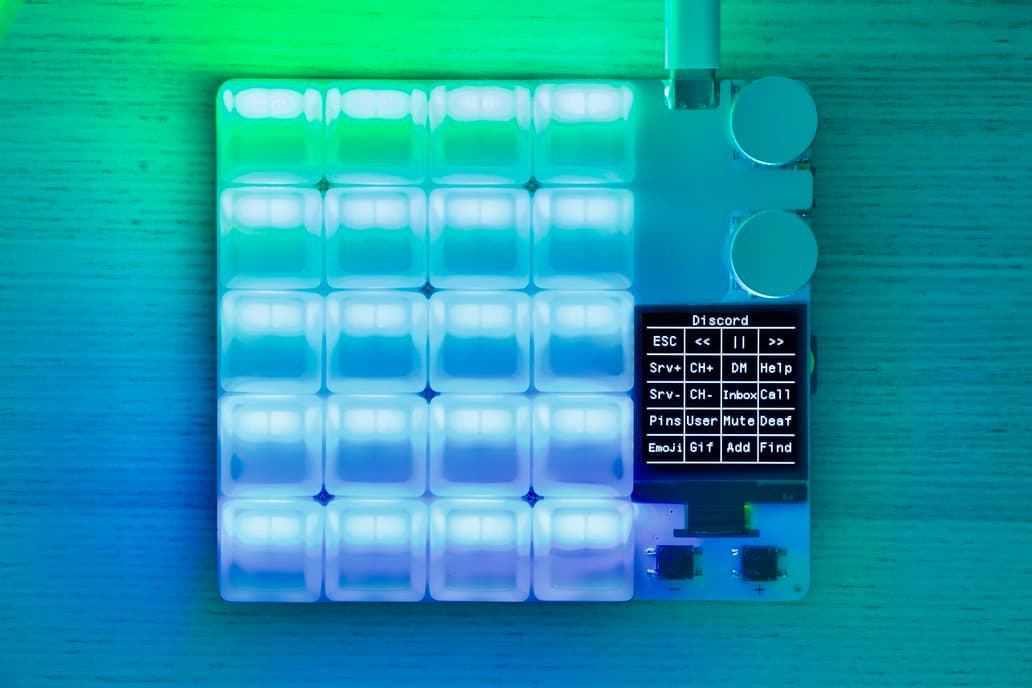
Each of the 20 hot-swap Cherry MX-compatible keys features a north-facing ARGB LED for per-key RGB lighting, and the device includes two Bourns PEC12R rotary encoders with tactile push-switches for volume control, scrolling, or any custom function. A 1.5-inch 128x128 OLED display driven via SPI shows real-time key labels, profile names, and script status, with configurable portrait/landscape orientation and burn-in prevention.
The duckyPad Pro supports 64 profiles with automatic switching based on the active application window, storing over 3,700 macros (each up to 60,000+ characters) on the microSD card. Bluetooth 5.0 enables wireless operation with an external USB battery bank, while USB-C handles wired connectivity and firmware updates via DFU mode. The expansion module system allows daisy-chaining up to 32 additional input channels for foot pedals and external switches.
All hardware schematics, PCB layouts, and firmware source code are released under the MIT license, with a cross-platform configurator application for Windows, macOS, and Linux. The firmware is built on ESP-IDF v5.3.1, giving tinkerers full access to customize every aspect of the device's behavior.
Use Cases
6Macro Keyboard
Custom programmable keyboard with configurable keys, knobs, and macros for productivity.
Programmable Keyboard
Fully programmable mechanical keyboard with custom key mappings, layers, and macros.
USB HID Device
Implementing a USB Human Interface Device such as a keyboard, mouse, game controller, or MIDI device using native USB support.
Macro Scripting
Automated macro scripting for repetitive tasks, keyboard shortcuts, and workflow automation.
Stream Deck Alternative
Open-source alternative to Elgato Stream Deck for streaming, content creation, and productivity.
Desktop Automation
Desktop workflow automation with programmable keys, macros, and application-specific profiles.
Resources
Where to Buy
Explore more of the directory — popular use cases, firmware, and specs to browse next.