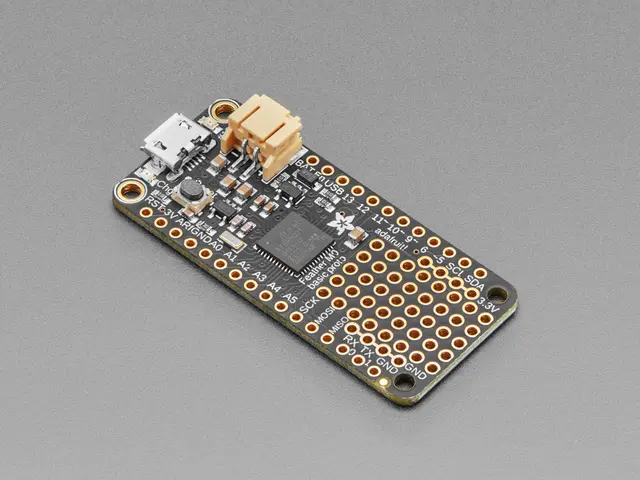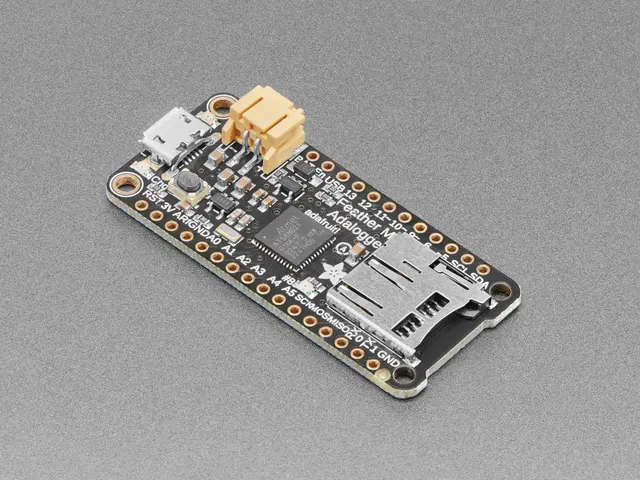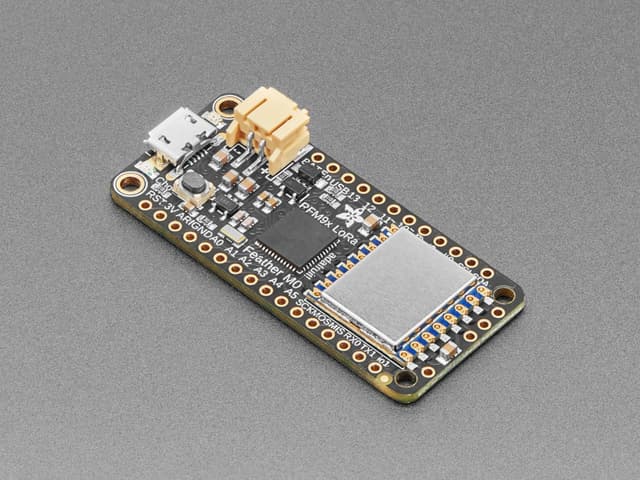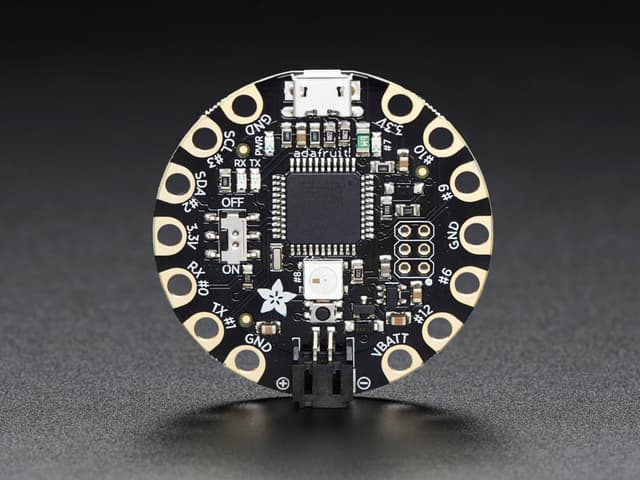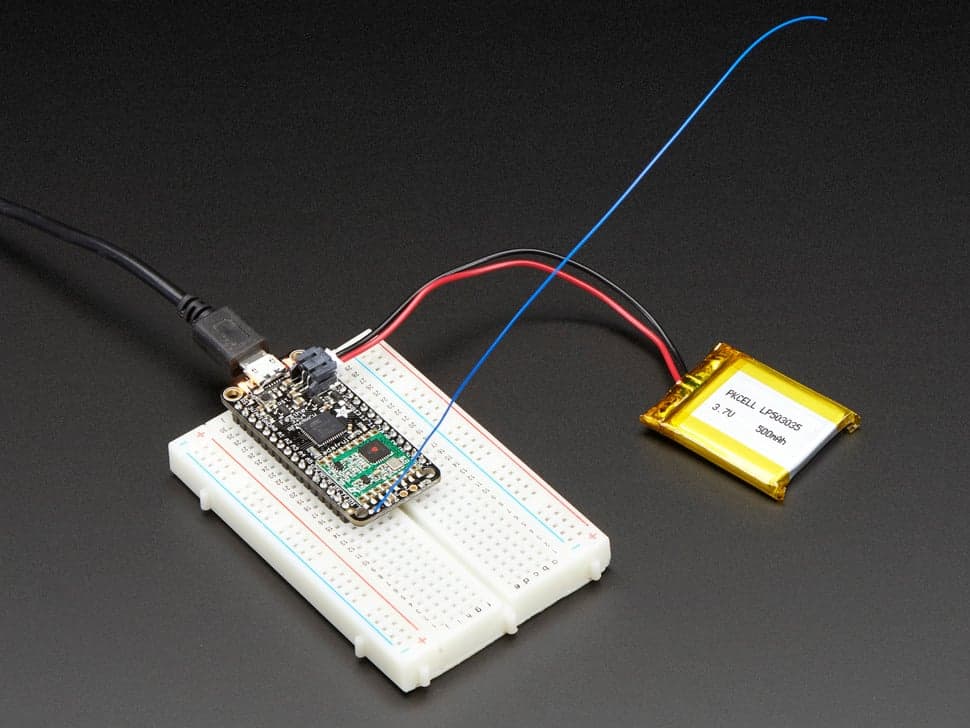
Adafruit Feather 32u4 RFM96 LoRa (433 MHz)
Feather-format development board combining the ATmega32u4 microcontroller with an RFM96 LoRa 433 MHz transceiver for long-range, low-power IoT applications.
$34.95
Tap any value to browse matching devices
Specifications
Components
8-bit AVR microcontroller with native USB, 32KB flash, 2KB SRAM, running at 8MHz on 3.3V
HopeRF RFM96 LoRa transceiver (SX1276-based) operating at 433 MHz with configurable spreading factor for long-range, low-power communication
Microchip MCP73831 single-cell LiPo/LiIon battery charger IC providing up to 100mA charge current via USB
Bus Interfaces
GPIO Map
Overview
The Adafruit Feather 32u4 RFM96 is a compact, all-in-one development board that pairs the popular ATmega32u4 microcontroller with an HopeRF RFM96 LoRa transceiver operating at 433 MHz. Built on Adafruit's Feather form factor, it delivers the range and penetration advantages of LoRa modulation in a tiny, breadboard-friendly package suited to sensor nodes, remote monitoring, and IoT deployments requiring kilometre-scale wireless links.
The ATmega32u4 is an 8-bit AVR microcontroller running at 8 MHz with 32KB of flash and 2KB of SRAM. It features native USB support, eliminating the need for a separate USB-to-serial chip and enabling USB HID, CDC, and MIDI device emulation out of the box. The 3.3V operating voltage ensures compatibility with modern sensors and radio modules without level shifting.
The RFM96 module is based on the Semtech SX1276 silicon and operates in the 433 MHz ISM band. LoRa spread-spectrum modulation provides exceptional link budgets — often exceeding 148 dB — enabling communication over several kilometres in open environments. The chip supports configurable spreading factors, coding rates, and bandwidth, allowing a fine-grained trade-off between data rate and range. It is fully supported by the RadioHead and Arduino-LoRa libraries.
Conforming to the Feather specification, the board measures 51.0 × 22.8 × 8 mm and includes a built-in 100 mA LiPo charger (MCP73831), a JST PH connector for a 3.7 V LiPo battery, and Micro-USB for programming and charging. Mounting holes and a U.FL/IPEX antenna connector complete the hardware. The board is fully supported by the Arduino IDE and PlatformIO, and Adafruit publishes open-source schematics and PCB layout files.
Use Cases
4IoT
Internet of Things applications including connected sensors, actuators, and smart devices that communicate over WiFi, BLE, LoRa, or other wireless protocols.
LoRa Mesh Networking
Building off-grid mesh communication networks using LoRa radio for text messaging, location sharing, and sensor data relay without cellular or internet infrastructure.
Environmental Monitoring
Monitoring environmental conditions like temperature, humidity, air quality, and weather data using remote sensors.
Asset Tracking
Tracking the location and status of physical assets like vehicles, packages, and equipment.
Resources
Where to Buy
Explore more of the directory — popular use cases, firmware, and specs to browse next.