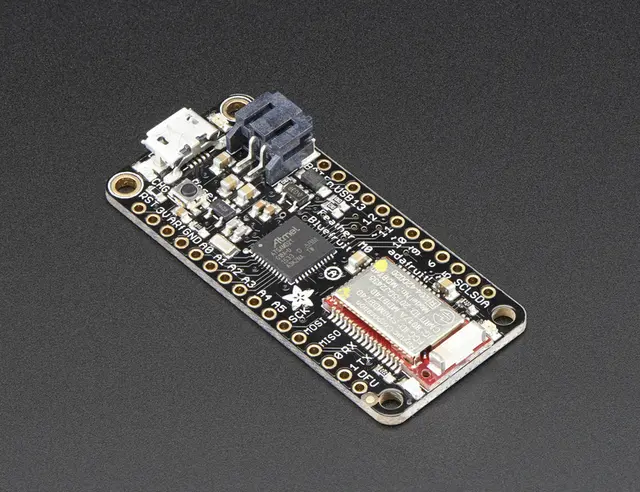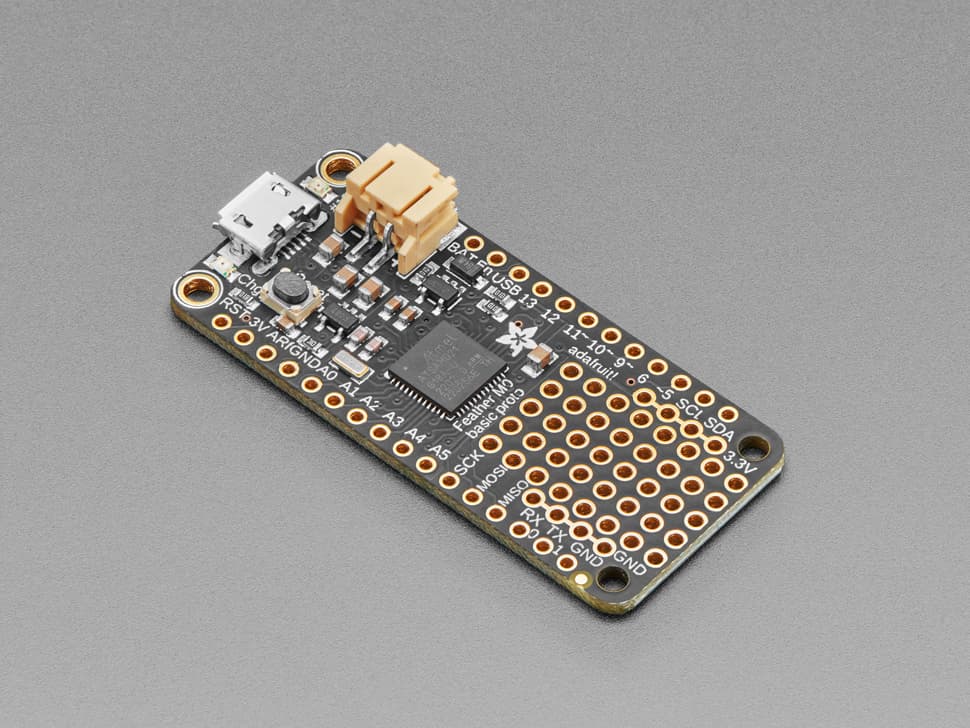
Adafruit Feather M0 Basic Proto
Feather-format ATSAMD21 ARM Cortex-M0+ board at 48 MHz, 3.3V with 256KB flash, 32KB RAM, LiPo charging, native USB, 12-bit ADC/DAC, and RTC crystal — lightweight and CircuitPython-capable.
$19.95
Tap any value to browse matching devices
Specifications
Components
Microchip ARM Cortex-M0+ at 48 MHz, 256KB flash, 32KB RAM, native USB, 12-bit ADC/DAC, hardware RTC
Microchip MCP73831 100mA LiPo/LiIon charge management IC
Bus Interfaces
GPIO Map
Overview
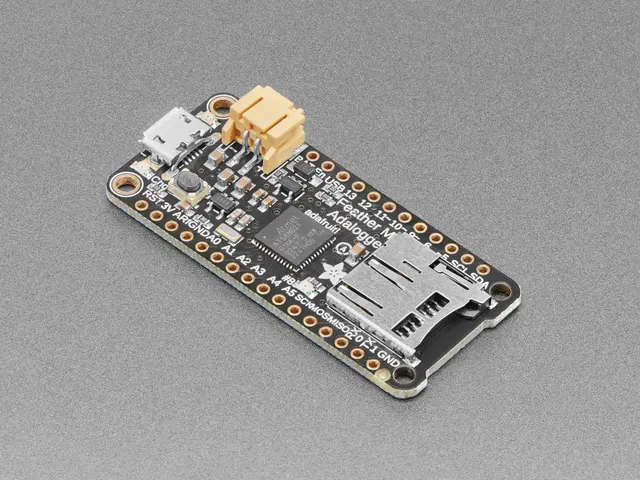
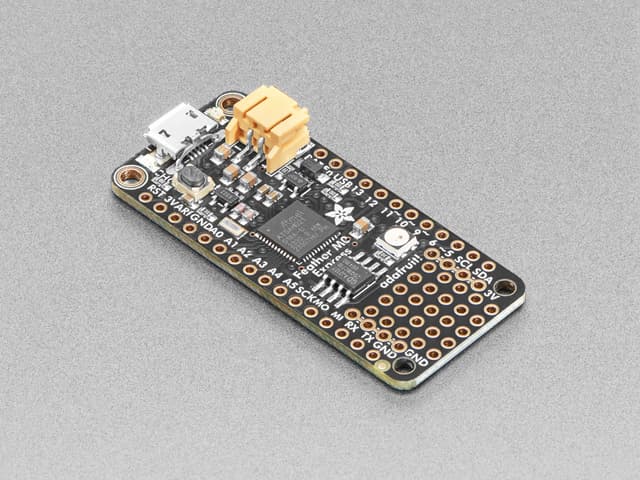
The Adafruit Feather M0 Basic Proto is a 32-bit ARM Cortex-M0+ development board in the Feather form factor, built around the Microchip ATSAMD21G18 running at 48 MHz. It represents a significant step up from AVR-based Feathers, offering 256KB of flash, 32KB of RAM, 12-bit ADC/DAC, and native USB support — all in a thin, lightweight 51 × 23 mm package at just 4.6 grams.
The ATSAMD21 handles USB natively, enabling the board to appear as a USB disk drive for drag-and-drop CircuitPython firmware uploads. It also supports Arduino IDE via the Arduino SAMD board package, providing PWM on all pins, six 12-bit analog inputs, one 10-bit DAC output, and standard Serial, I2C, and SPI interfaces. A 32.768 kHz RTC crystal is included for timekeeping applications.
An integrated 100mA LiPoly charger manages battery charging when USB power is present, with automatic switchover between battery and USB. The 3.3V regulator provides 500mA peak output. A small prototyping area with through-holes is included on the PCB for minor circuit additions.
As the first Feather to support CircuitPython, the M0 Basic Proto established the SAMD21 as a core platform across dozens of Feather variants and FeatherWing accessories. Its combination of 32-bit performance, USB versatility, and compact size makes it suitable for data logging, audio, USB instruments, and battery-powered sensor nodes.
Use Cases
6portable
battery-powered
Data Logging
Recording time-stamped sensor readings, environmental data, or system events to local storage.
Audio
Audio playback, streaming, amplification, digital signal processing, and music projects.
IoT
Internet of Things applications including connected sensors, actuators, and smart devices that communicate over WiFi, BLE, LoRa, or other wireless protocols.
Prototyping
Rapid hardware prototyping and proof-of-concept development with breadboard-friendly form factors and accessible development environments.
Resources
Where to Buy
Explore more of the directory — popular use cases, firmware, and specs to browse next.