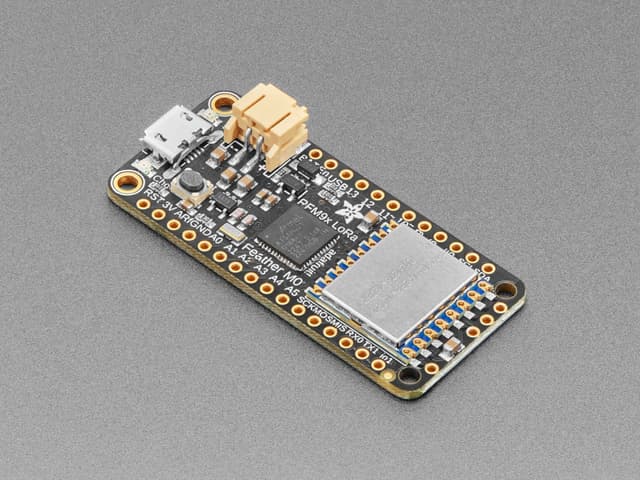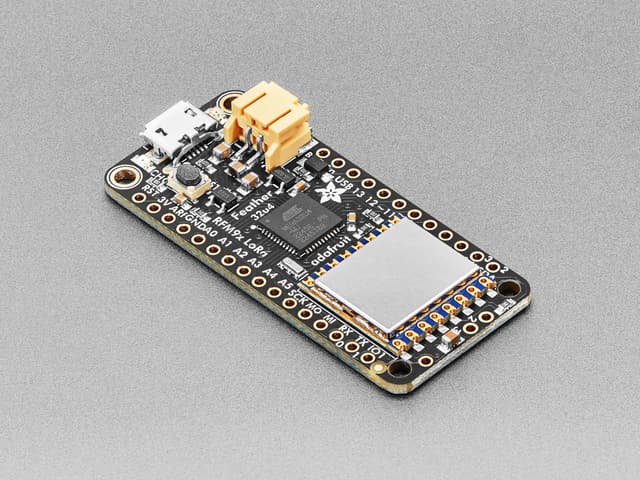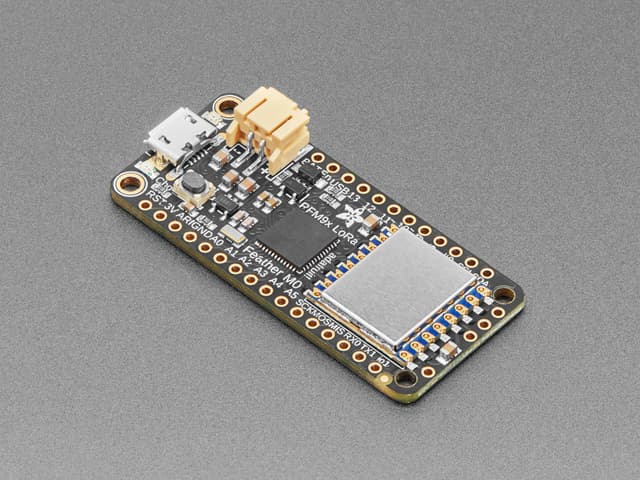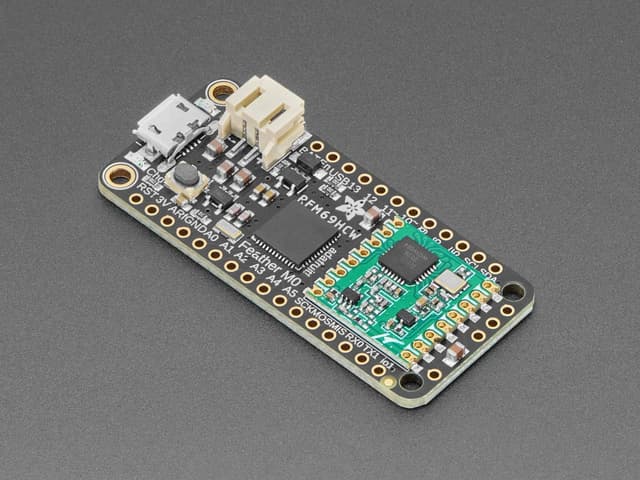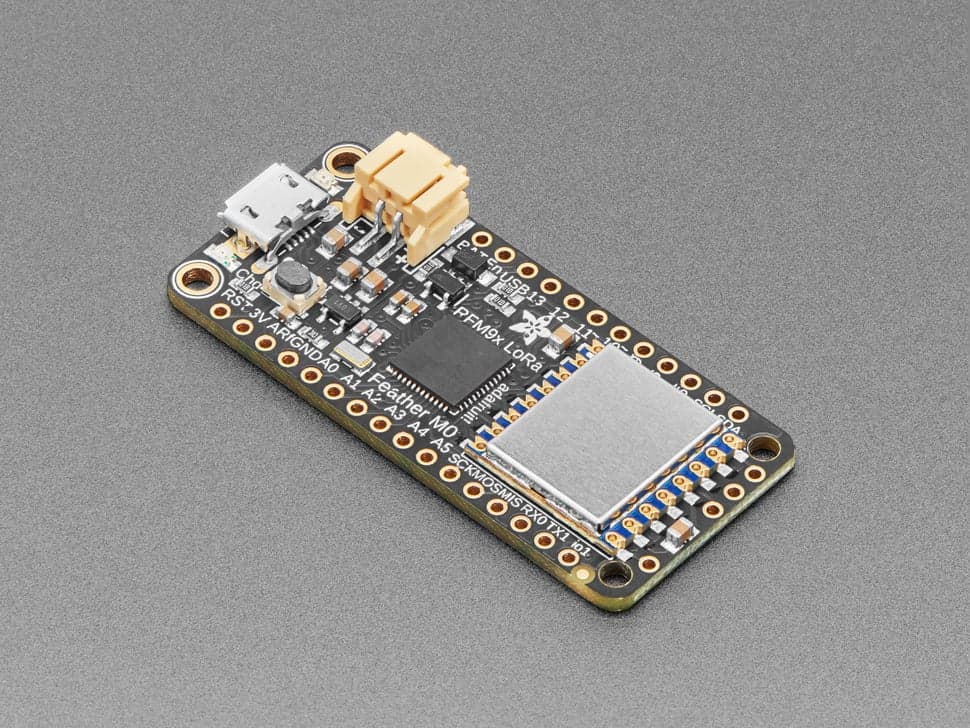
Adafruit Feather M0 RFM96 LoRa Radio (433 MHz)
ATSAMD21G18 ARM Cortex-M0+ Feather board with RFM96 LoRa radio at 433 MHz. Spread-spectrum modulation for long-range links, 256KB flash, 32KB RAM, native USB, and built-in LiPo charger.
$34.95
Tap any value to browse matching devices
Specifications
Components
HopeRF RFM96 LoRa 433MHz transceiver based on Semtech SX1276, configurable SF7-SF12, up to +20 dBm TX.
Bus Interfaces
GPIO Map
Overview
The Adafruit Feather M0 RFM96 LoRa 433 MHz combines the ATSAMD21G18 ARM Cortex-M0+ microcontroller with the HopeRF RFM96 LoRa radio module for operation in the 433 MHz ISM band. LoRa's spread-spectrum modulation technique allows signals to be received well below the noise floor, enabling multi-kilometre range at low data rates — ideal for sensor networks, asset tracking, and environmental monitoring.
The ATSAMD21G18 runs at 48 MHz with 256KB of flash and 32KB of SRAM, along with native USB support. The RFM96 module is based on the Semtech SX1276 chipset and supports LoRa modulation with configurable spreading factor, bandwidth, and coding rate. A u.FL connector accepts a tuned 433 MHz external antenna to maximize range.
All standard Feather peripherals are included: 20 GPIO pins, 6 analog inputs, one DAC output, 8 PWM channels, and hardware I2C, SPI, and UART. A JST connector and 100mA LiPo charger allow portable battery operation. The Feather form factor ensures compatibility with the full range of Feather FeatherWing accessories.
The RadioHead and LMIC (LoRaWAN-in-C) libraries are both compatible with this board, supporting everything from simple peer-to-peer LoRa links to full LoRaWAN network stack operation. The 433 MHz band is particularly popular in Europe and Asia for LoRa deployments.
Use Cases
5IoT
Internet of Things applications including connected sensors, actuators, and smart devices that communicate over WiFi, BLE, LoRa, or other wireless protocols.
LoRa Mesh Networking
Building off-grid mesh communication networks using LoRa radio for text messaging, location sharing, and sensor data relay without cellular or internet infrastructure.
Environmental Monitoring
Monitoring environmental conditions like temperature, humidity, air quality, and weather data using remote sensors.
Asset Tracking
Tracking the location and status of physical assets like vehicles, packages, and equipment.
Prototyping
Rapid hardware prototyping and proof-of-concept development with breadboard-friendly form factors and accessible development environments.
Resources
Where to Buy
Explore more of the directory — popular use cases, firmware, and specs to browse next.