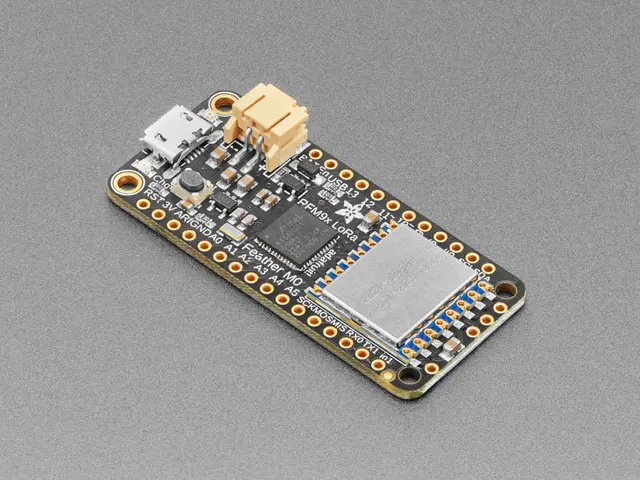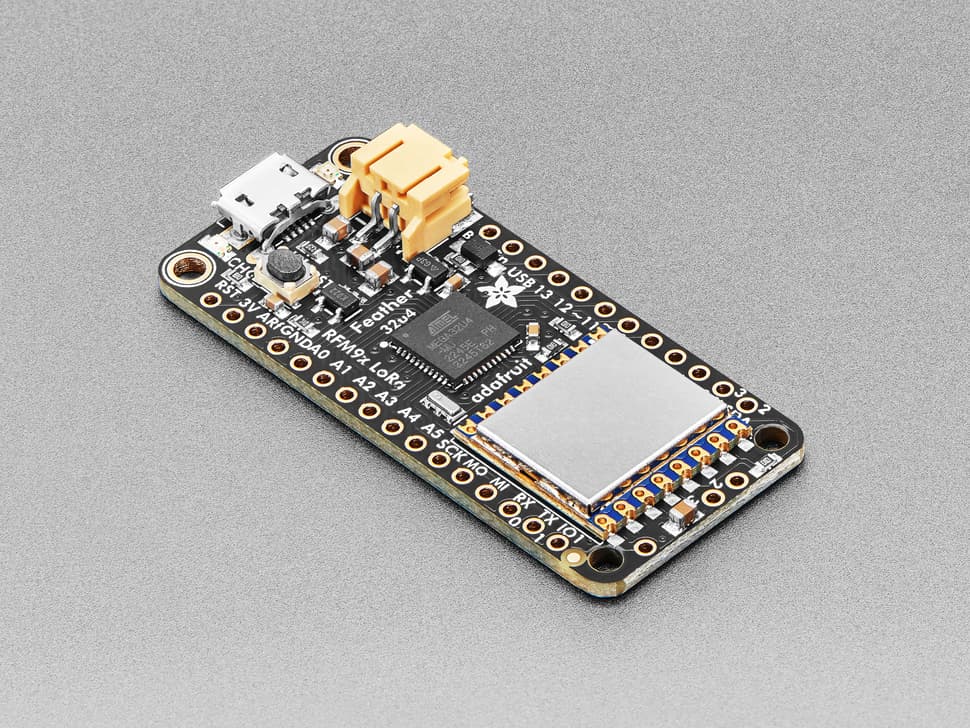
Adafruit Feather 32u4 RFM96 LoRa 433 MHz
ATmega32u4 Feather board with RFM96W SX1278 LoRa radio for 433 MHz long-range communication. Achieves 2+ km range with quarter-wave antennas, supports LoRaWAN, and includes a built-in LiPo charger.
$34.95
Tap any value to browse matching devices
Specifications
Components
HopeRF RFM96W LoRa module based on Semtech SX1278, 433MHz, +5 to +20dBm TX, SF6-SF12, >2km range.
Bus Interfaces
GPIO Map
Overview
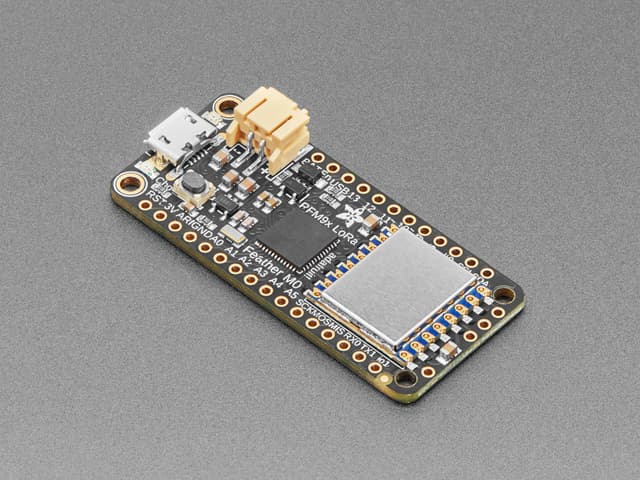
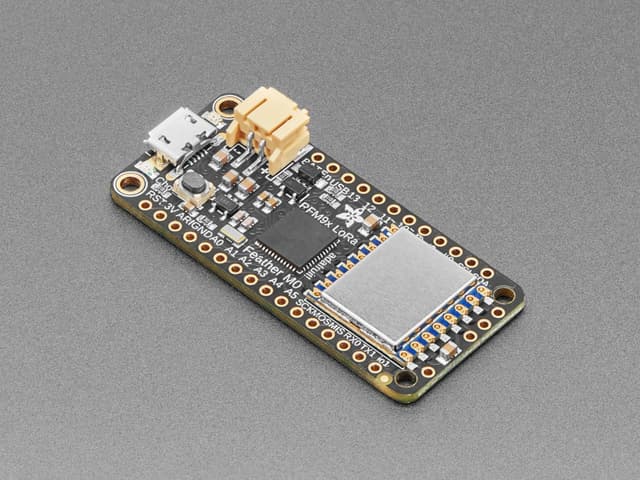
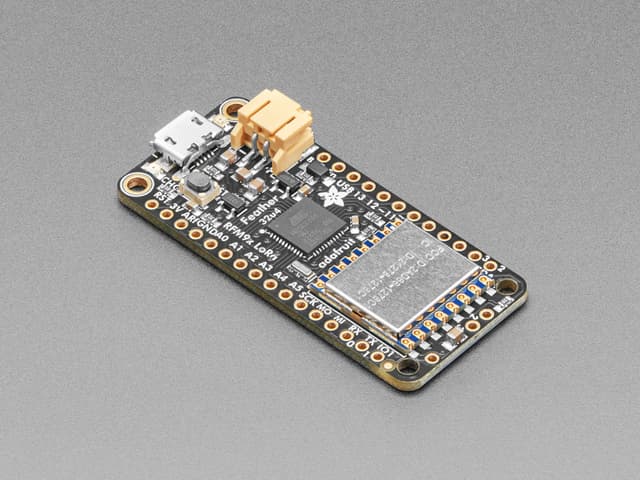
The Adafruit Feather 32u4 RFM96 LoRa 433 MHz is the 433 MHz variant of the LoRa Feather series. It pairs the ATmega32u4 at 8 MHz with HopeRF's RFM96W module based on the Semtech SX1278 LoRa chipset, targeting the 433 MHz ISM band prevalent in much of Asia, South America, and parts of Europe.
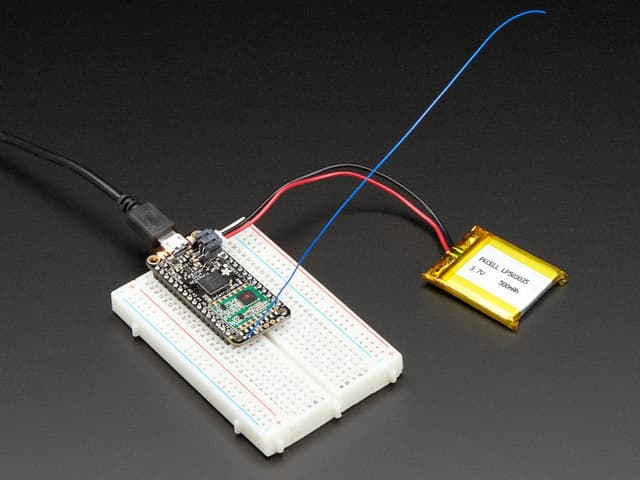
The lower 433 MHz frequency provides better RF propagation characteristics compared to 868/915 MHz — longer wavelengths penetrate buildings and terrain more effectively, which can extend range or improve reliability in obstructed environments. Like the 868/915 MHz variant, the RFM96W achieves over 2 km of range with quarter-wave wire antennas and supports transmit powers from +5 to +20 dBm.
The board includes all standard Feather features: 20 GPIO pins, 10 analog inputs, 7 PWM outputs, hardware SPI/I2C/UART, native USB, a u.FL antenna connector, and a 100mA LiPo charger. The RadioHead library and LMIC LoRaWAN stack work with this board, providing both raw LoRa packet communication and LoRaWAN support where 433 MHz LoRaWAN networks are available.
This board is the right choice for deployments in 433 MHz regions or for projects that benefit from the propagation advantages of the lower frequency band.
Use Cases
5LoRa IoT
IoT applications using LoRa radio for long-range, low-power sensor connectivity.
Long-Range IoT
IoT deployments using LoRa or sub-GHz radio for communication ranges of several kilometers.
Remote Sensor Nodes
Deploy wireless sensor nodes in remote locations using LoRa, NB-IoT, or cellular connectivity.
IoT
Internet of Things applications including connected sensors, actuators, and smart devices that communicate over WiFi, BLE, LoRa, or other wireless protocols.
Prototyping
Rapid hardware prototyping and proof-of-concept development with breadboard-friendly form factors and accessible development environments.
Resources
Where to Buy
Explore more of the directory — popular use cases, firmware, and specs to browse next.