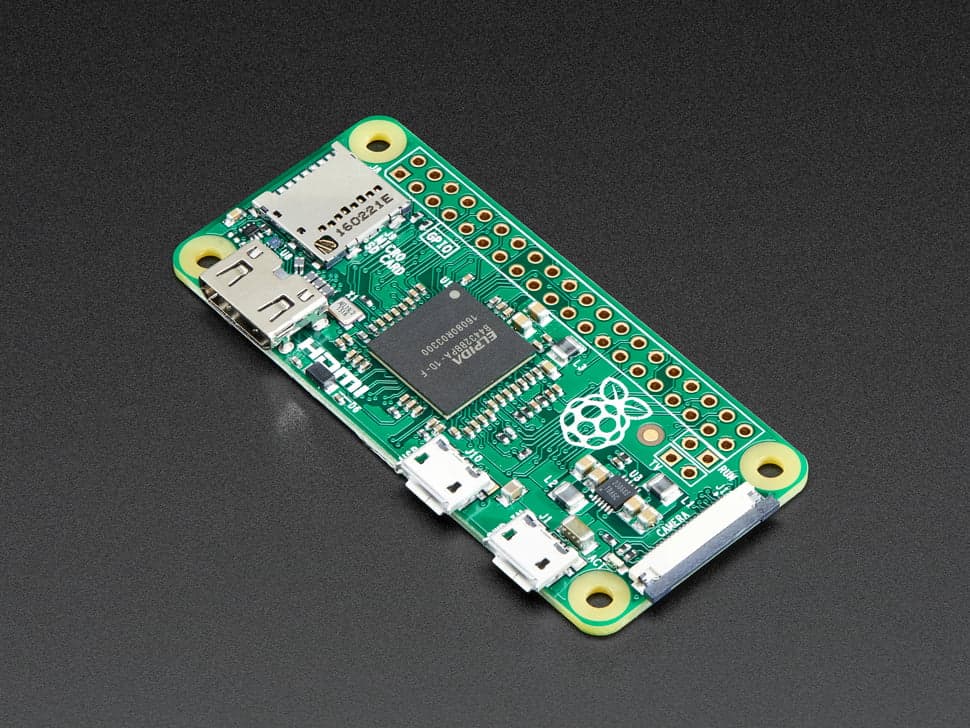
Raspberry Pi Zero v1.3
Ultra-compact $10 single-board Linux computer with BCM2835 ARM at 1 GHz, 512MB RAM, micro SD, mini HDMI, two micro USB ports, and camera connector — the original Raspberry Pi Zero with camera support added in v1.3.
$10.00
Tap any value to browse matching devices
Specifications
Components
Broadcom BCM2835 single-core ARM11 at 1 GHz with VideoCore IV GPU, 512MB RAM, running full Linux from microSD
Bus Interfaces
GPIO Map
Overview
The Raspberry Pi Zero v1.3 is the smallest and most affordable member of the Raspberry Pi family — a fully functional Linux single-board computer measuring 65 × 31 × 5 mm and weighing just 9 grams. Priced at $10, it brought full Raspberry Pi OS compatibility to an ultra-compact form factor suitable for IoT, wearable, and embedded deployments.
Powered by the Broadcom BCM2835 single-core ARM11 processor at 1 GHz with 512MB of RAM, the Pi Zero runs a full Linux operating system from a microSD card. Version 1.3 was the first Pi Zero to include a camera connector (using the smaller Zero-specific flat flex cable), enabling projects that combine full Linux processing with camera vision without dedicated CSI adapters.
Connectivity is provided through two Micro USB ports — one for power input and one for USB data (OTG capable) — and a Mini HDMI port supporting up to 1080p output. The 40-pin GPIO header is unpopulated (sold without pre-soldered headers), providing flexibility for custom installations. WiFi and Bluetooth are absent on this model (found in the Pi Zero W).
The Pi Zero v1.3 is fully software-compatible with all other Raspberry Pi models running Raspberry Pi OS, supporting Python, Node.js, and virtually any Linux software. Its low power draw makes it ideal for battery-operated Linux projects, retro gaming handhelds, and embedded vision applications where computational complexity exceeds what a microcontroller can handle.
Use Cases
6Embedded Linux
Running a full Linux distribution in embedded or headless applications, such as servers, gateways, edge devices, and automation controllers.
IoT
Internet of Things applications including connected sensors, actuators, and smart devices that communicate over WiFi, BLE, LoRa, or other wireless protocols.
camera-vision
Retro Gaming
Running classic game emulators (NES, Game Boy, Pong) or building handheld game consoles with display and controls.
home-automation
maker
Resources
Where to Buy
Explore more of the directory — popular use cases, firmware, and specs to browse next.