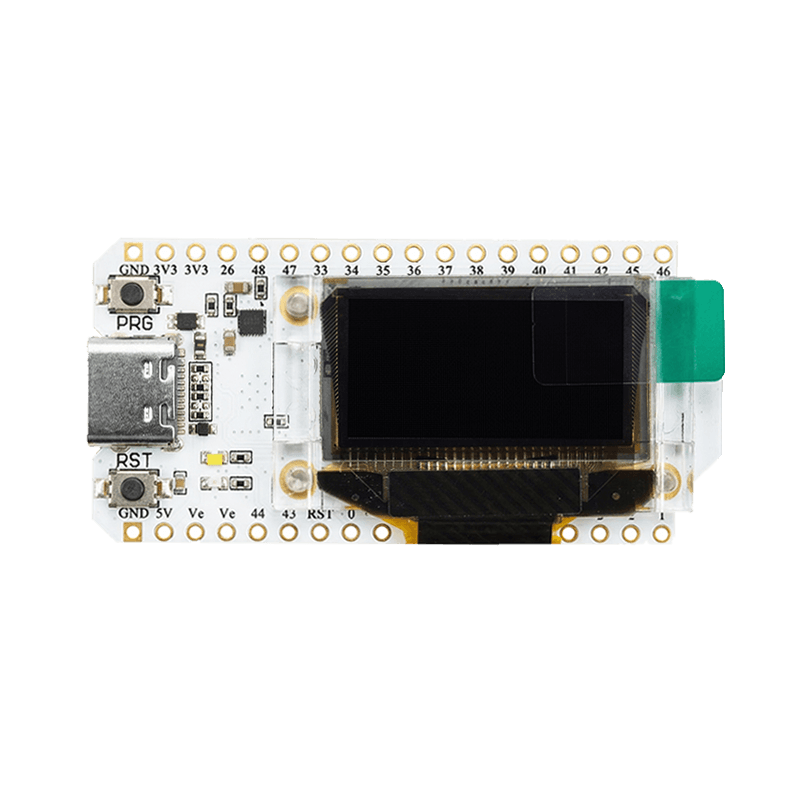
Heltec WiFi Kit 32 (V3)
ESP32-S3-based IoT development board with built-in 0.96" OLED display, lithium battery management, WiFi and Bluetooth 5.0 connectivity, and USB-C interface in a compact 50mm form factor.
$12.99
Tap any value to browse matching devices
Specifications
Components
Xtensa LX7 dual-core processor at 240MHz with 8MB SiP flash, 512KB SRAM, WiFi 802.11 b/g/n, Bluetooth 5.0, hardware crypto acceleration, and 34 programmable GPIOs.
Integrated OLED display controller driving a 0.96-inch 128×64 pixel monochrome display via I2C, used for showing sensor data, status info, and debug output.
Silicon Labs USB 2.0 to UART bridge providing serial programming and debugging interface with baud rates up to 1Mbps.
Standalone constant-current/constant-voltage linear charger for single-cell lithium-ion batteries with programmable charge current up to 800mA and thermal regulation.
Low-dropout linear voltage regulator providing stable 3.3V output from USB 5V or battery input to power the ESP32-S3 and peripheral ICs.
Bus Interfaces
GPIO Map
Overview
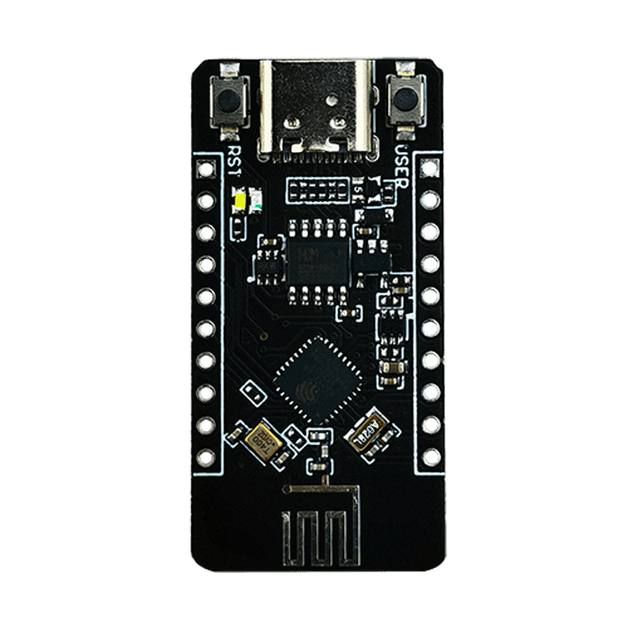
The Heltec WiFi Kit 32 (V3) is a compact IoT development board built around the ESP32-S3FN8 dual-core processor running at up to 240MHz. It integrates a 0.96-inch 128x64 OLED display, lithium battery management with charge/discharge protection, and both WiFi and Bluetooth 5.0 wireless connectivity into a breadboard-friendly package measuring just 50.2 x 25.5mm.
The V3 revision brings significant improvements over its predecessor, including an upgrade from the ESP32-D0 to the ESP32-S3 platform, a switch from Micro-USB to USB-C, and a dramatic reduction in deep sleep current from approximately 800uA down to less than 10uA — making it far more practical for battery-powered deployments. The onboard CP2102 USB-to-serial converter provides reliable programming and debugging via the Arduino IDE, PlatformIO, or ESP-IDF.
With 8MB of flash storage, 512KB of SRAM, 7 ADC channels, 7 capacitive touch inputs, and support for SPI, I2C, UART, and I2S interfaces, the WiFi Kit 32 V3 is well-suited for IoT sensor nodes, portable data loggers, weather displays, and any project that benefits from a built-in screen and battery support. The integrated OLED display is particularly useful for showing real-time sensor readings, connection status, or debug information without requiring external displays.
Use Cases
6Weather Station
A device that displays current weather conditions and forecasts, typically using WiFi to fetch data from weather APIs.
Weather Display
A dedicated screen that shows weather information including current conditions, temperature, humidity, pressure, and multi-day forecasts.
Environmental Monitoring
Monitoring environmental conditions like temperature, humidity, air quality, and weather data using remote sensors.
OLED Status Display
Compact OLED screen for displaying sensor readings, system status, notifications, or other real-time data in a small form factor.
Portable Sensor Node
Battery-powered wireless sensor node for collecting and transmitting environmental data from remote or mobile locations.
IoT Sensors
IoT sensor nodes for collecting and transmitting environmental, motion, or industrial data wirelessly.
Resources
Where to Buy
Explore more of the directory — popular use cases, firmware, and specs to browse next.