HeishaMon Communication PCB
Open-source ESP-based communication PCB for local monitoring and control of Panasonic Aquarea heat pumps via MQTT and HTTP, with Home Assistant integration and S0 energy metering support.
$20.00
Tap any value to browse matching devices
Specifications
Components
Espressif ESP8266EX single-core Xtensa L106 WiFi SoC @ 80/160MHz with 802.11 b/g/n
5V to 3.3V bidirectional level shifter for Panasonic heat pump UART communication
Supported external 1-Wire digital temperature sensors connected to GPIO4
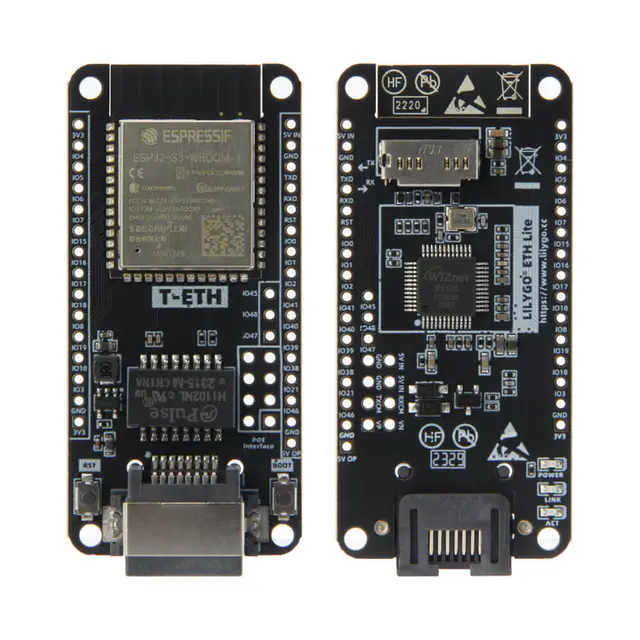
WIZnet W5500 10/100 Mbps hardwired TCP/IP Ethernet controller via SPI (large board only)
Bus Interfaces
GPIO Map
HeishaMon Communication PCB
The HeishaMon Communication PCB is an open-source interface board designed for local monitoring and control of Panasonic Aquarea heat pumps (H, J, K, L, and M series). It eliminates the need for cloud connectivity by providing direct MQTT and HTTP API access to heat pump data, making it ideal for Home Assistant and other smart home platforms.
How It Works
The board connects to the Panasonic heat pump's CN-CNT (indoor unit) or CN-NMODE (outdoor unit) connector using a standard serial UART interface at 9600 baud (8E1). A level shifter converts between the heat pump's 5V logic and the ESP's 3.3V levels. Once connected, the HeishaMon firmware reads all available heat pump parameters — temperatures, flow rates, operating modes, error codes, and energy consumption — and publishes them via MQTT topics.
Two Board Variants
- Small board (ESP8266, Wemos D1 mini form factor): The original compact design with WiFi connectivity, 1-Wire temperature sensor support, and two S0 pulse meter inputs for energy monitoring. Powered via USB-C or directly from the heat pump's 5V supply.
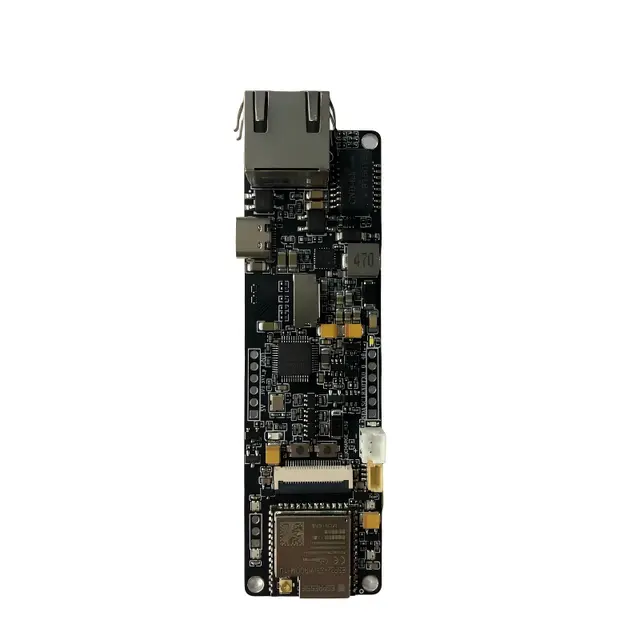
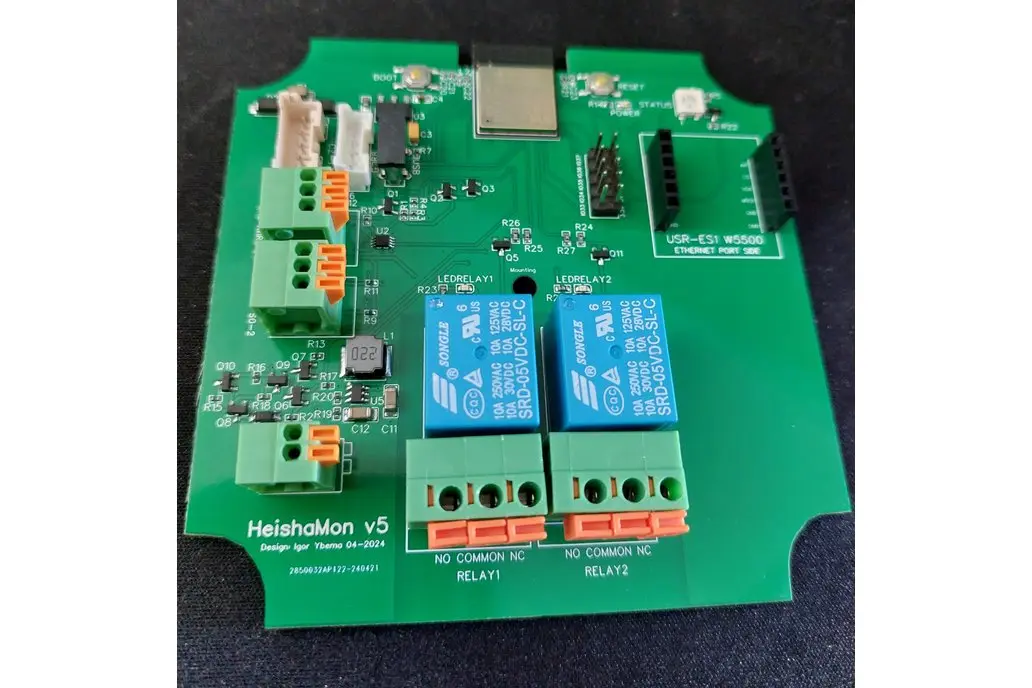
- Large board (ESP32-S3): An expanded version adding optional W5500 Ethernet connectivity, two onboard 230V/5A relays for controlling external heating elements or pumps, and additional GPIO for peripherals.
Key Features
- Full heat pump telemetry: Reads 200+ parameters from Panasonic Aquarea heat pumps including water temperatures, compressor frequency, COP, and error codes
- MQTT integration: Publishes all data to MQTT topics with configurable update intervals for seamless Home Assistant, Node-RED, or openHAB integration
- HTTP API and web dashboard: Built-in web interface for configuration, real-time monitoring, and firmware updates (OTA)
- 1-Wire temperature sensors: Connect up to 15 DS18B20 sensors on GPIO4 for monitoring additional temperatures (buffer tanks, room sensors, outdoor)
- S0 pulse energy metering: Two S0 inputs (GPIO12, GPIO14) for connecting kWh pulse meters to track energy consumption
- Optional Ethernet: W5500 SPI Ethernet module support on the large board for wired network reliability
- Optional relays: Two 230V/5A relays on the large board for switching external devices based on heat pump state
Community and Ecosystem
HeishaMon has a thriving community with thousands of active installations. Community contributions include:
- Home Assistant integration with auto-discovery
- Node-RED control flows for advanced automation
- ESPHome configuration for those preferring YAML-based setups
- Multiple 3D-printed enclosure designs on Thingiverse and Printables
Compatibility
Supported Panasonic Aquarea heat pump series:
- H-series (2012+)
- J-series (2014+)
- K-series (2018+)
- L-series (2021+)
- M-series (2023+)
Both monoblock and split system configurations are supported.
Use Cases
6Heat Pump Monitoring
Monitoring heat pump parameters, energy usage, and operating status for efficiency optimization.
Heat Pump Control
Local control of heat pump settings including temperature setpoints, operating modes, and schedules via MQTT or HTTP.
Energy Monitoring
Monitoring energy consumption of appliances, circuits, or whole buildings using pulse counting or current sensors.
HVAC Control
Smart HVAC control systems for monitoring and managing heating, ventilation, and air conditioning.
home-automation
Smart Home
Home automation devices for controlling lighting, climate, security, and appliances.
Resources
Where to Buy
Available Software
3Explore more of the directory — popular use cases, firmware, and specs to browse next.