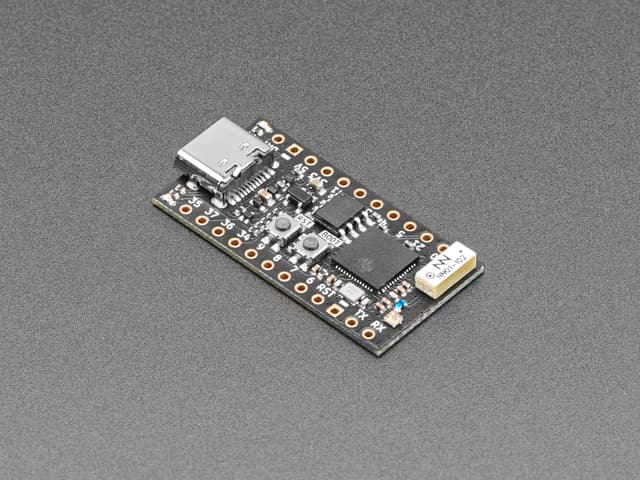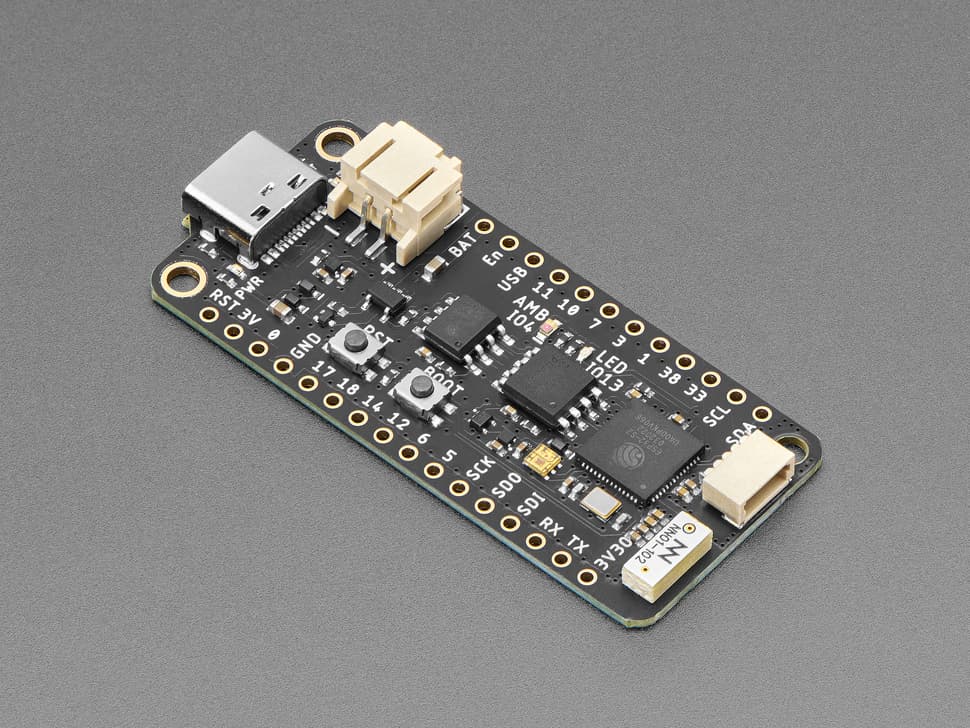
FeatherS2 ESP32-S2
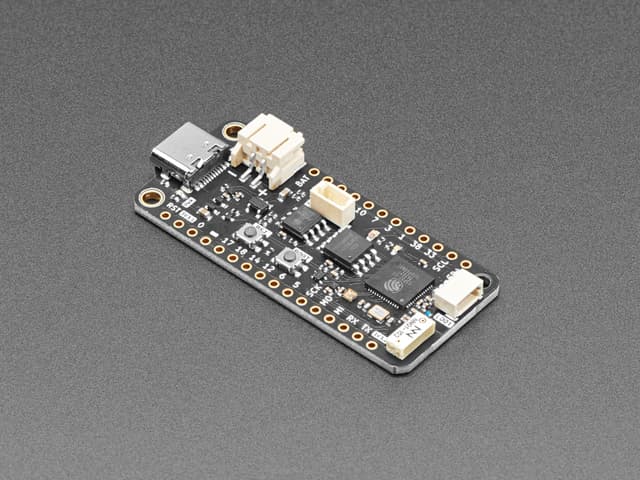
Full-featured ESP32-S2 Feather-compatible board by Unexpected Maker with 16MB Flash, 8MB QSPI PSRAM, WiFi, native USB-C, 21 GPIO, STEMMA QT, APA102 RGB LED, ambient light sensor, and dual 700mA LDOs.
$24.95
Tap any value to browse matching devices
Specifications
Certifications
Components
Bus Interfaces
GPIO Map
Overview
The FeatherS2 is a feature-rich ESP32-S2 development board in the Adafruit Feather form factor, designed and manufactured by Australian maker Unexpected Maker. It distinguishes itself from other ESP32-S2 boards with unusually large onboard memory: 16MB of SPI Flash and 8MB of QSPI PSRAM — roughly four times the memory of competing ESP32-S2 Feathers. This makes it particularly well-suited for applications that need to store large assets, run complex Python programs, or buffer substantial amounts of data.
Power design on the FeatherS2 is equally considered. The board features two independent 3.3V LDO regulators, each rated for 700mA, allowing the ESP32-S2 and attached peripherals to draw power from separate, stable supplies. A USB-C connector with backfeed protection handles programming and charging, with native USB support via GPIO19/20 on the ESP32-S2. A LiPo battery connector and associated charging circuitry follow the Feather standard.
Onboard peripherals include an APA102 programmable RGB LED for status indication, an ALS-PT19 ambient light sensor accessible via GPIO, and a STEMMA QT / Qwiic JST-SH connector for I2C peripherals without soldering. Twenty-one GPIO pins are available on the standard Feather headers. The board runs at 2.4GHz WiFi (802.11 b/g/n) via the ESP32-S2's built-in radio; there is no Bluetooth support on the ESP32-S2.
The FeatherS2 is fully compatible with CircuitPython 6.0+, ESP-IDF, Arduino (via arduino-esp32), and MicroPython. Documentation, pinout diagrams, and example code are available at feathers2.io. Unexpected Maker maintains an active Discord community for hardware support.
Use Cases
4IoT
Internet of Things applications including connected sensors, actuators, and smart devices that communicate over WiFi, BLE, LoRa, or other wireless protocols.
Smart Home
Home automation devices for controlling lighting, climate, security, and appliances.
Wearable
Body-worn computing devices including smartwatches, fitness bands, and health monitors.
Environmental Monitoring
Monitoring environmental conditions like temperature, humidity, air quality, and weather data using remote sensors.
Where to Buy
Explore more of the directory — popular use cases, firmware, and specs to browse next.