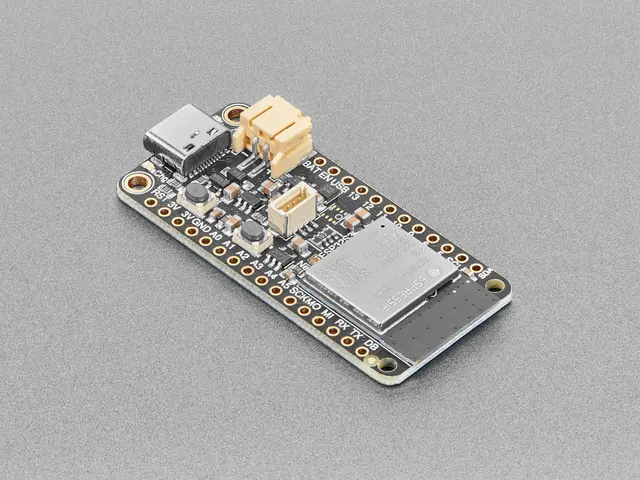
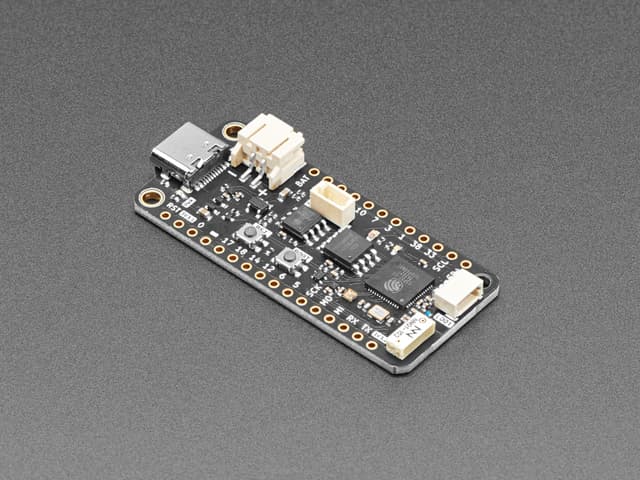
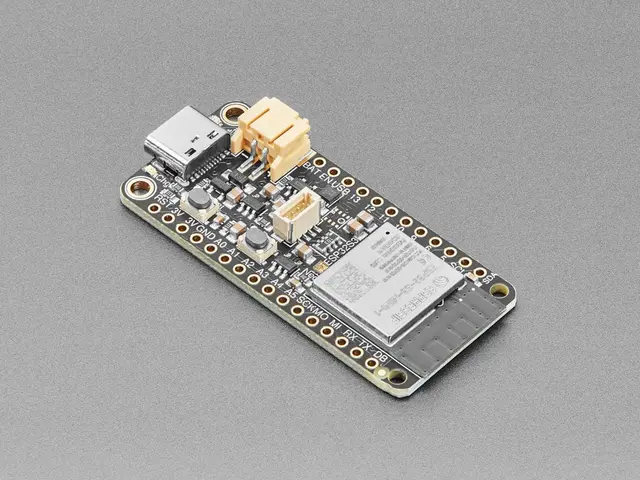
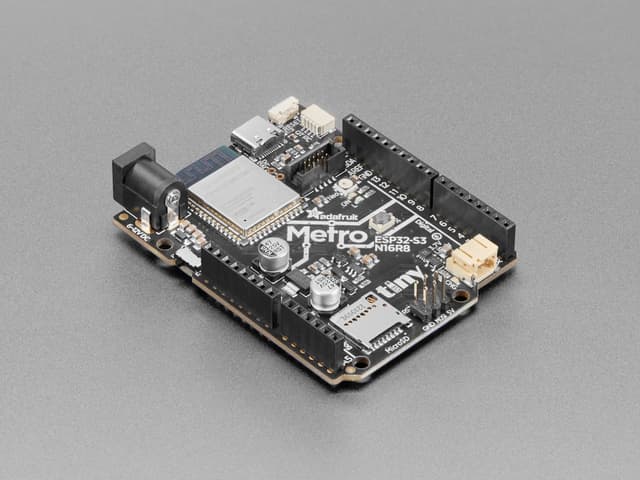
Bee Data Logger
ESP32-S3 based data logging board with DS3231 RTC, microSD card slot, dual STEMMA/Qwiic connectors, and LiPo charging. Achieves ~21µA deep sleep current. Open source hardware with Arduino and CircuitPython support.
$34.99
Tap any value to browse matching devices
Specifications
Components
Espressif ESP32-S3 system-on-chip with WiFi and Bluetooth LE 5.0, dual-core Xtensa LX7 processor at 240MHz
Maxim DS3231 temperature-compensated real-time clock with ±2ppm accuracy and CR1220 backup battery
Bus Interfaces
Bee Data Logger
The Bee Data Logger by Smart Bee Designs is an ESP32-S3 data logging board engineered for minimal power consumption, achieving approximately 21 microamps in deep sleep mode.
Key Features
- ESP32-S3 microcontroller with WiFi and Bluetooth connectivity
- DS3231 high-precision RTC with CR1220 coin cell backup battery
- MicroSD card slot supporting up to 64GB capacity
- Dual 600mA linear voltage regulators — one always-on, one sleep-controlled for sensor power management
- Two STEMMA/Qwiic I2C connectors for easy sensor breakout board integration
- 1S LiPo battery connector with built-in charging circuitry and on/off switch
- Battery voltage monitoring capability
- USB-C interface with detection circuitry
- Breadboard-friendly pin layout
- Ultra-low power deep sleep: ~21µA
Software Support
- Arduino IDE compatible
- CircuitPython compatible
- Full example code available on GitHub
Open Source
All design files are open source and available on GitHub, including schematics, PCB layout, and 3D models.
Accessories
Smart Bee Designs also offers compatible accessories:
- I2C Extender board (holds 1 sensor)
- I2C Extender XL (holds 2 sensors)
- Screw Terminal Breakout Board
Community
Active Discord server for user support and community discussion.
Use Cases
6Data Logging
Recording time-stamped sensor readings, environmental data, or system events to local storage.
Field Data Logger
Battery-powered device for recording sensor data, GPS coordinates, and environmental measurements in the field.
Environmental Monitoring
Monitoring environmental conditions like temperature, humidity, air quality, and weather data using remote sensors.
Low-Power IoT
Ultra-low-power IoT sensor nodes using deep sleep and wake cycles for long battery life.
IoT Sensor Node
Compact wireless sensor node for collecting and transmitting environmental or industrial data.
Plant Monitoring
Monitoring soil moisture, temperature, humidity, and light to automate plant care and watering.
Where to Buy
Explore more of the directory — popular use cases, firmware, and specs to browse next.