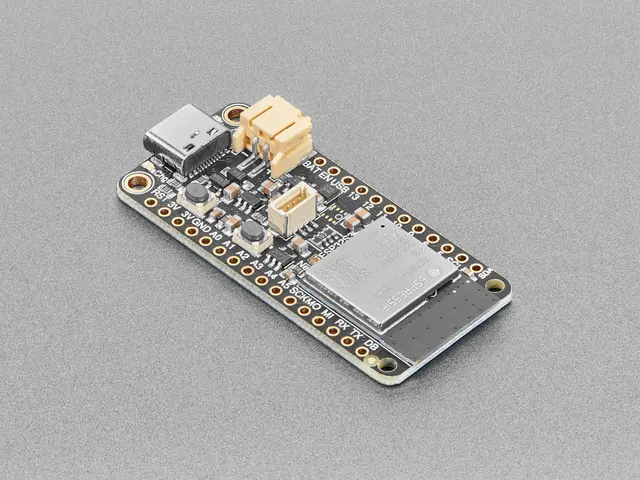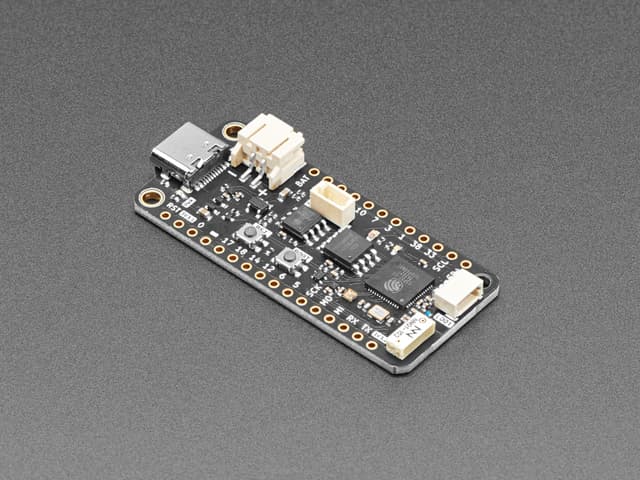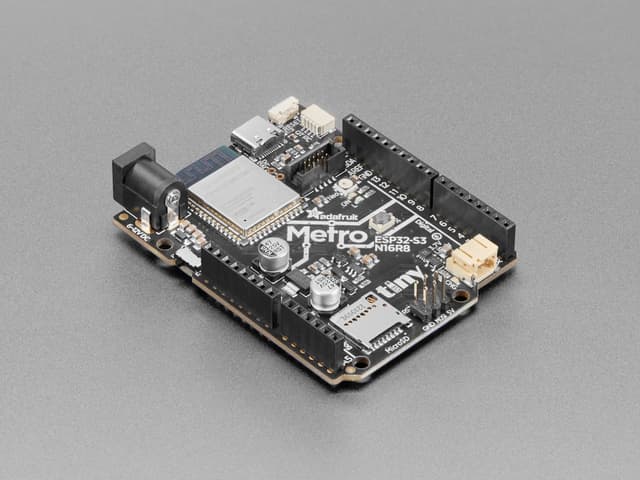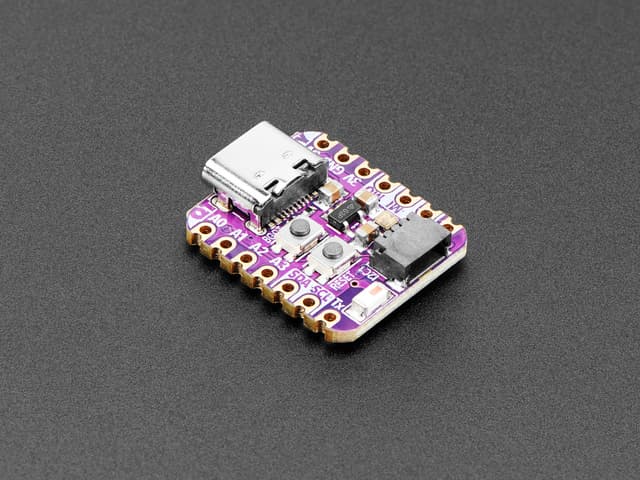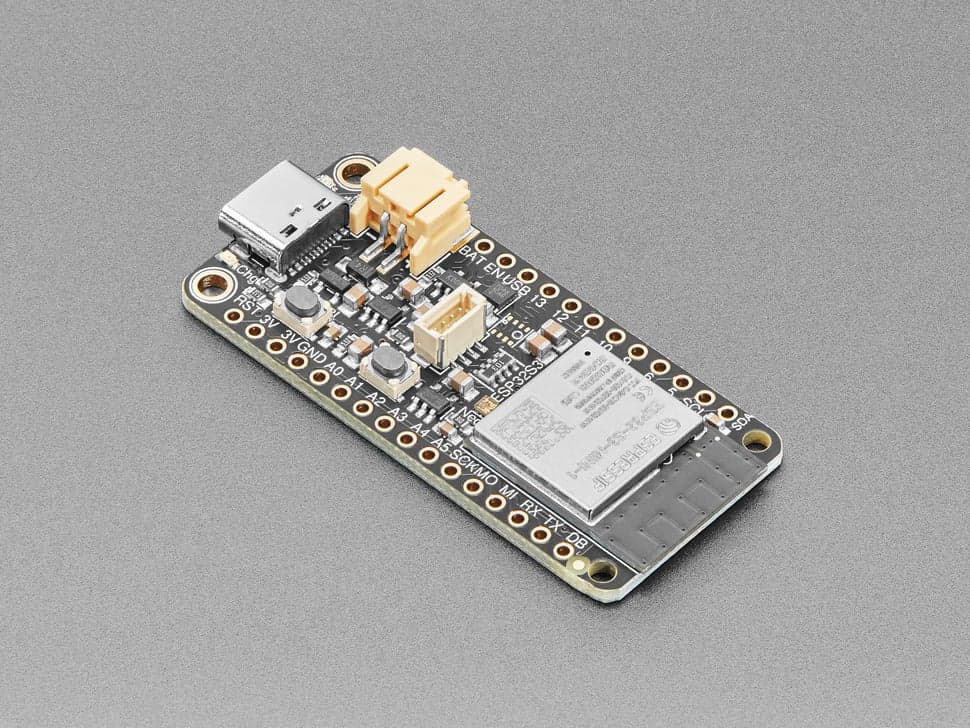
Adafruit ESP32-S3 Feather (4MB Flash, 2MB PSRAM)
Feather-format ESP32-S3 board with 4 MB flash and 2 MB PSRAM, dual-core 240 MHz, native USB-C, BLE 5, WiFi, STEMMA QT, LiPoly charging, and MAX17048 battery monitor.
$17.50
Tap any value to browse matching devices
Specifications
Components
Maxim MAX17048 Li-Ion/LiPo fuel gauge providing state-of-charge via I2C.
Bus Interfaces
GPIO Map
Overview
The Adafruit ESP32-S3 Feather with 4 MB Flash and 2 MB PSRAM is the PSRAM-equipped sibling of the 8 MB no-PSRAM variant, offering an additional 2 MB of pseudo-static RAM for applications that need larger buffers — useful for JPEG decoding, audio streaming, or running multiple CircuitPython display libraries simultaneously.
Native USB-C via the ESP32-S3's hardware USB OTG allows the board to emulate keyboards, mice, MIDI devices, and mass-storage drives without a separate bridge chip. The UF2 bootloader makes firmware updates drag-and-drop simple. Both WiFi (2.4 GHz) and BLE 5 are supported simultaneously, and the standard Feather pinout ensures FeatherWing compatibility.
A MAX17048 fuel-gauge IC monitors the LiPoly battery state-of-charge over I2C, and the onboard charger keeps the cell topped up from USB-C. A STEMMA QT connector with switchable power, a NeoPixel with power control, Reset and DFU buttons, and On/Charge/User indicator LEDs are all included. Deep sleep current is approximately 100 µA.
This board is compatible with CircuitPython, Arduino (ESP32 core), and ESP-IDF. The 2 MB PSRAM makes it better suited than the no-PSRAM variant for projects using the ESP32-S3's camera interface, TensorFlow Lite Micro, or large in-memory datasets.
Use Cases
3IoT
Internet of Things applications including connected sensors, actuators, and smart devices that communicate over WiFi, BLE, LoRa, or other wireless protocols.
Smart Home
Home automation devices for controlling lighting, climate, security, and appliances.
Wearable
Body-worn computing devices including smartwatches, fitness bands, and health monitors.
Where to Buy
Available Software
2Explore more of the directory — popular use cases, firmware, and specs to browse next.