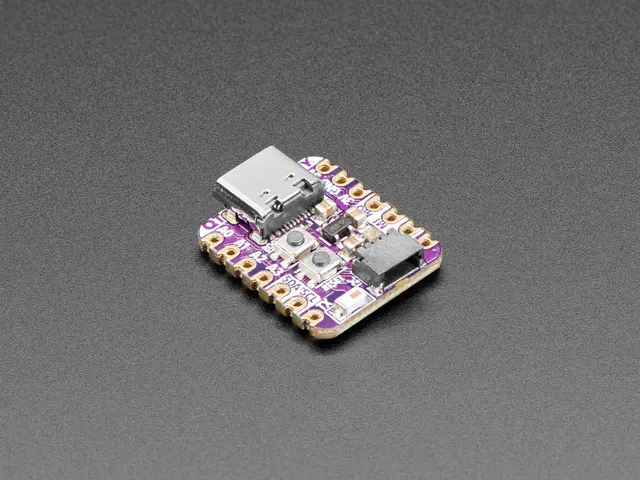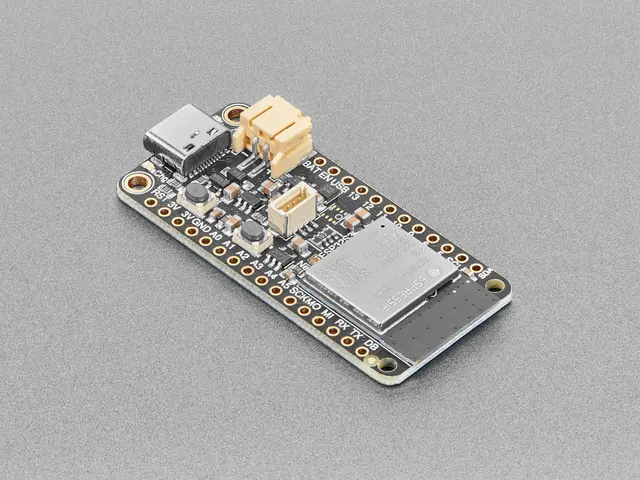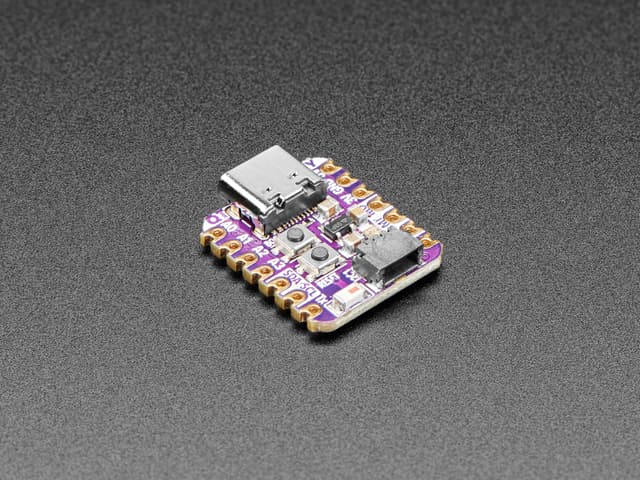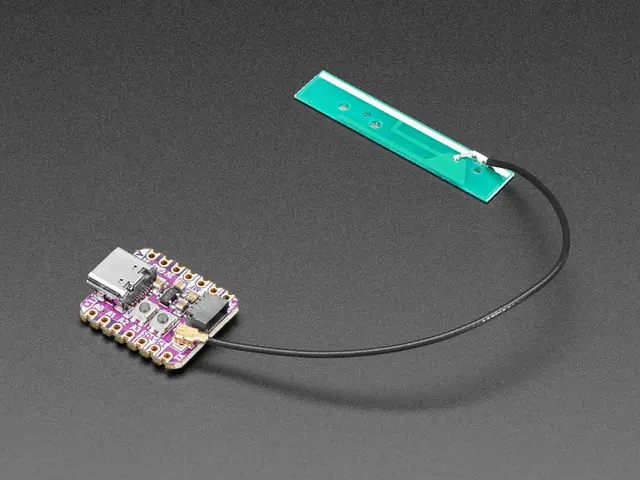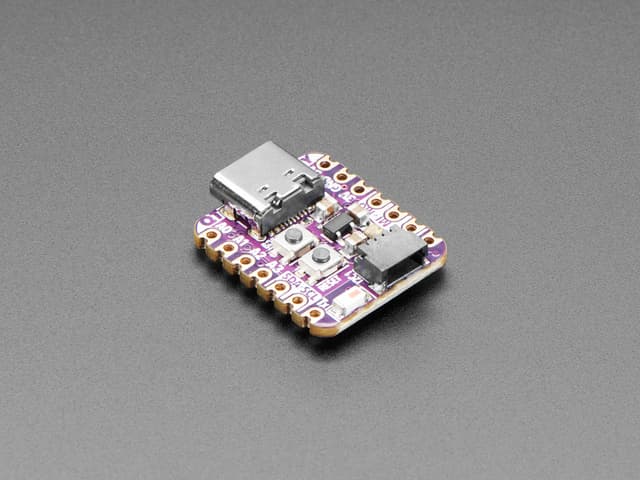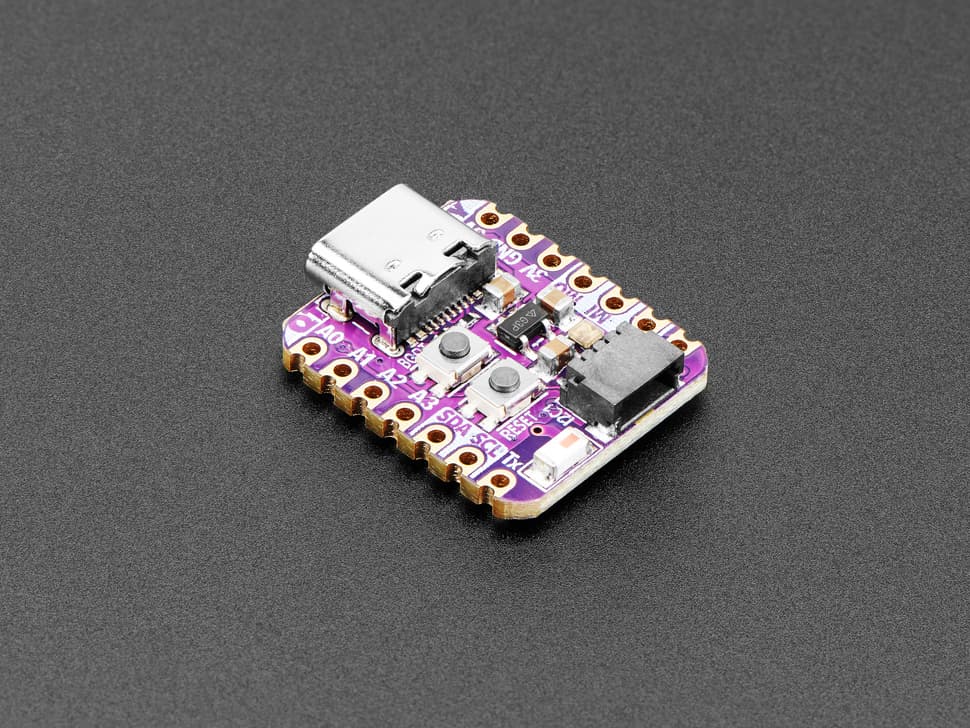
Adafruit QT Py ESP32-S3
Tiny dual-core ESP32-S3 dev board in the QT Py / Seeed XIAO footprint — 8 MB flash, WiFi, BLE 5, native USB-C, STEMMA QT, 13 GPIO, 10 ADC inputs, no PSRAM variant.
$12.50
Tap any value to browse matching devices
Specifications
Components
Bus Interfaces
GPIO Map
Overview
The Adafruit QT Py ESP32-S3 brings the dual-core 240 MHz ESP32-S3 into the tiny 21.7 × 17.8 mm QT Py / Seeed XIAO footprint. With 8 MB of Flash and 512 KB of on-chip SRAM (no PSRAM in this variant), it is the most capable QT Py in terms of raw compute while remaining at roughly the same price as the single-core ESP32-S2 variant.
Native USB-C via the ESP32-S3's hardware USB OTG means the board can emulate keyboards, mice, MIDI controllers, and USB mass-storage drives without a bridge chip. The UF2 bootloader appears as a flash drive for drag-and-drop firmware updates. Both WiFi and BLE 5 are available simultaneously, a significant upgrade over the WiFi-only ESP32-S2 QT Py.
A STEMMA QT / Qwiic connector provides immediate I2C sensor chain capability. Ten 12-bit ADC inputs, 5 capacitive touch pins, hardware I2S, and PWM on any output give broad I/O coverage for the board's size. An NeoPixel RGB LED with its own power-control pin enables efficient low-power operation.
CircuitPython is the recommended starting point, with the extensive Adafruit CircuitPython library bundle providing drivers for the most popular sensors. Arduino (with Espressif's ESP32 Arduino core) and ESP-IDF are also supported for advanced users who need lower-level access to the ESP32-S3's rich peripheral set.
Use Cases
3IoT
Internet of Things applications including connected sensors, actuators, and smart devices that communicate over WiFi, BLE, LoRa, or other wireless protocols.
Smart Home
Home automation devices for controlling lighting, climate, security, and appliances.
Wearable
Body-worn computing devices including smartwatches, fitness bands, and health monitors.
Where to Buy
Available Software
2Explore more of the directory — popular use cases, firmware, and specs to browse next.