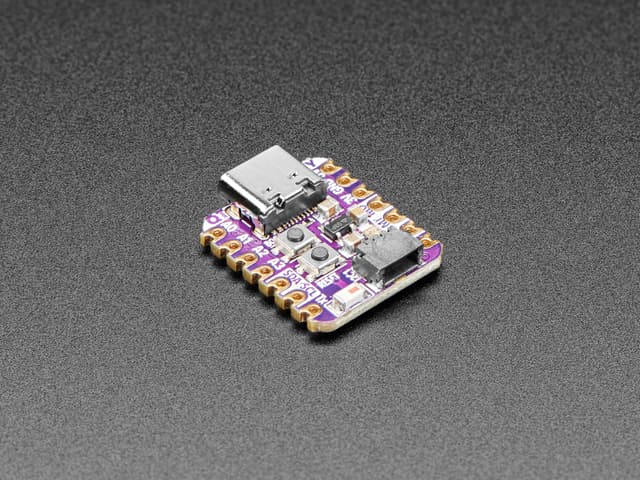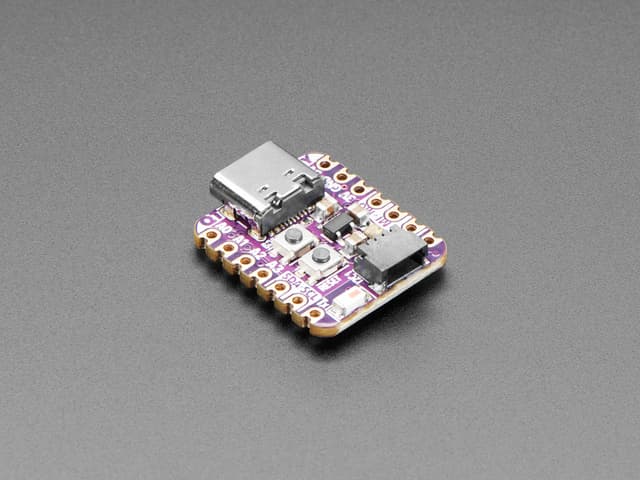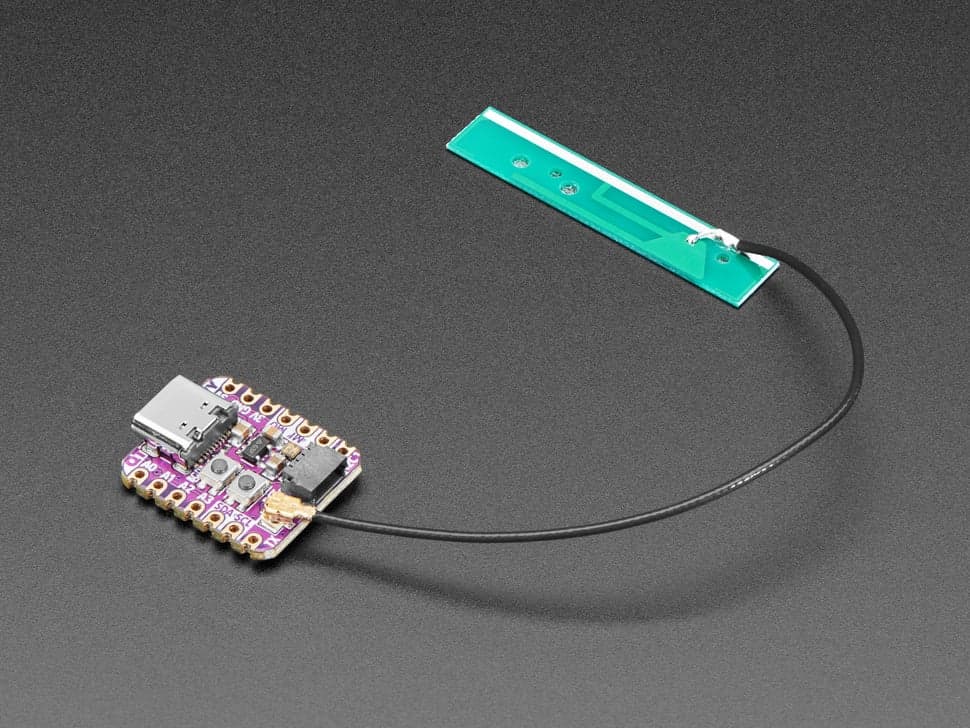
Adafruit QT Py ESP32-S2 with uFL Antenna
QT Py-sized ESP32-S2 dev board with a uFL connector for an external 2.4 GHz antenna, 4 MB flash, 2 MB PSRAM, native USB-C, STEMMA QT, and 13 GPIO — for improved WiFi range.
$12.50
Tap any value to browse matching devices
Specifications
Components
Bus Interfaces
GPIO Map
Overview
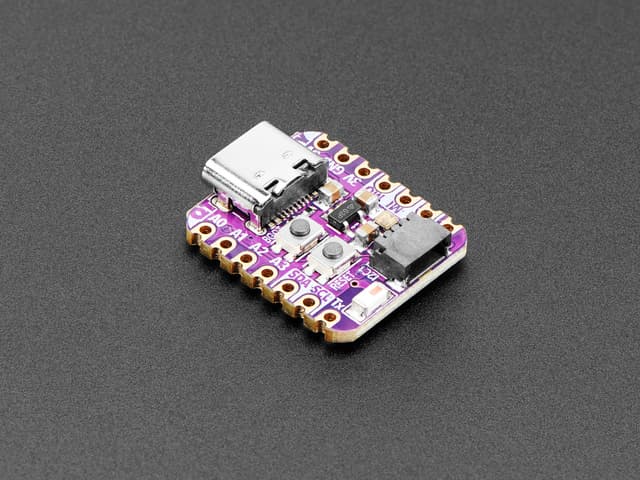
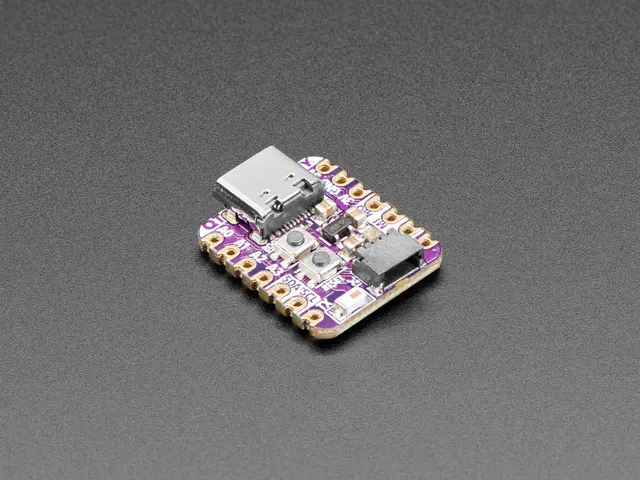
The Adafruit QT Py ESP32-S2 with uFL Antenna Port is identical to the standard QT Py ESP32-S2 but replaces the built-in PCB antenna with a u.FL / IPEX connector. This allows you to attach an external 2.4 GHz antenna for greater WiFi range, particularly useful in enclosures made of metal or other RF-blocking materials where a PCB antenna would be insufficient.
The board measures just 21.8 × 17.9 mm and carries 4 MB of Flash and 2 MB of PSRAM, making it capable of running full CircuitPython applications with WiFi and multiple sensor drivers loaded simultaneously. Native USB-C provides keyboard, mouse, MIDI, and mass-storage emulation via the ESP32-S2's hardware USB OTG peripheral.
A STEMMA QT / Qwiic connector allows immediate I2C sensor integration without soldering, and the five capacitive-touch capable GPIO pins can be accessed directly in CircuitPython. Ten 12-bit ADC inputs and an 8-bit DAC on two pins make analogue interfacing easy. The 3.3 V 600 mA regulator can comfortably drive external sensors.
Note that no antenna is included with the board. A separate 2.4 GHz mini flexible WiFi antenna with u.FL connector or a u.FL-to-RP-SMA pigtail is required to make use of the connector. Without an attached antenna, WiFi range will be significantly lower than a PCB-antenna variant.
Use Cases
3IoT
Internet of Things applications including connected sensors, actuators, and smart devices that communicate over WiFi, BLE, LoRa, or other wireless protocols.
Smart Home
Home automation devices for controlling lighting, climate, security, and appliances.
Wearable
Body-worn computing devices including smartwatches, fitness bands, and health monitors.
Where to Buy
Available Software
2Explore more of the directory — popular use cases, firmware, and specs to browse next.