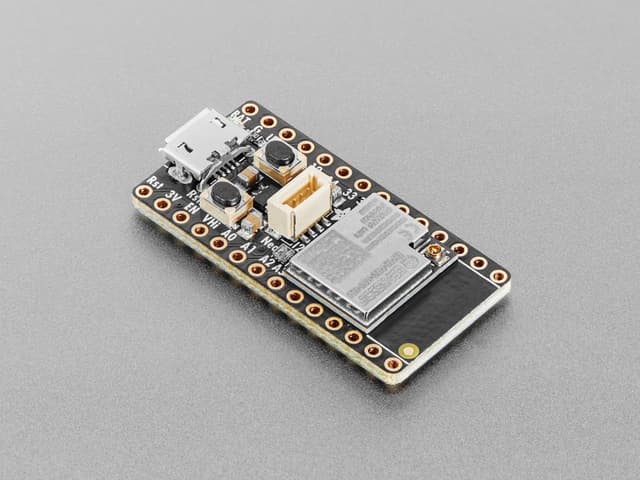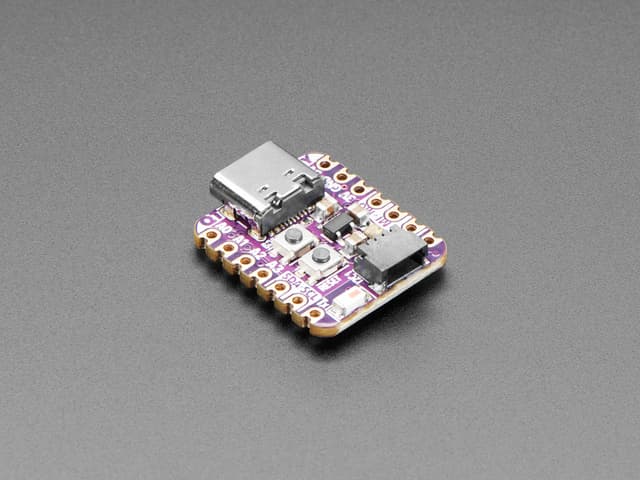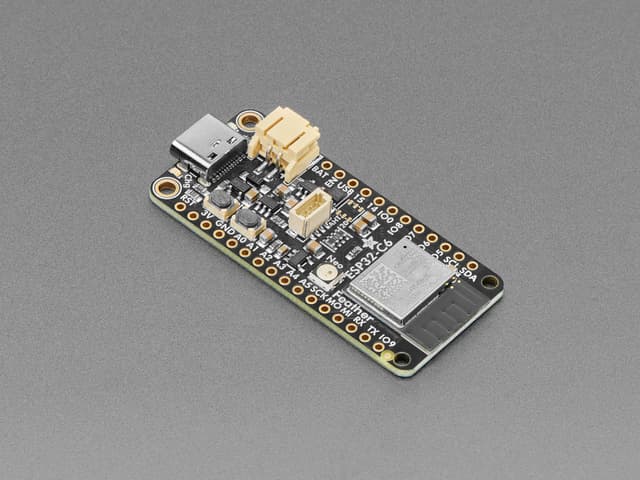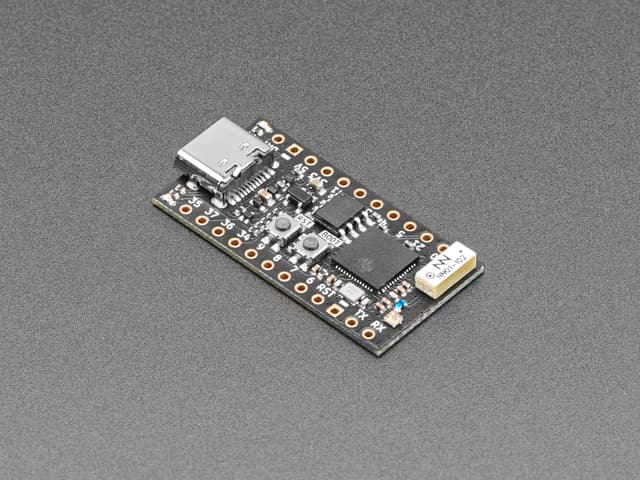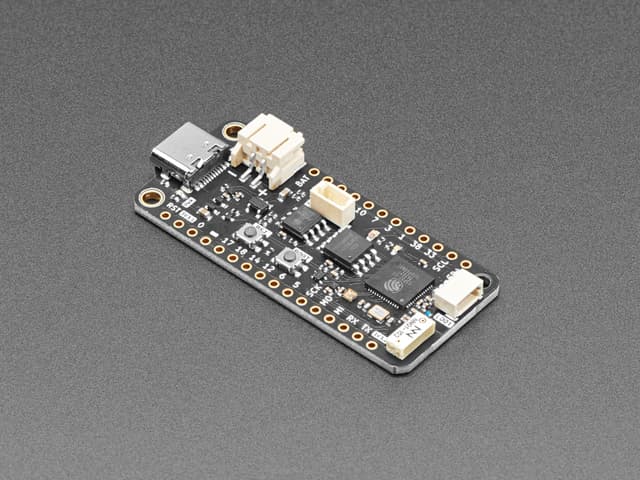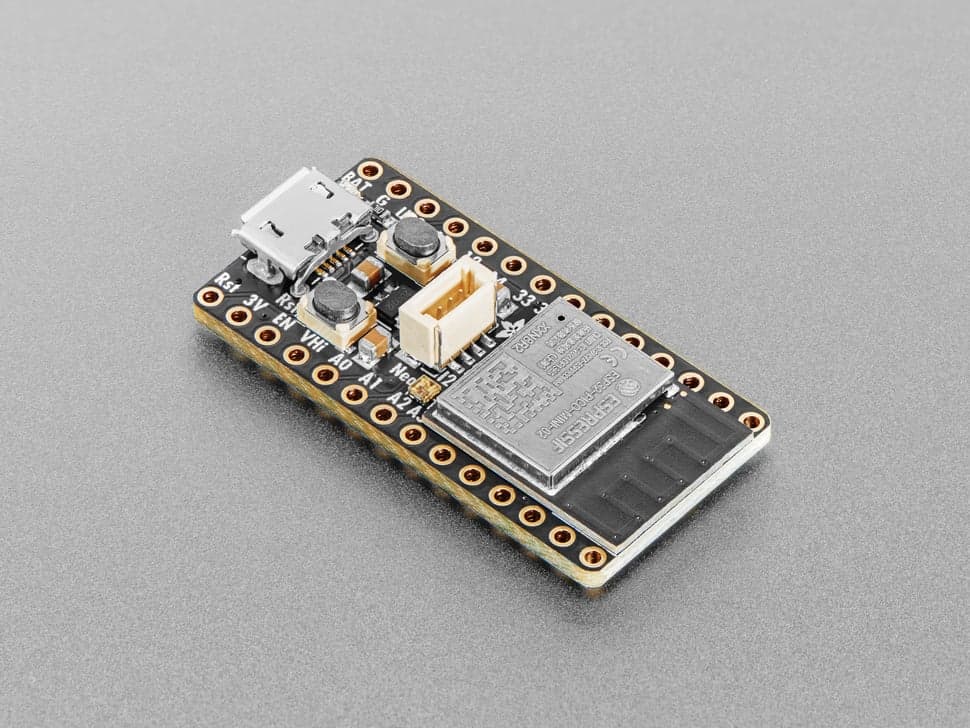
Adafruit ItsyBitsy ESP32 PCB Antenna
Compact ItsyBitsy-format ESP32 board with 8MB flash, 2MB PSRAM, PCB antenna, Wi-Fi + Bluetooth Classic + BLE, 20 GPIO, NeoPixel, STEMMA QT, and Micro-B USB.
$14.95
Tap any value to browse matching devices
Specifications
Certifications
Components
Onboard addressable RGB NeoPixel.
Bus Interfaces
GPIO Map
Overview
The Adafruit ItsyBitsy ESP32 PCB Antenna is a compact development board using the ESP32 PICO ECO V3 system-in-package (SiP), which integrates the ESP32 dual-core processor, 8 MB flash, 2 MB PSRAM, and a PCB antenna all within a single chip package. This unusual integration keeps the board extremely small in the familiar ItsyBitsy form factor (36 × 17.6 × 6.9 mm) while offering full ESP32 capabilities.
The ESP32 PICO ECO V3 provides dual Tensilica Xtensa LX6 cores at 240 MHz with Wi-Fi 4, Bluetooth Classic, and BLE. Unlike ESP32-S3 based boards, this variant supports Bluetooth Classic (for audio profiles and SPP) in addition to BLE. The 20-pin breakout includes 13 analog-capable 12-bit ADC inputs, 2 DAC outputs, 8 capacitive touch pins, and PWM on any pin. A 5V level-shifted output is available on D5.
The board uses a USB Micro-B connector with a USB-to-serial converter IC for programming — it does not support native USB. Power management includes a 600 mA 3.3V regulator, 4 mA light sleep, and 10 µA deep sleep. A NeoPixel RGB LED with power control, red LED on D13, STEMMA QT I2C connector, reset and user buttons are all included. Works with Arduino IDE, CircuitPython, and MicroPython.
Use Cases
5IoT
Internet of Things applications including connected sensors, actuators, and smart devices that communicate over WiFi, BLE, LoRa, or other wireless protocols.
Prototyping
Rapid hardware prototyping and proof-of-concept development with breadboard-friendly form factors and accessible development environments.
Wearable
Body-worn computing devices including smartwatches, fitness bands, and health monitors.
Audio
Audio playback, streaming, amplification, digital signal processing, and music projects.
wifi
Where to Buy
Explore more of the directory — popular use cases, firmware, and specs to browse next.