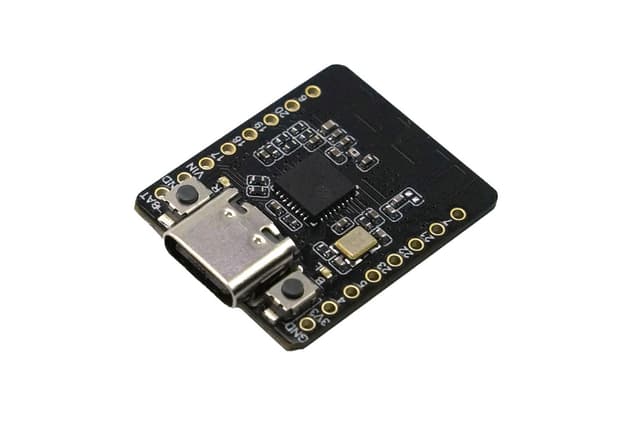
SparkFun Thing Plus Matter - MGM240P
Feather-compatible Matter/Thread/Zigbee/BLE dev board based on Silicon Labs MGM240P with Qwiic, LiPo charging, microSD, and +20dBm radio range.
$27.95
Tap any value to browse matching devices
Specifications
Components
Silicon Labs MGM240P multiprotocol wireless module, ARM Cortex-M33 @ 78MHz, 1536KB flash, 256KB RAM, +20dBm TX, Matter/Thread/Zigbee/BLE 5.3.
Microchip MCP73831 single-cell LiPo charger, selectable 100mA or 500mA charge rate.
Maxim MAX17048 fuel gauge IC for accurate battery state-of-charge measurement via I2C.
Bus Interfaces
GPIO Map
Overview
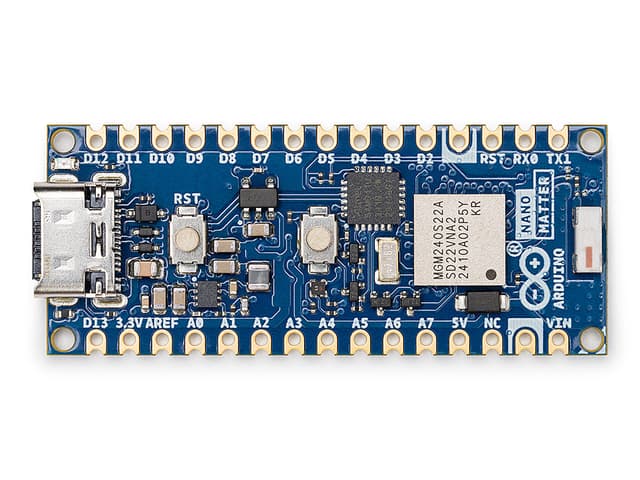
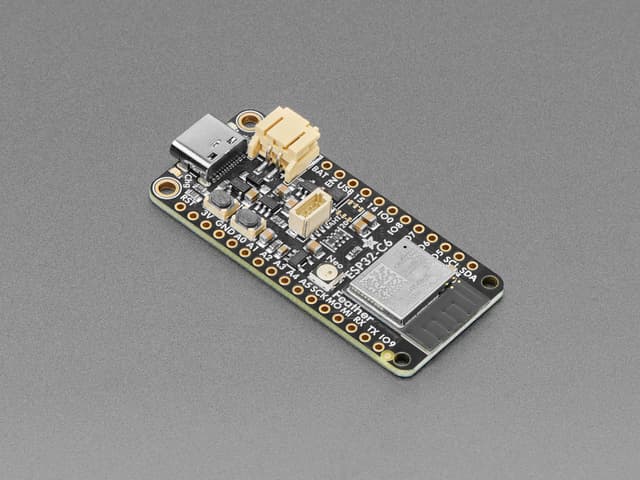
The SparkFun Thing Plus Matter - MGM240P brings Matter, Thread, Zigbee, and Bluetooth 5.3 connectivity to the popular Thing Plus (Feather-compatible) form factor. At its core is the Silicon Labs MGM240P multiprotocol wireless module — an ARM Cortex-M33 running at 78MHz with 1536KB flash, 256KB RAM, and a powerful +20dBm radio for extended wireless range.
Designed for rapid prototyping, the board includes a Qwiic connector for plug-and-play I2C sensor integration, a microSD card slot for local data storage, and a LiPo battery charging circuit with MAX17048 fuel gauge for battery-powered deployments. The MCP73831 charger supports both 100mA and 500mA charging rates.
With 23 GPIO pins broken out to standard 0.1" headers in the Thing Plus layout, it is Feather-compatible and works with the vast SparkFun and Adafruit ecosystems. A Mini Simplicity connector allows connection to Silicon Labs' Simplicity Studio IDE and external debuggers for professional development workflows.
The MGM240P is certified for Matter and supports all major 802.15.4 mesh protocols, making this board ideal for building Thread end devices, Matter accessories, and Zigbee nodes that integrate with Apple Home, Google Home, Amazon Alexa, and SmartThings.
Use Cases
6Matter Smart Home
Building Matter-compatible smart home devices that work across ecosystems like Apple Home, Google Home, and Amazon Alexa.
Smart Home
Home automation devices for controlling lighting, climate, security, and appliances.
Thread Mesh Network
Low-power mesh networking using Thread protocol for smart home and IoT devices.
IoT
Internet of Things applications including connected sensors, actuators, and smart devices that communicate over WiFi, BLE, LoRa, or other wireless protocols.
Prototyping
Rapid hardware prototyping and proof-of-concept development with breadboard-friendly form factors and accessible development environments.
Battery Powered Sensor Node
Low-power sensor nodes running on battery for wireless data collection and monitoring.
Resources
Where to Buy
Explore more of the directory — popular use cases, firmware, and specs to browse next.