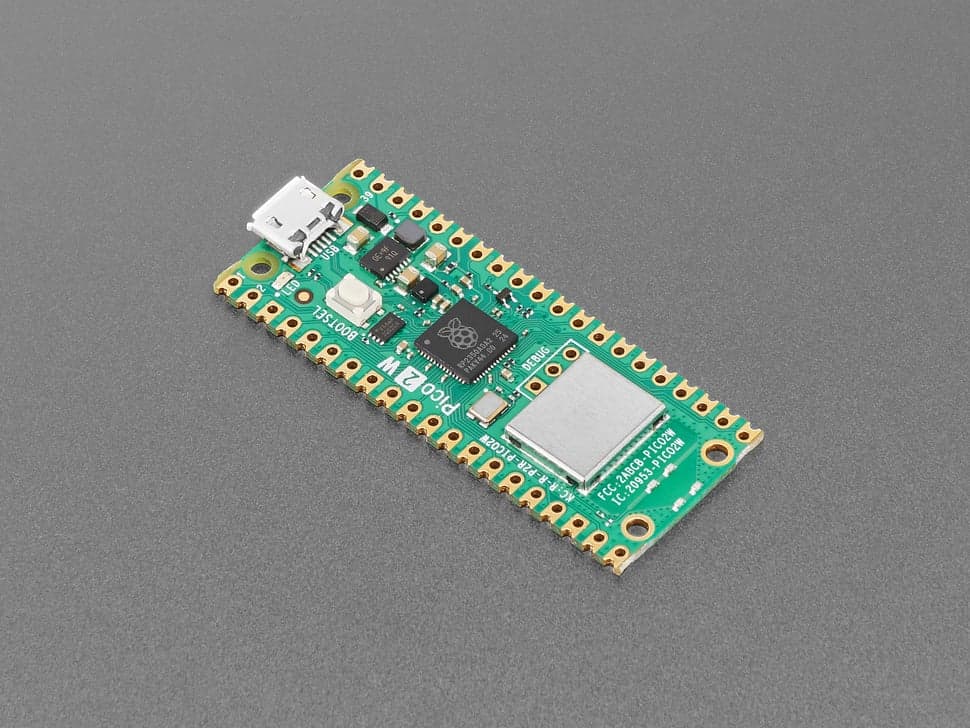
Raspberry Pi Pico 2W
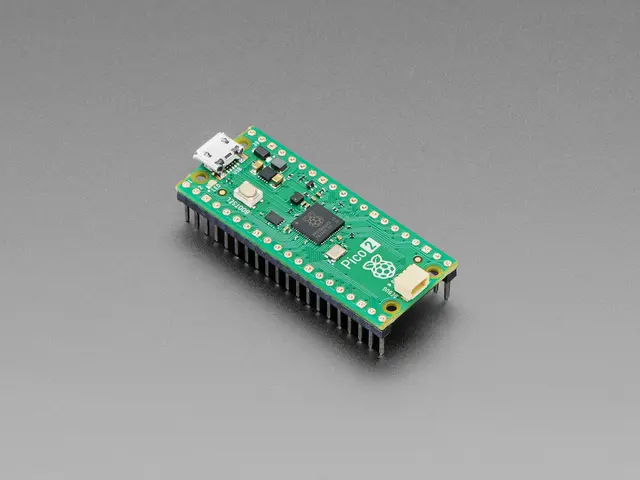
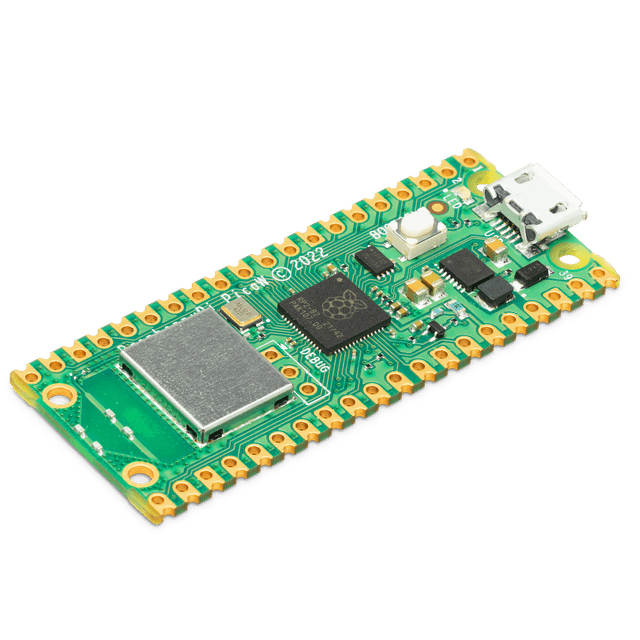
The Raspberry Pi Pico 2W is a wireless microcontroller board built on the RP2350 chip, delivering dual Cortex-M33 or RISC-V cores at 150MHz with 2.4GHz WiFi 4 (WPA3), Bluetooth 5.2, and 4MB flash — a major step up from the RP2040-based Pico W.
$7.00
Tap any value to browse matching devices
Specifications
Certifications
Components
Dual-core ARM Cortex-M33 or RISC-V Hazard3 at 150MHz with 520KB SRAM, 12 PIO state machines, hardware crypto, and TRNG.
2.4GHz 802.11n WiFi 4 with WPA3 and Bluetooth 5.2 Classic+BLE combo module providing wireless connectivity.
Bus Interfaces
GPIO Map
Overview
The Raspberry Pi Pico 2W is the wireless successor to both the Pico W and the Pico 2, combining the RP2350 chip's enhanced processing power with the radio capabilities of the Infineon CYW43439 module. Running at 150MHz with either dual ARM Cortex-M33 or dual RISC-V Hazard3 cores — selectable per application — it delivers significantly more raw compute than the RP2040-based Pico W while maintaining full hardware and software compatibility with the existing Pico ecosystem.
The board pairs 520KB of on-chip SRAM with 4MB of QSPI flash and exposes 26 multi-purpose GPIO pins, four of which can be used as ADC inputs. Two UARTs, two SPI controllers, two I2C buses, 24 PWM channels, and 12 PIO state machines provide rich peripheral coverage for embedded applications. Power input is flexible at 1.8–5.5V, and the USB 1.1 controller supports both host and device operation.
Wireless connectivity is provided by the Infineon CYW43439, supporting 2.4GHz single-band 802.11n (WiFi 4) with WPA3 security and Bluetooth 5.2 Classic plus BLE. The CYW43439 shares the SPI bus with the RP2350, a design that is fully documented and open-source. Security is enhanced by the RP2350's hardware True Random Number Generator, SHA-256 accelerator, and an optional secure boot chain.
The Pico 2W is programmable in C/C++ via the official Raspberry Pi Pico SDK, MicroPython, and CircuitPython. It is pin-compatible with the original Pico W, allowing existing Pico W projects to benefit from the RP2350's higher performance and larger memory with minimal code changes.
Use Cases
5IoT
Internet of Things applications including connected sensors, actuators, and smart devices that communicate over WiFi, BLE, LoRa, or other wireless protocols.
Prototyping
Rapid hardware prototyping and proof-of-concept development with breadboard-friendly form factors and accessible development environments.
Education
Teaching programming, electronics, and computer science concepts. Popular in schools, universities, and coding bootcamps.
Smart Home
Home automation devices for controlling lighting, climate, security, and appliances.
IoT Gateway
Acting as a local IoT gateway that aggregates data from sensors, runs MQTT broker, Node-RED, or Home Assistant, and bridges to the cloud.
Resources
Where to Buy
Available Software
3Explore more of the directory — popular use cases, firmware, and specs to browse next.