Adafruit Metro RP2350 with PSRAM
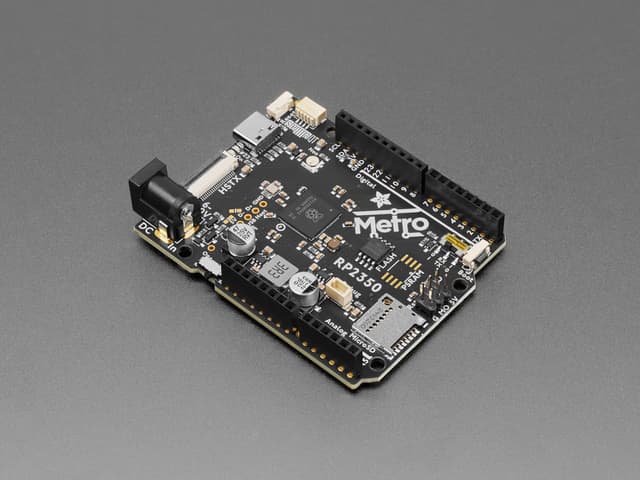
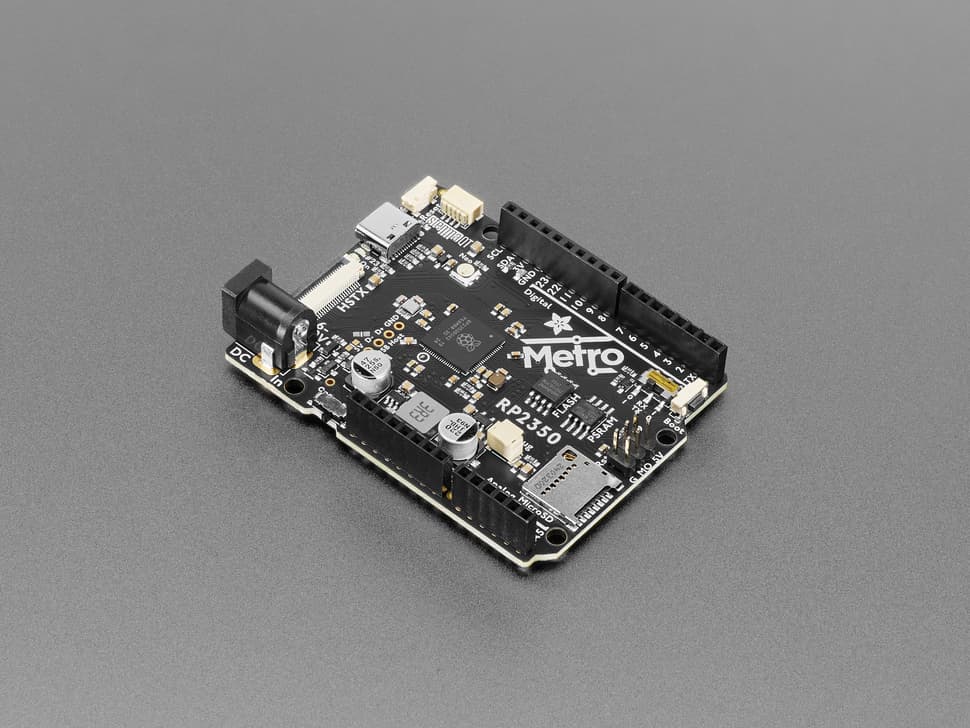
The Adafruit Metro RP2350 with PSRAM is an Arduino Uno–footprint development board powered by the RP2350 chip, featuring 16MB flash, 520KB SRAM, and 8MB QSPI PSRAM for expanded dynamic memory — ideal for data-intensive CircuitPython and C/C++ projects.
$27.95
Tap any value to browse matching devices
Specifications
Certifications
Components
Dual-core ARM Cortex-M33 or RISC-V Hazard3 at 150MHz with 520KB SRAM, hardware crypto, and 12 PIO state machines.
External 8MB QSPI pseudo-static RAM providing additional dynamic memory for data-intensive applications and Python scripting.
Adafruit NeoPixel WS2812B addressable RGB LED for status indication and user feedback.
Bus Interfaces
GPIO Map
Overview
The Adafruit Metro RP2350 with PSRAM brings the RP2350 microcontroller into the familiar Arduino Uno form factor, making it a natural drop-in for projects that rely on Uno-compatible shields. Built around Raspberry Pi's RP2350 chip, it offers dual ARM Cortex-M33 or RISC-V Hazard3 cores at 150MHz, significantly more processing power than the RP2040 it succeeds. The Metro form factor exposes 37 GPIO pins, including 6 analog inputs, spread across socket headers and an HSTX high-speed serial port.
The defining feature of this variant is 8MB of QSPI PSRAM added alongside the 16MB of QSPI flash and 520KB of on-chip SRAM. This extra dynamic memory is particularly valuable for CircuitPython users, who get dramatically more working space for code, data structures, and libraries. For C/C++ developers, it unlocks use cases such as frame buffering, audio streaming, and large lookup tables that would overflow on-chip SRAM alone.
Adafruit includes a NeoPixel RGB LED, a reset button, and a STEMMA QT / Qwiic I2C connector for quick integration with sensor and display breakout boards. The USB-C connector supports native USB for programming and serial communication without a separate UART chip. A standard DC barrel jack (5.5mm/2.1mm, 6–12V input) allows powering from a wall adapter alongside the USB-C option.
The board ships with CircuitPython pre-installed and is fully compatible with the Arduino IDE and the Raspberry Pi Pico SDK. Adafruit's extensive open-source documentation, learning guides, and CircuitPython libraries make it a well-supported platform for makers moving from classic Arduino boards to the modern RP2350 ecosystem.
Use Cases
4Prototyping
Rapid hardware prototyping and proof-of-concept development with breadboard-friendly form factors and accessible development environments.
Education
Teaching programming, electronics, and computer science concepts. Popular in schools, universities, and coding bootcamps.
IoT
Internet of Things applications including connected sensors, actuators, and smart devices that communicate over WiFi, BLE, LoRa, or other wireless protocols.
USB HID Device
Implementing a USB Human Interface Device such as a keyboard, mouse, game controller, or MIDI device using native USB support.
Resources
Where to Buy
Available Software
2Explore more of the directory — popular use cases, firmware, and specs to browse next.