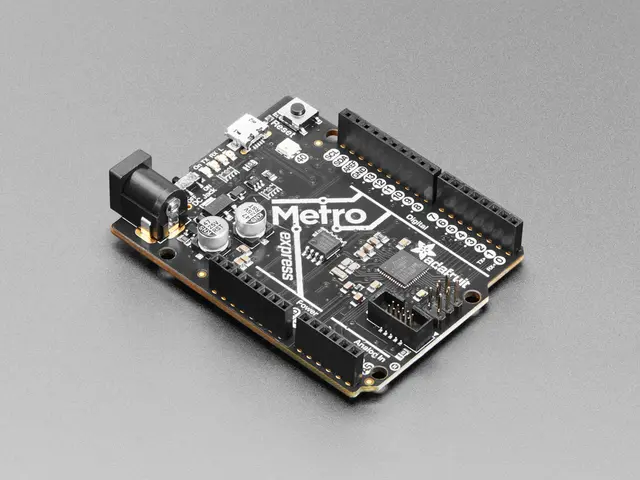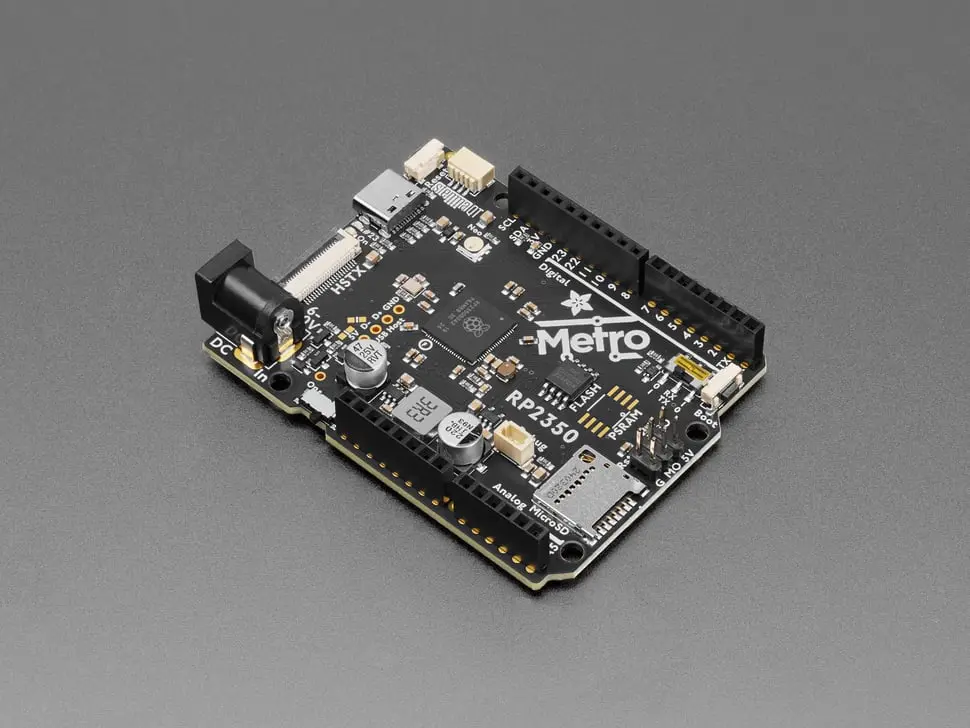
Adafruit Metro RP2350
Arduino-Uno-compatible board with RP2350, dual ARM Cortex-M33 at 150 MHz, 520KB SRAM, 16MB QSPI flash, microSD, HSTX port, 23 GPIO on headers, NeoPixel, STEMMA QT, and USB-C.
$24.95
Tap any value to browse matching devices
Specifications
Certifications
Components
TI TPS563201 synchronous buck converter, 6-17V input, up to 2A at 3.3V.
Onboard addressable RGB NeoPixel.
Bus Interfaces
GPIO Map
Overview
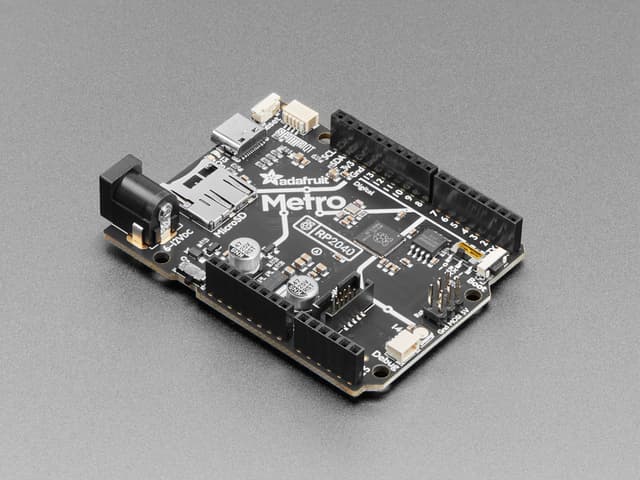
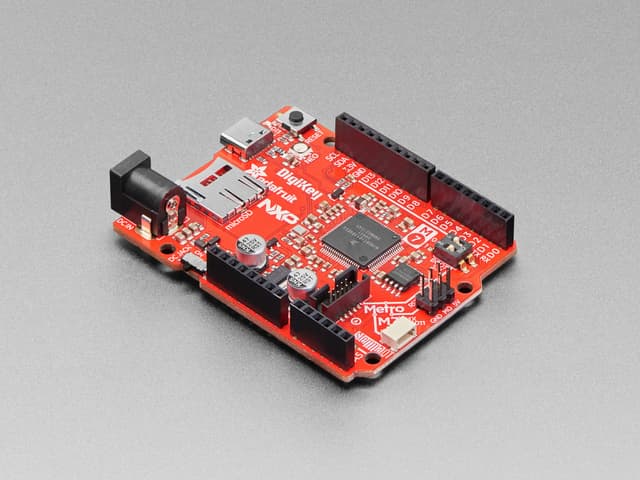
The Adafruit Metro RP2350 brings Raspberry Pi's RP2350 microcontroller into an Arduino Uno-compatible form factor, delivering a significant performance upgrade over the RP2040-based Metro. The RP2350 offers dual ARM Cortex-M33 cores (or dual RISC-V Hazard3 cores) at 150 MHz with hardware floating-point, 520 KB SRAM, 12 PIO state machines, and TrustZone security — roughly doubling performance and memory compared to its predecessor.
The Metro RP2350 provides 16 MB of QSPI flash and a microSD socket (SPI and SDIO-capable) for generous storage. A 22-pin 3-lane differential HSTX FPC connector (Pi 5-compatible) enables high-speed data output for displays and video. The board exposes 23 GPIO on standard Arduino headers, 6 analog inputs, 24 PWM channels, plus 12 additional GPIO via the HSTX port and 2 for USB host. A 5.5mm/2.1mm DC barrel jack accepts 6–17V via a TPS563201 buck converter (up to 2A), with USB Type-C as the primary power and data port.
On-board peripherals include a NeoPixel, LED on pin 23, reset and bootloader buttons, a DPDT RX/TX switch, Pico Probe debug connector, STEMMA QT, and an on/off switch for the DC jack. Fully supported by CircuitPython, MicroPython, C/C++ (Pico SDK), and informal Arduino support. Note: ships with the RP2350 A2 revision affected by the E9 erratum on GPIO pulldown inputs.
Use Cases
6Prototyping
Rapid hardware prototyping and proof-of-concept development with breadboard-friendly form factors and accessible development environments.
Education
Teaching programming, electronics, and computer science concepts. Popular in schools, universities, and coding bootcamps.
Data Logging
Recording time-stamped sensor readings, environmental data, or system events to local storage.
IoT
Internet of Things applications including connected sensors, actuators, and smart devices that communicate over WiFi, BLE, LoRa, or other wireless protocols.
Arduino Shields
Compatible with Arduino Uno-format shields and the Arduino shield ecosystem.
Display
Driving LCD, OLED, e-ink, or DVI/HDMI displays for HMI and media applications.
Where to Buy
Available Software
2Explore more of the directory — popular use cases, firmware, and specs to browse next.