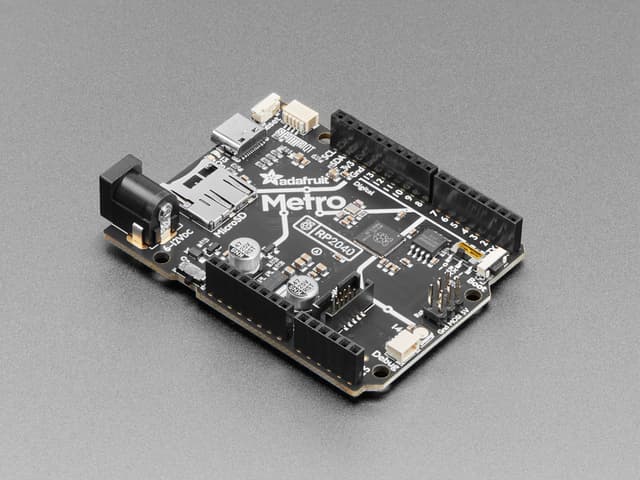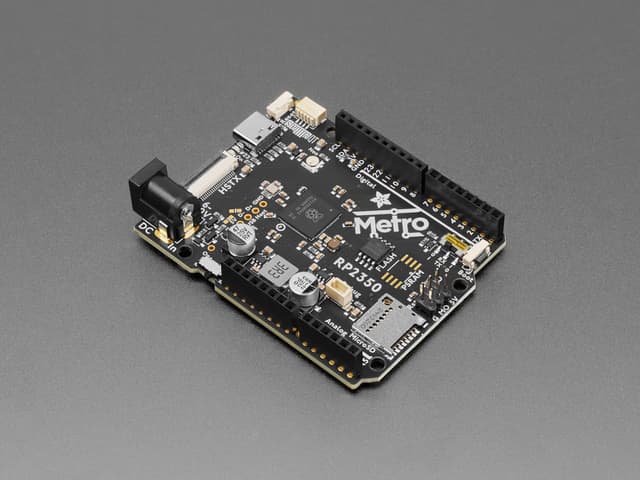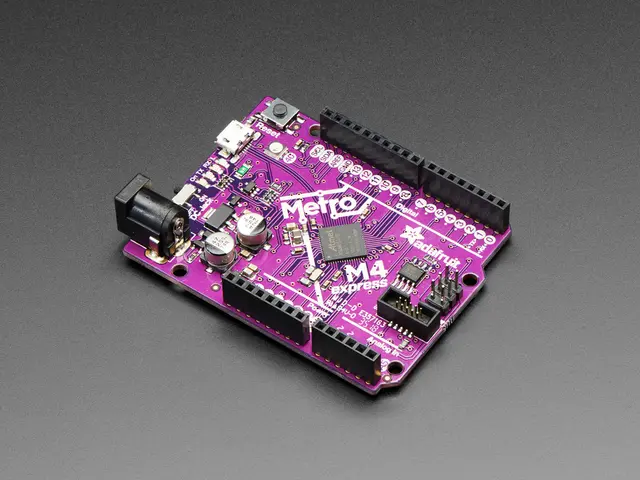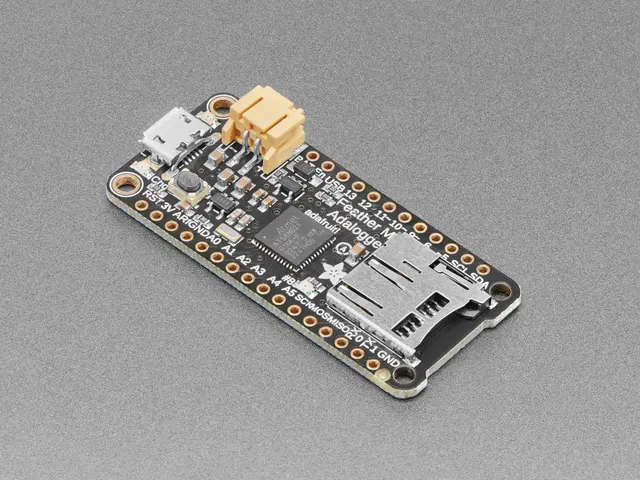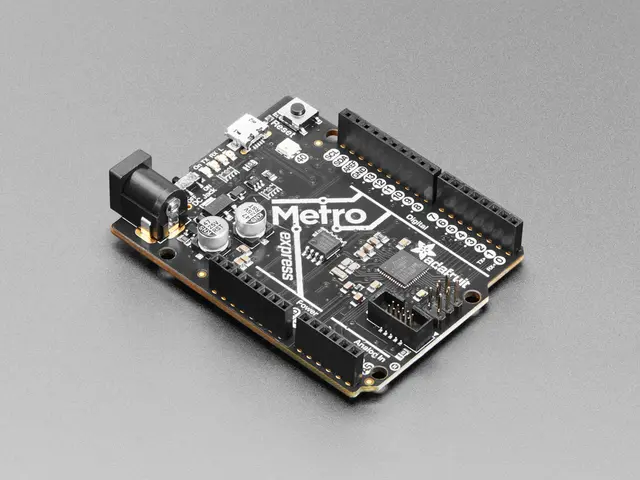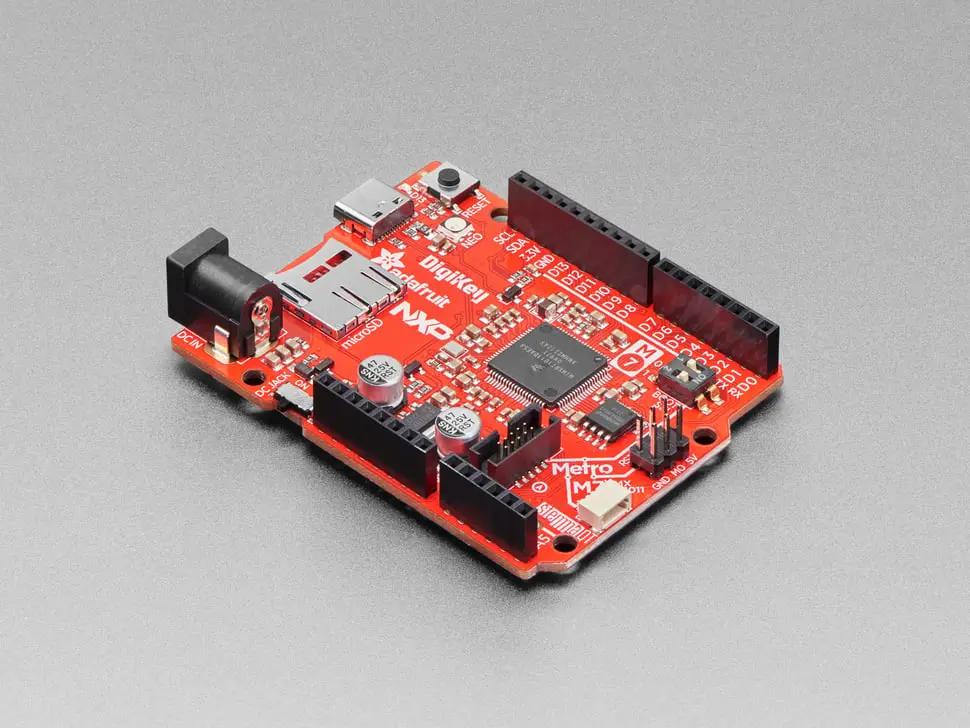
Adafruit Metro M7 with microSD
High-performance Arduino-compatible board powered by the NXP iMX RT1011 Cortex-M7 at 500 MHz, with 8MB QSPI flash, microSD slot, STEMMA QT, and USB-C.
$19.95
Tap any value to browse matching devices
Specifications
Certifications
Components
Addressable RGB NeoPixel for status indication.
Bus Interfaces
GPIO Map
Overview
The Adafruit Metro M7 with microSD is a high-performance development board built around the NXP i.MX RT1011 crossover microcontroller, featuring an ARM Cortex-M7 core running at 500 MHz. This makes it dramatically faster than typical 8-bit or even many 32-bit boards, while still fitting into an Arduino Uno-compatible form factor for use with existing shields.
The board includes 8 MB of QSPI XIP Flash, 128 KB of SRAM, and a dedicated microSD card slot connected via SPI for easy file storage and data logging. An on-board STEMMA QT connector enables direct connection of I2C sensors and peripherals without soldering. Power can be supplied via USB Type-C or a 6–12V DC barrel jack, with an on/off switch for battery-friendly projects.
The Metro M7 is fully supported by CircuitPython and Adafruit's extensive library ecosystem. The board includes a status NeoPixel, user and power LEDs, reset and boot-mode switches, and an SWD debug connector for advanced development.
Use Cases
4Prototyping
Rapid hardware prototyping and proof-of-concept development with breadboard-friendly form factors and accessible development environments.
Data Logging
Recording time-stamped sensor readings, environmental data, or system events to local storage.
IoT
Internet of Things applications including connected sensors, actuators, and smart devices that communicate over WiFi, BLE, LoRa, or other wireless protocols.
Education
Teaching programming, electronics, and computer science concepts. Popular in schools, universities, and coding bootcamps.
Where to Buy
Available Software
1Explore more of the directory — popular use cases, firmware, and specs to browse next.