Airlytix ES1
ESPHome-native indoor air quality sensor with PM1.0/PM2.5/PM4/PM10, CO2, VOC, NOx, temperature, humidity, pressure, light, and sound monitoring. Designed for Home Assistant with full local control and open YAML configuration.
$149.02
Tap any value to browse matching devices
Specifications
Components
Espressif ESP32 dual-core Xtensa LX6 microcontroller running at 240MHz with WiFi 802.11 b/g/n, 520KB SRAM, and 4MB flash. Runs ESPHome firmware with ESP-IDF framework.
Sensirion SEN55 all-in-one environmental sensor measuring PM1.0/PM2.5/PM4/PM10 (0-1000 ug/m3), VOC index (<+/-15% precision), and NOx index (<+/-50% precision). Connected via I2C at address 0x69.
Sensirion SCD41 photoacoustic NDIR CO2 sensor with 400-5000 ppm range and +/-50 ppm accuracy. Supports automatic self-calibration and ambient pressure compensation. I2C address 0x62.
Sensirion SHT40 digital temperature and humidity sensor with +/-0.2C temperature accuracy (-40 to 125C range) and +/-1.8% RH humidity accuracy. I2C address 0x44.
Infineon DPS310 XENSIV barometric pressure sensor with 300-1200 hPa range and +/-0.06 hPa relative accuracy. Provides pressure compensation data for the SCD41 CO2 sensor. I2C address 0x77.
Vishay VEML6040 RGBW color sensor measuring illuminance (0.007865 lux/step, up to 16,496 lux) and correlated color temperature (CCT). Used for ambient light monitoring and lighting automation triggers.
I2S digital MEMS microphone for ambient sound level measurement. Captures A-weighted LAeq_1min and LApeak_1min at 48kHz sample rate, 24-bit resolution with APLL clock.
Bus Interfaces
GPIO Map
Overview
The Airlytix ES1 is a comprehensive indoor environment sensor that runs ESPHome firmware on an ESP32 microcontroller. It measures nine environmental parameters across six high-quality Sensirion, Infineon, and Vishay sensors: particulate matter (PM1.0, PM2.5, PM4, PM10), volatile organic compounds (VOC), nitrogen oxides (NOx), carbon dioxide (CO2), temperature, humidity, barometric pressure, ambient light with color temperature, and sound levels.
Designed specifically for Home Assistant users, the ES1 connects over WiFi and is auto-discovered by the ESPHome integration. Each sensor reading is exposed as a separate entity in Home Assistant, plus a combined "State" entity that aggregates all readings into a simple good/fair/poor classification. An RGB traffic-light LED on the front of the device provides at-a-glance air quality feedback with configurable thresholds that can be adjusted directly from Home Assistant.
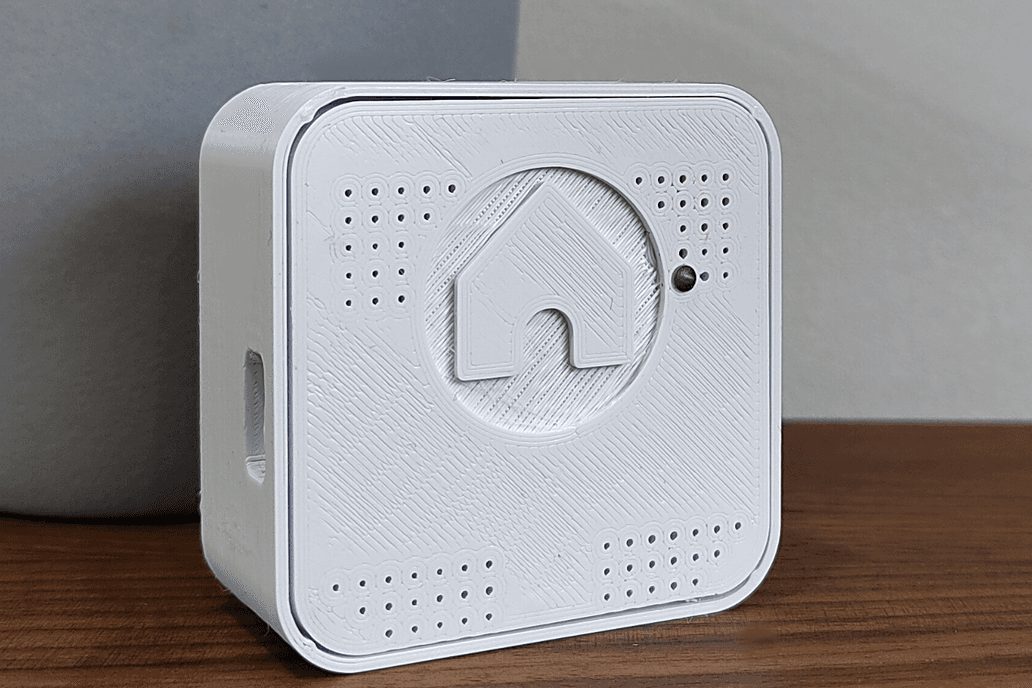
The firmware is fully open source with the complete ESPHome YAML configuration published on GitHub. Users can inspect, fork, and customize every aspect of the device behavior, from sensor polling intervals and Kalman filter fusion parameters to the indicator LED colors and threshold logic. The device ships in a compact 3D-printed enclosure (62.5 x 63 x 34mm) with wall-mounting clip, and is available as a fully assembled unit, a kit requiring mechanical assembly, or a bare PCB for custom enclosures.
The ES1 uses sensor fusion with Kalman filtering to combine temperature and humidity readings from both the SHT40 and SEN55 sensors for improved accuracy. CO2 readings from the SCD41 are automatically compensated using the barometric pressure from the DPS310 sensor. Setup is straightforward via a browser-based installer or WiFi hotspot provisioning, with no soldering required for any variant.
Use Cases
7Air Quality Monitoring
Monitoring indoor or outdoor air quality by measuring particulate matter, CO2, VOCs, NOx, and other pollutants to assess air safety and comfort.
Indoor Air Quality
Monitoring and improving indoor air quality with CO2, VOC, NOx, humidity, and temperature sensors.
Environmental Monitoring
Monitoring environmental conditions like temperature, humidity, air quality, and weather data using remote sensors.
Ventilation Control
Smart ventilation controllers for managing mechanical ventilation units, air flow, and indoor air quality.
Noise Monitoring
Continuous measurement of ambient sound levels (LAeq, LApeak) to detect noise pollution, monitor room acoustics, or trigger automations based on sound thresholds.
Lighting Automation
Automating lighting based on ambient light levels, color temperature, or occupancy to improve comfort and energy efficiency.
Smart Home
Home automation devices for controlling lighting, climate, security, and appliances.
Resources
Where to Buy
Explore more of the directory — popular use cases, firmware, and specs to browse next.