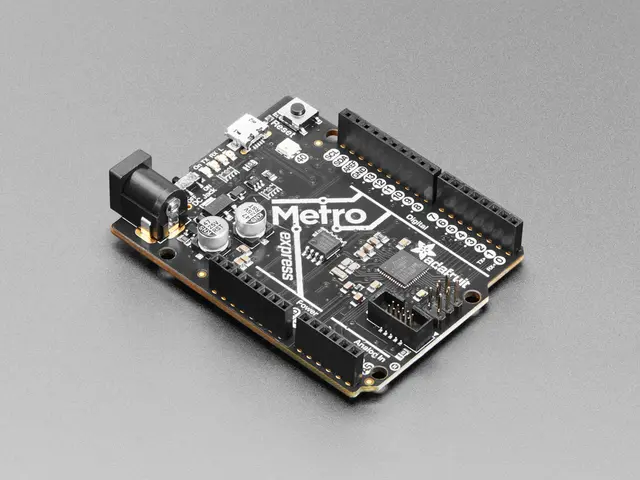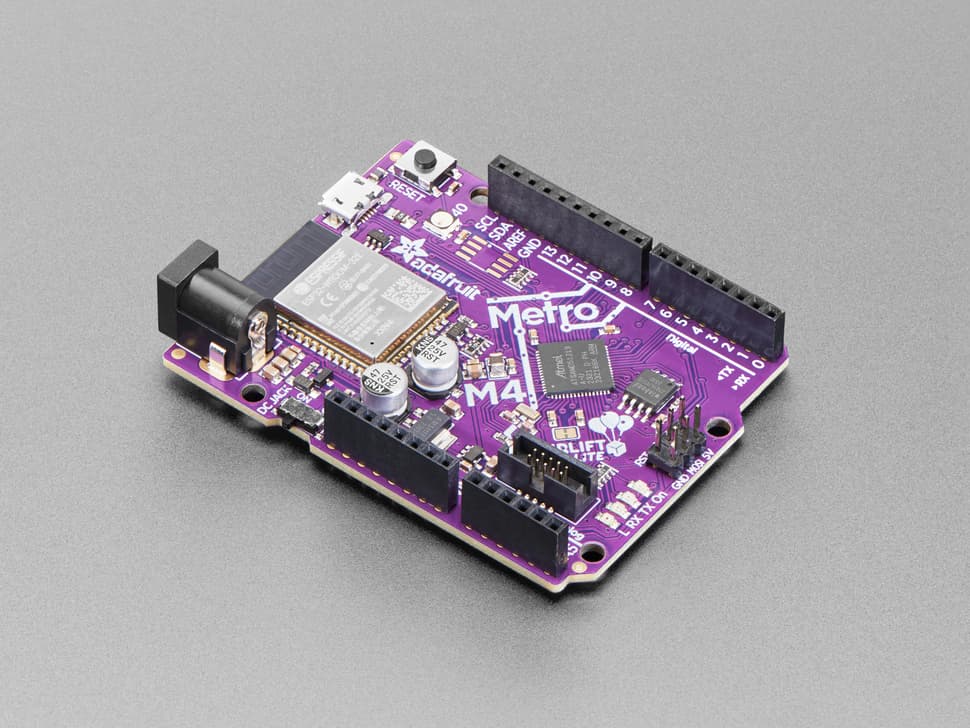
Adafruit Metro M4 Express AirLift
Arduino Uno-compatible board with ATSAMD51J19 Cortex M4F at 120MHz, ESP32 AirLift WiFi co-processor with TLS/SSL, 512KB flash, 192KB RAM, 2MB QSPI flash, 25 GPIO, dual DAC/ADC, and native USB. Arduino shield compatible.
$34.95
Tap any value to browse matching devices
Specifications
Certifications
Components
32-bit ARM Cortex M4F at 120 MHz with 512 KB flash, 192 KB SRAM, AES-256, TRNG, native USB.
ESP32 acting as WiFi co-processor via SPI, providing 802.11 b/g/n with TLS/SSL support.
Bus Interfaces
GPIO Map
Overview
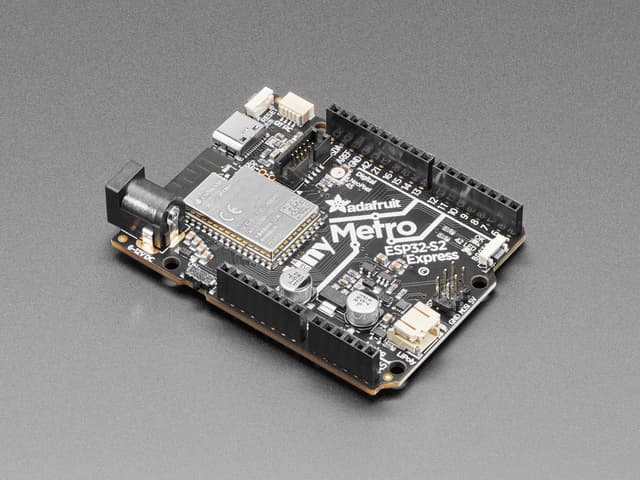
The Adafruit Metro M4 Express AirLift combines the high-performance ATSAMD51J19 ARM Cortex M4F processor with an ESP32 AirLift WiFi co-processor in the standard Arduino Uno form factor. This pairing delivers both the computing power for complex CircuitPython or Arduino applications and WiFi connectivity with full TLS/SSL support, AES-256 encryption, and a true random number generator — all without requiring any WiFi library changes on the main SAMD51 processor.
The ATSAMD51J19 at 120 MHz provides 512 KB of internal flash, 192 KB of SRAM, 2 MB of QSPI flash, 25 GPIO pins with 8 analog inputs, 22 PWM outputs, dual 1 MSPS 12-bit DAC and ADC, 6 SERCOM interfaces, stereo I2S, and 8-bit parallel capture. Native USB handles HID, MIDI, and CDC modes. The Arduino-compatible form factor accepts thousands of existing shields.
The AirLift ESP32 co-processor handles all WiFi protocol stack operations, offloading network processing from the main M4 processor and keeping the WiFi implementation isolated from the main application code. Data is transferred between the SAMD51 and ESP32 via SPI, and Adafruit's WiFiNINA library provides a familiar interface. The AirLift handles WPA2 Enterprise and modern TLS cipher suites, making it suitable for secure cloud IoT applications.
Power input accepts 7-9V DC via barrel jack or 5V USB Micro, with a 3.3V regulated output. The board is ideal for IoT dashboards, secure data logging, connected displays, and retrofit projects requiring high performance plus WiFi in a familiar Arduino hardware ecosystem.
Use Cases
5iot-sensor-platform
Education
Teaching programming, electronics, and computer science concepts. Popular in schools, universities, and coding bootcamps.
Prototyping
Rapid hardware prototyping and proof-of-concept development with breadboard-friendly form factors and accessible development environments.
connected-display
Data Logging
Recording time-stamped sensor readings, environmental data, or system events to local storage.
Where to Buy
Explore more of the directory — popular use cases, firmware, and specs to browse next.