Adafruit Grand Central M4 Express
Arduino Mega-form-factor board with ATSAMD51P20 Cortex M4F at 120MHz, 1MB flash, 256KB RAM, 8MB QSPI flash, 70 GPIO pins, SD card slot, 8 SERCOM, 22 PWM outputs, dual DAC/ADC, AES-256, and native USB.
$39.95
Tap any value to browse matching devices
Specifications
Certifications
Components
32-bit ARM Cortex M4F at 120 MHz with 1 MB flash, 256 KB SRAM, AES-256, TRNG, 8 SERCOM, native USB.
8 MB QSPI NOR flash for CircuitPython code, assets, and data storage.
Bus Interfaces
GPIO Map
Overview
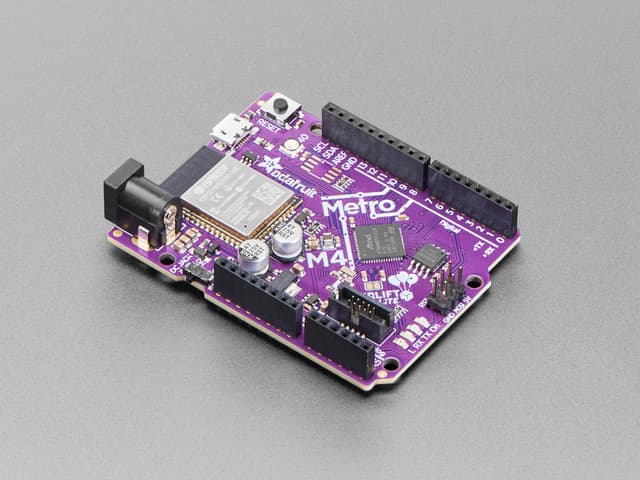
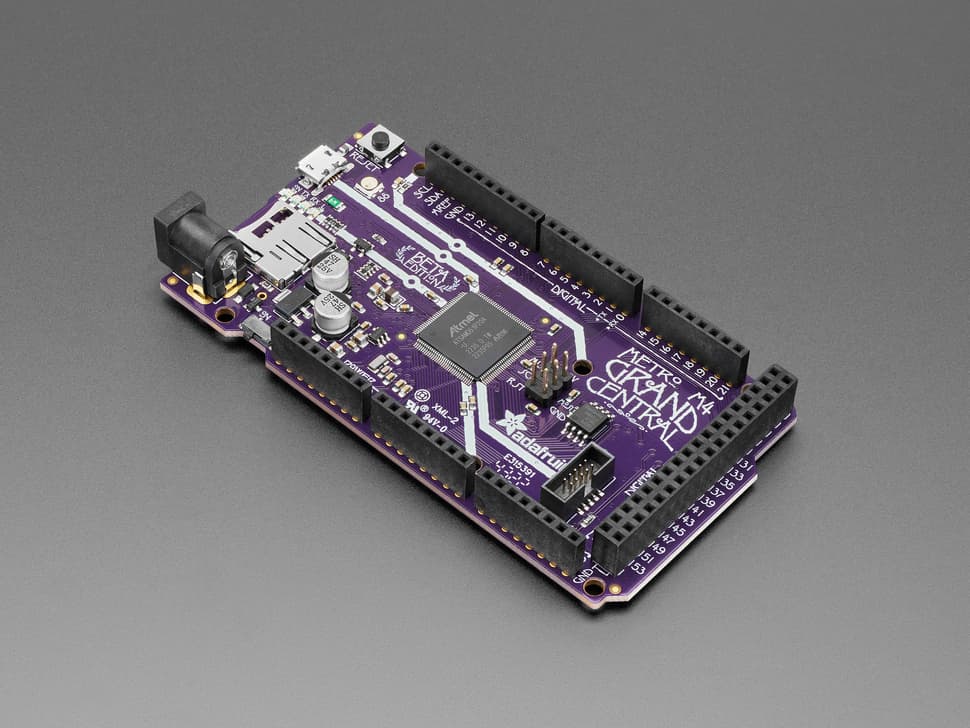
The Adafruit Grand Central M4 Express is the most fully-featured board in Adafruit's SAMD51 lineup, adopting the Arduino Mega form factor to provide an unprecedented 70 GPIO pins while running the ATSAMD51P20 ARM Cortex M4F at 120 MHz. It is the go-to board for projects that have outgrown smaller development boards and need maximum I/O, storage, and processing capability.
The ATSAMD51P20 provides 1 MB of internal flash, 256 KB of SRAM, and 8 MB of QSPI flash for code and data storage. Eight hardware SERCOM interfaces are configurable as SPI, I2C, or Serial — enabling simultaneous operation of multiple buses without software bit-banging. The 70 GPIO pins include 15 analog inputs, 22 PWM outputs, dual 1 MSPS 12-bit DAC and ADC, I2S stereo audio, 8-bit parallel capture, and full compatibility with Arduino Mega shields.
On-board hardware includes a microSD card slot for logging or asset storage, a NeoPixel RGB LED, four status indicator LEDs, a reset button, and native USB via UF2 bootloader. AES-256 hardware acceleration and a true RNG provide cryptographic capability for secure IoT and data integrity applications. The board accepts 6-12V DC via barrel jack or 5V via Micro USB.
CircuitPython is the recommended environment — the large flash and SRAM enable running sizable Python programs with complex data structures. Arduino IDE is also fully supported. The Grand Central M4 is the definitive choice for data acquisition systems, robotics controllers, mixed-signal laboratory instruments, and any application demanding maximum I/O and processing in the Arduino ecosystem.
Use Cases
5data-acquisition
Robotics
General robotics applications including mobile robots, robotic arms, drones, and automated systems.
arduino-shield
Prototyping
Rapid hardware prototyping and proof-of-concept development with breadboard-friendly form factors and accessible development environments.
lab-instrument
Where to Buy
Explore more of the directory — popular use cases, firmware, and specs to browse next.