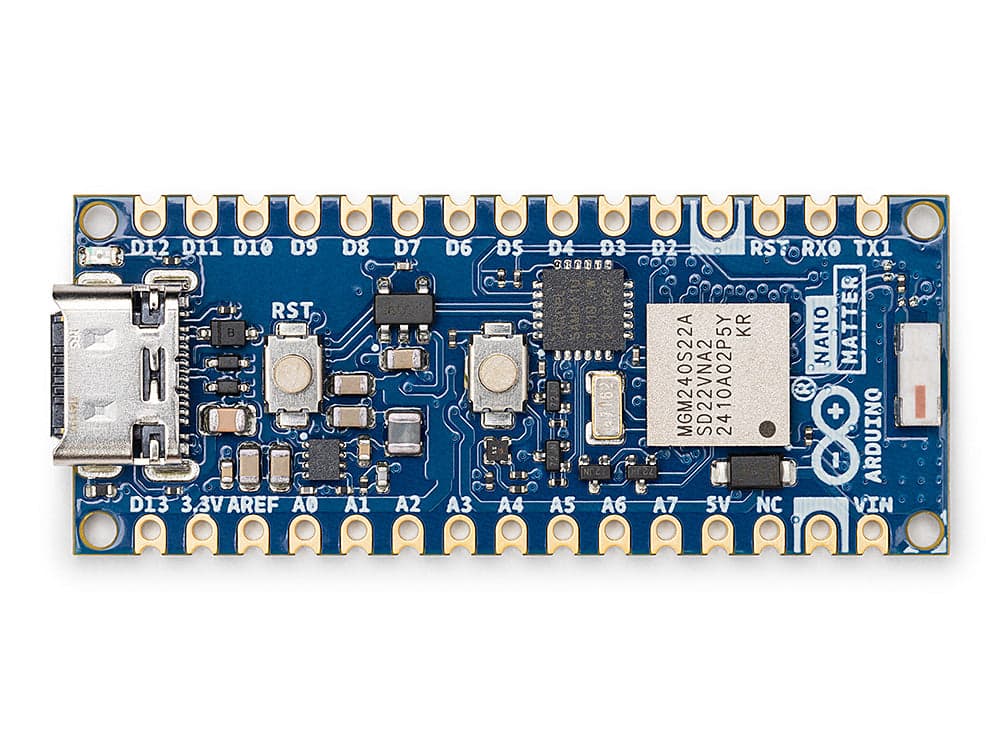
Arduino Nano Matter
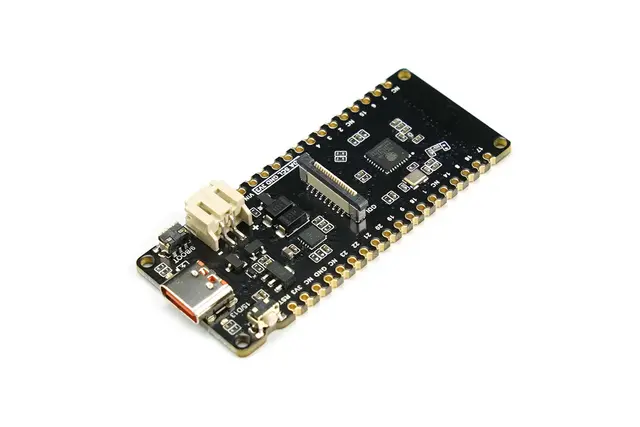
Ultra-compact Matter/Thread/BLE development board based on Silicon Labs MGM240S, bringing official Matter support to the beloved Arduino Nano form factor at 45×18mm.
$22.00
Tap any value to browse matching devices
Specifications
Components
Silicon Labs multiprotocol wireless module with ARM Cortex-M33 @ 78MHz, 1536KB flash, 256KB RAM, Matter/Thread/Zigbee/BLE 5.3, and Secure Vault hardware security.
Bus Interfaces
GPIO Map
Overview
The Arduino Nano Matter is a collaboration between Arduino and Silicon Labs, bringing the Matter smart home standard to the iconic Nano form factor. Built around the Silicon Labs MGM240SD22VNA multiprotocol wireless module, it combines an ARM Cortex-M33 processor with native support for Matter over Thread, BLE 5.3, and Zigbee — making it one of the most accessible entry points for building certified Matter end devices.
At just 45×18mm and 4 grams, the Nano Matter fits into virtually any project enclosure. Its castellated pins allow it to be soldered directly onto a custom PCB, enabling seamless integration into production designs. The onboard USB-C port provides both power and a built-in SWD debug interface — no external debugger required.
Security is built in through Silicon Labs' Secure Vault technology, providing hardware-backed key storage, secure boot, and tamper protection. The board is programmable through the Arduino IDE, CLI, or Cloud Editor using the official Silicon Labs Arduino core, which includes pre-built Matter device type examples for lights, switches, sensors, plugs, and more.
With 22 exposed GPIO, dual UART/I2C/SPI buses, 19-channel 12-bit ADC, and ultra-low power design, the Nano Matter is equally suited for battery-powered sensor nodes, smart switches, and Thread end devices in a home automation network.
Use Cases
6Matter Smart Home
Building Matter-compatible smart home devices that work across ecosystems like Apple Home, Google Home, and Amazon Alexa.
Smart Home
Home automation devices for controlling lighting, climate, security, and appliances.
Thread Mesh Network
Low-power mesh networking using Thread protocol for smart home and IoT devices.
IoT
Internet of Things applications including connected sensors, actuators, and smart devices that communicate over WiFi, BLE, LoRa, or other wireless protocols.
Prototyping
Rapid hardware prototyping and proof-of-concept development with breadboard-friendly form factors and accessible development environments.
Battery Powered Sensor Node
Low-power sensor nodes running on battery for wireless data collection and monitoring.
Resources
Explore more of the directory — popular use cases, firmware, and specs to browse next.