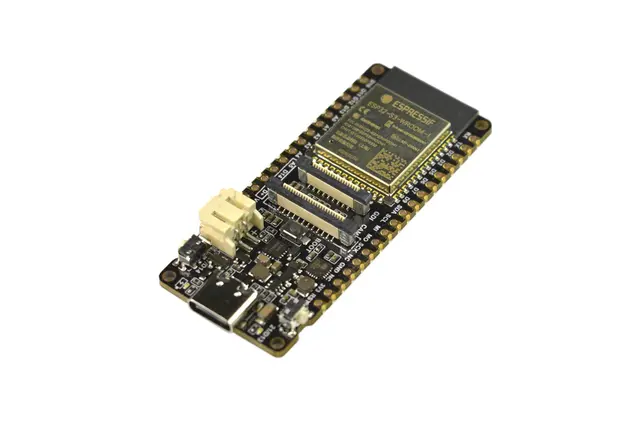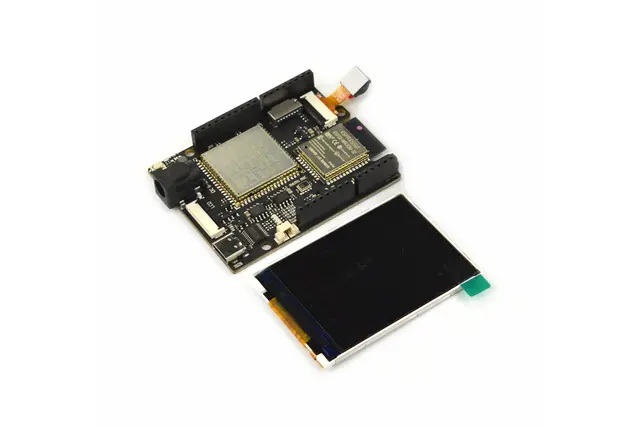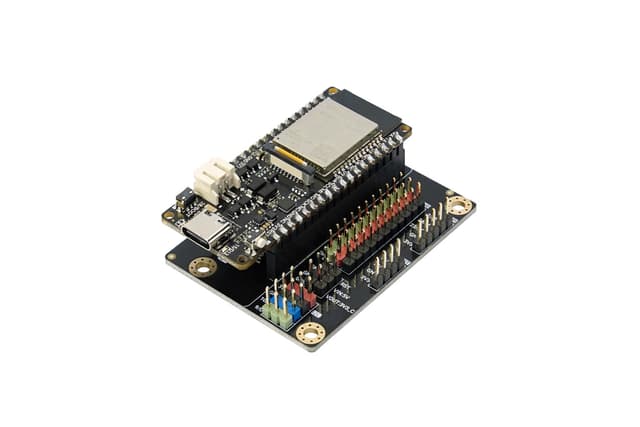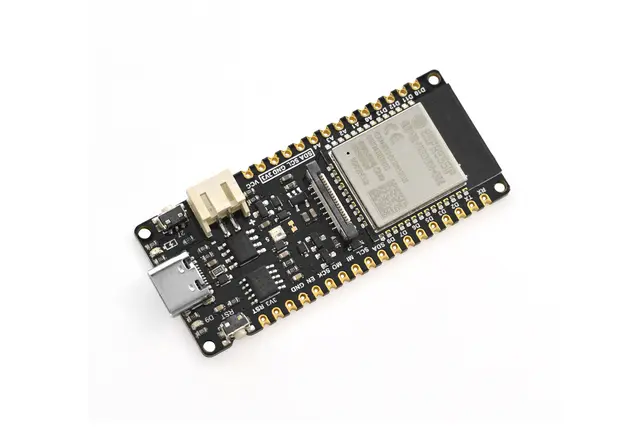
DFRobot UNIHIKER K10
All-in-one AI coding board for STEM education with ESP32-S3, 2.8-inch touchscreen, 2MP camera, microphone, speaker, environmental sensors, WiFi, Bluetooth 5, and pre-loaded AI models for vision, voice, and TinyML.
$28.90
Tap any value to browse matching devices
Specifications
Components
ESP32-S3 Xtensa LX7 dual-core microcontroller at 240MHz with WiFi and Bluetooth 5 for AI edge computing.
Onboard 2-megapixel camera for computer vision, face detection, pet recognition, and QR code scanning.
Overview
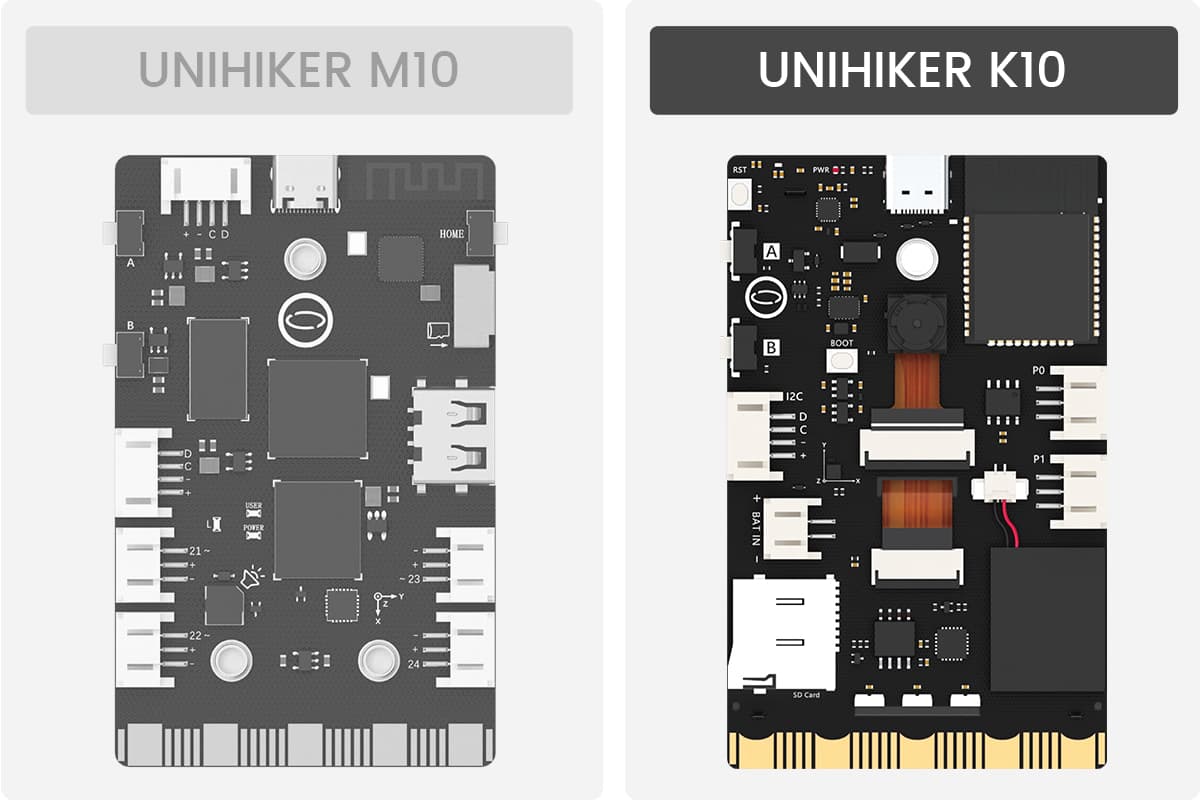
The DFRobot UNIHIKER K10 is an all-in-one AI coding board designed for K-12 STEM education, built around the ESP32-S3 with a 2.8-inch color LCD touchscreen (240x320). It packs an impressive array of onboard sensors and peripherals including a 2MP camera, microphone, speaker, RGB LED, and environmental sensors for temperature, humidity, light, and acceleration — all in a compact 51.6 x 83mm form factor.
What sets the K10 apart is its pre-loaded suite of AI models that work offline: face detection, pet recognition (cat/dog), QR code scanning, motion detection, and local speech recognition with custom voice commands. Students can also train their own TinyML models using camera or sensor data, making it a hands-on platform for learning computer vision, voice AI, and machine learning concepts without cloud dependencies.
Programming is done through MicroPython or the graphical Mind+ drag-and-drop environment, making it accessible to beginners while still powerful enough for intermediate projects. With WiFi 2.4G and Bluetooth 5.0 connectivity, Gravity 3/4-pin expansion connectors, edge connectors, a microSD card slot, and a PH2.0 battery port, the K10 supports IoT projects, sensor data logging, and wireless communication experiments alongside its AI capabilities.
Use Cases
5AI Education
Hands-on AI and machine learning education including computer vision, speech recognition, and TinyML model training.
STEM Education
Educational kits and boards designed to teach science, technology, engineering, and math concepts through hands-on projects.
Computer Vision
Image recognition, object detection, and ML inference using embedded cameras and AI-capable processors.
IoT Sensor Node
Compact wireless sensor node for collecting and transmitting environmental or industrial data.
Voice Assistant
Offline and cloud-connected voice assistant, wake-word detection, and speech recognition projects.
Where to Buy

Explore more of the directory — popular use cases, firmware, and specs to browse next.