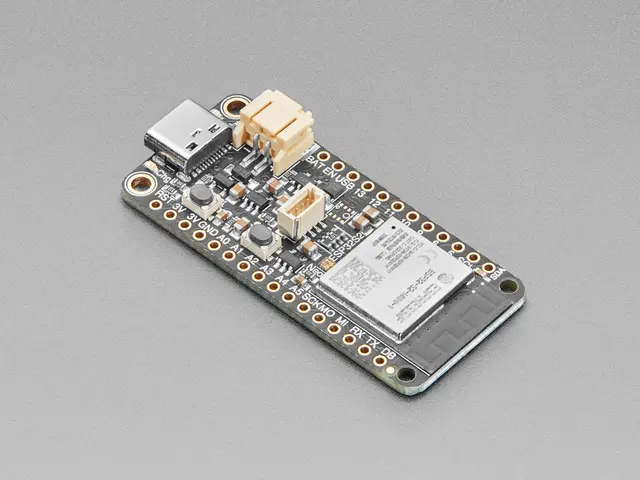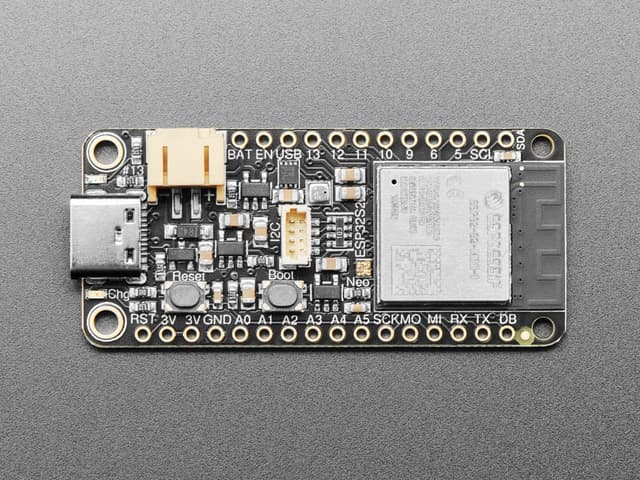
Adafruit FunHouse
WiFi IoT automation board with ESP32-S2, built-in 1.54″ color TFT, barometric pressure, humidity, temperature sensors, DotStar LEDs, capacitive touch, and a speaker.
$34.95
Tap any value to browse matching devices
Specifications
Components
Infineon DPS310 barometric pressure and temperature sensor with I2C interface.
ASAIR AHT20 capacitive relative-humidity and temperature sensor with I2C interface.
Sitronix ST7789 SPI display controller driving the 240x240 colour TFT panel.
Bus Interfaces
GPIO Map
Overview
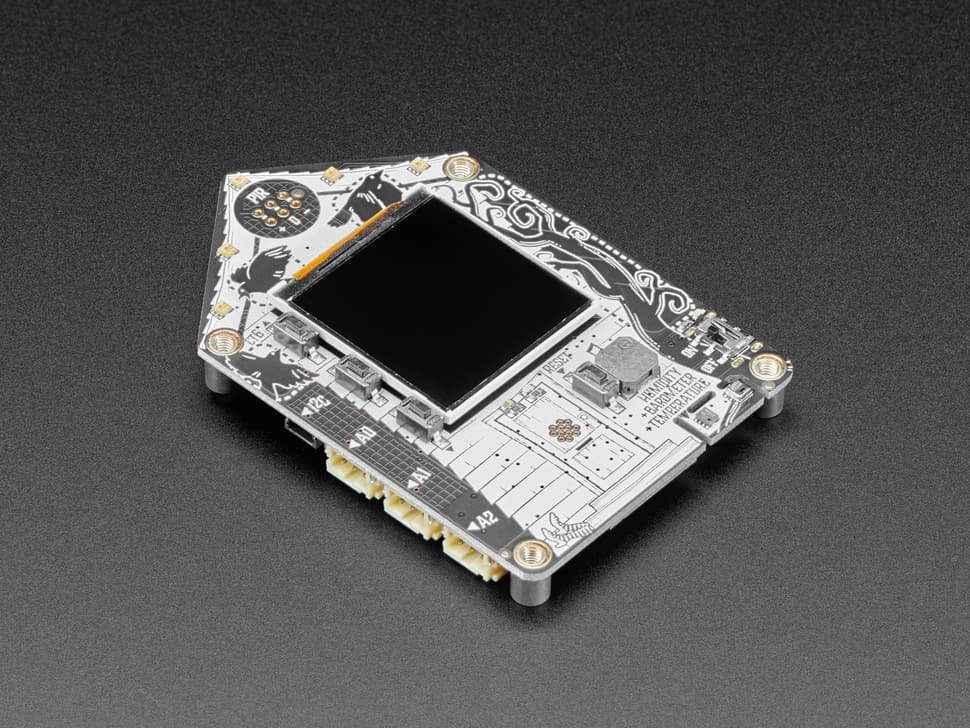
The Adafruit FunHouse is a purpose-built WiFi home-automation development board based on the ESP32-S2. Unlike bare dev boards, FunHouse arrives with a curated set of onboard sensors and outputs so you can prototype smart-home devices without wiring anything extra. The 1.54″ 240 × 240 colour TFT display provides a local readout or simple UI, while the five DotStar RGB LEDs and a small speaker round out the user-interaction layer.
Environmental sensing is provided by both a DPS310 barometric pressure and temperature sensor and an AHT20 relative-humidity and temperature sensor, giving redundant temperature readings and full atmospheric data out of the box. A front-facing ambient-light sensor and an optional PIR socket let you detect presence and ambient conditions for true home-automation logic.
Three STEMMA JST connectors and a STEMMA QT port allow straightforward integration of additional sensors, actuators, and I2C peripherals. Three capacitive-touch pads and a five-element touch slider give tactile input without physical buttons for a clean panel look.
The ESP32-S2's native USB support means the board appears as a keyboard, mouse, MIDI device, or mass-storage drive, simplifying development with CircuitPython's UF2 bootloader workflow. Power comes from USB-C and the board supports direct wall installation.
Use Cases
4Smart Home
Home automation devices for controlling lighting, climate, security, and appliances.
home-automation
Environmental Monitoring
Monitoring environmental conditions like temperature, humidity, air quality, and weather data using remote sensors.
IoT
Internet of Things applications including connected sensors, actuators, and smart devices that communicate over WiFi, BLE, LoRa, or other wireless protocols.
Where to Buy
Available Software
2Explore more of the directory — popular use cases, firmware, and specs to browse next.