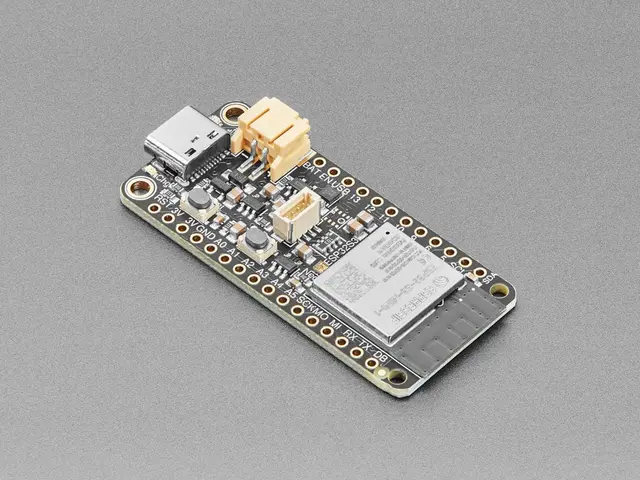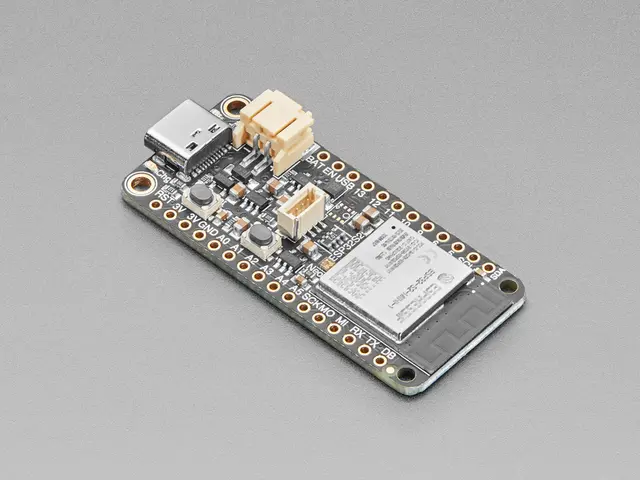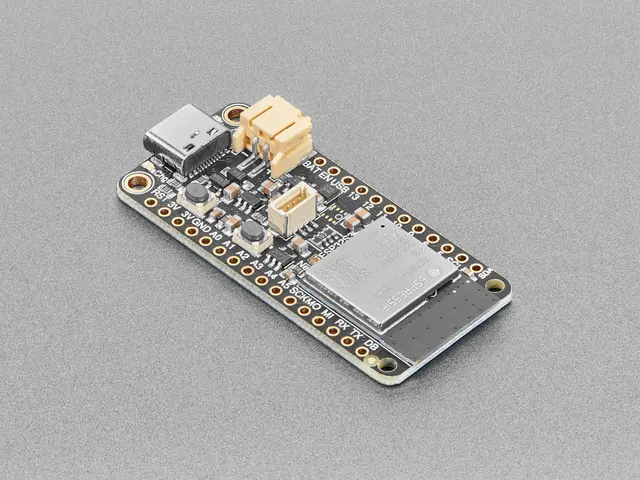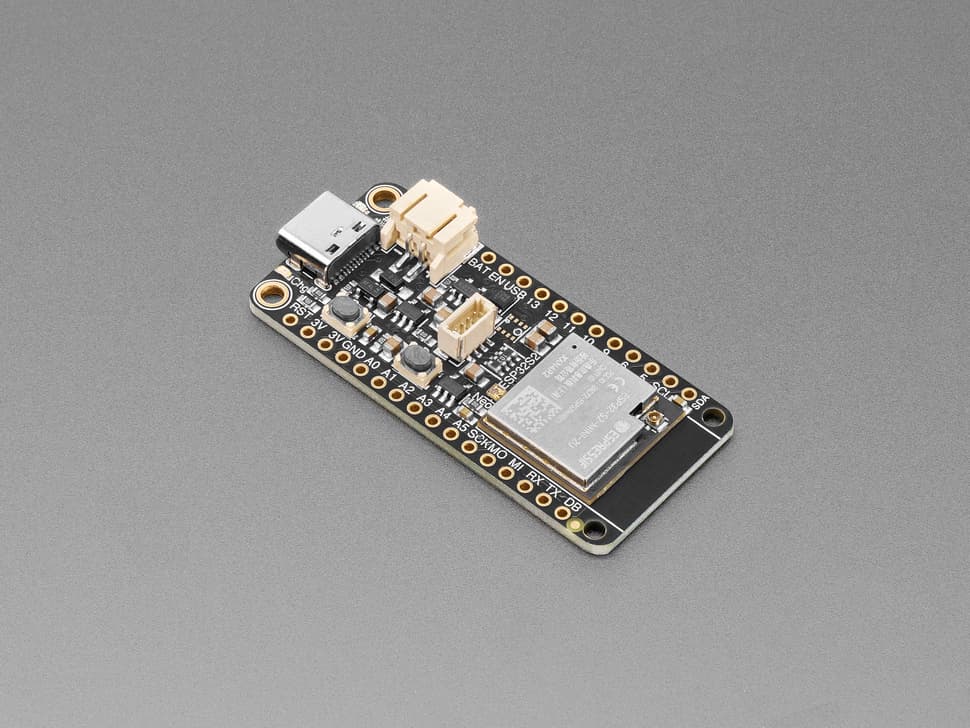
Adafruit ESP32-S2 Feather with w.FL Antenna
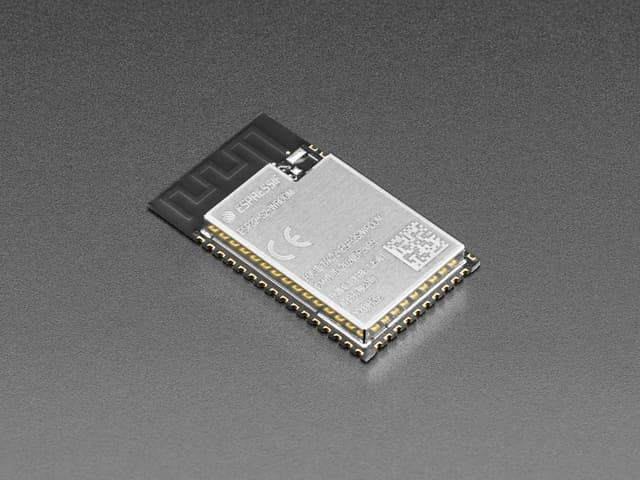
The Adafruit ESP32-S2 Feather with w.FL is a Feather-form WiFi microcontroller board with a w.FL (MHF4) external antenna connector for extended range. It features a 240MHz ESP32-S2 single-core CPU, 4MB flash, 2MB PSRAM, native USB-C, and LiPo battery charging — no Bluetooth.
$17.50
Tap any value to browse matching devices
Specifications
Certifications
Components
Single-core Xtensa LX7 at 240MHz with native USB OTG, WiFi 802.11 b/g/n, and no Bluetooth.
Bus Interfaces
GPIO Map
Overview
The Adafruit ESP32-S2 Feather with w.FL Antenna is a variant of the standard ESP32-S2 Feather that replaces the onboard PCB trace antenna with a w.FL (MHF4) miniature coaxial connector. This enables connection of an external antenna for significantly improved WiFi range in environments where the built-in antenna falls short — through walls, in metal enclosures, or across larger spaces. Beyond the antenna, the board is identical to the standard ESP32-S2 Feather.
At the heart of the board is the ESP32-S2 single-core Xtensa LX7 running at up to 240MHz. Unlike the dual-core ESP32, the S2 variant omits Bluetooth entirely but adds native USB — the USB-C connector connects directly to the ESP32-S2's built-in USB peripheral, enabling keyboard, mouse, MIDI, and mass-storage emulation without a UART bridge chip. This makes it particularly well-suited for USB HID and CDC applications.
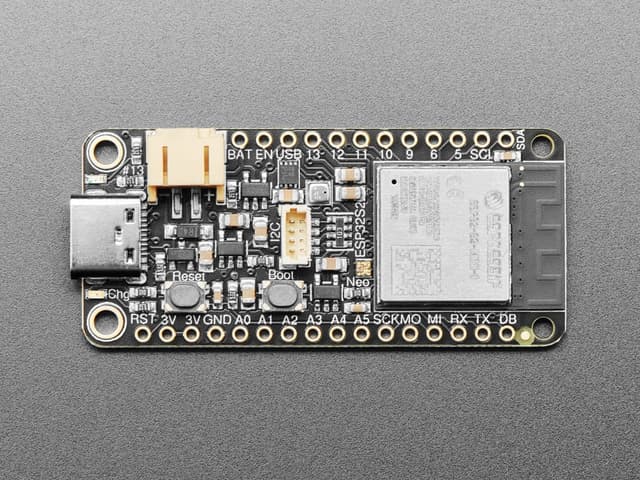
The board includes 4MB of SPI flash and 2MB of PSRAM for expanded memory, a STEMMA QT I2C connector for plug-and-play sensor integration, and built-in LiPoly battery charging with a JST-PH 2-pin connector. In deep sleep the board consumes only 80–100µA, making it suitable for battery-powered sensor nodes that wake periodically to transmit data. The Feather form factor ensures compatibility with the wide range of FeatherWing add-on boards.
The ESP32-S2 Feather supports Arduino, CircuitPython, and ESP-IDF development. Adafruit provides extensive learning guides, and CircuitPython ships pre-installed, enabling immediate development without any additional toolchain setup.
Use Cases
4IoT
Internet of Things applications including connected sensors, actuators, and smart devices that communicate over WiFi, BLE, LoRa, or other wireless protocols.
Prototyping
Rapid hardware prototyping and proof-of-concept development with breadboard-friendly form factors and accessible development environments.
USB HID Device
Implementing a USB Human Interface Device such as a keyboard, mouse, game controller, or MIDI device using native USB support.
Field Data Logger
Battery-powered device for recording sensor data, GPS coordinates, and environmental measurements in the field.
Resources
Where to Buy
Available Software
2Explore more of the directory — popular use cases, firmware, and specs to browse next.