Arduino Nicla Voice
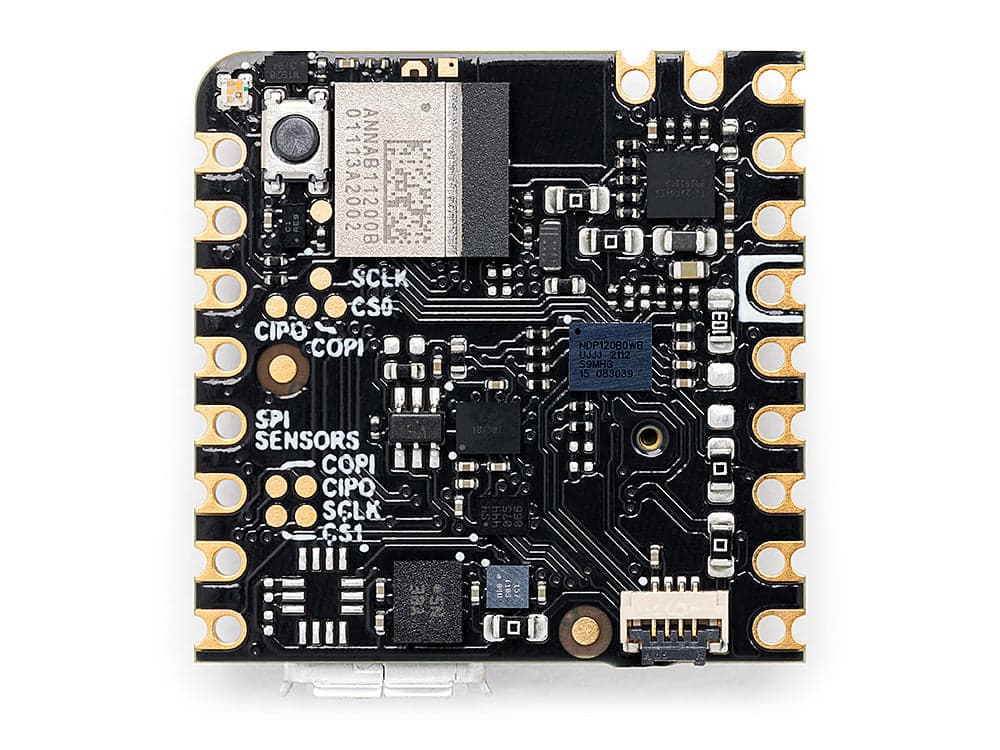
Tiny 22.86mm AI voice module with nRF52840 BLE 5.0, Syntiant NDP120 neural decision processor, MEMS microphone, 6-axis IMU, and magnetometer — runs always-on voice recognition and audio anomaly detection at ultra-low power.
$50.00
Tap any value to browse matching devices
Specifications
Components
Nordic nRF52840 at 64MHz with BLE 5.0 for application logic and wireless communication.
Syntiant NDP120 ultra-low-power neural processor for always-on voice recognition, keyword spotting, and audio event classification.
Bosch BMI270 6-axis IMU with accelerometer and gyroscope.
STMicroelectronics MP34DT06JTR omnidirectional MEMS microphone with PDM output.
Bus Interfaces
GPIO Map
Overview
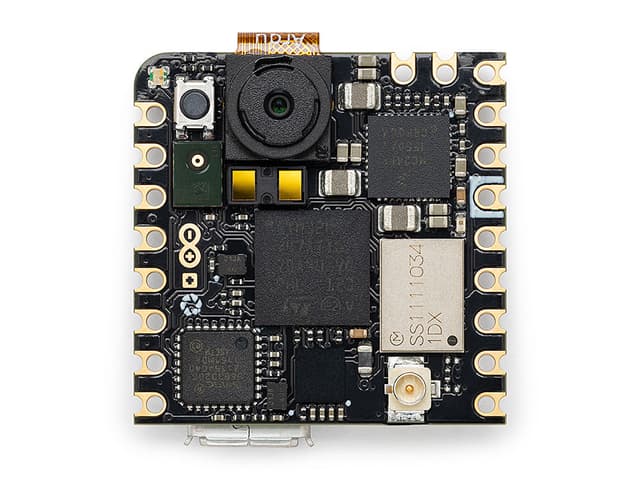
The Arduino Nicla Voice is a miniature (22.86×22.86mm) AI-powered module that combines always-on voice recognition with motion sensing. At its core is the Syntiant NDP120 neural decision processor, which runs multiple AI algorithms simultaneously at microwatt-level power consumption, enabling continuous keyword detection and audio classification without draining the battery.
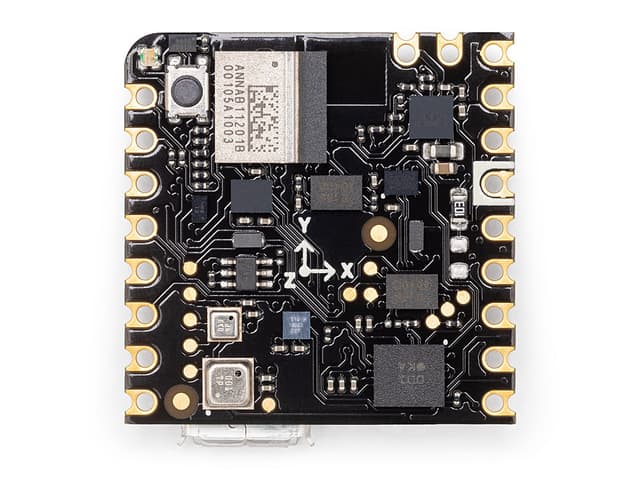
The nRF52840 ARM Cortex-M4F handles BLE 5.0 communication and application logic, while the onboard MEMS microphone captures audio and the BMI270 6-axis IMU + BMM150 magnetometer provide motion and orientation data. This combination enables voice commands, sound classification (glass breaking, machinery failure), gesture recognition, and compass heading in a package smaller than a coin.
Compatible with Nicla, Portenta, and MKR product lines, the Nicla Voice is designed for wearables, retrofit sensors, and standalone battery-powered AI devices where always-on intelligence in minimal form factor is essential.
Use Cases
3Voice Assistant
Offline and cloud-connected voice assistant, wake-word detection, and speech recognition projects.
Wearable
Body-worn computing devices including smartwatches, fitness bands, and health monitors.
Industrial IoT
Build robust industrial IoT solutions using CAN bus, RS-485, Modbus, and wired Ethernet interfaces.
Resources
Explore more of the directory — popular use cases, firmware, and specs to browse next.