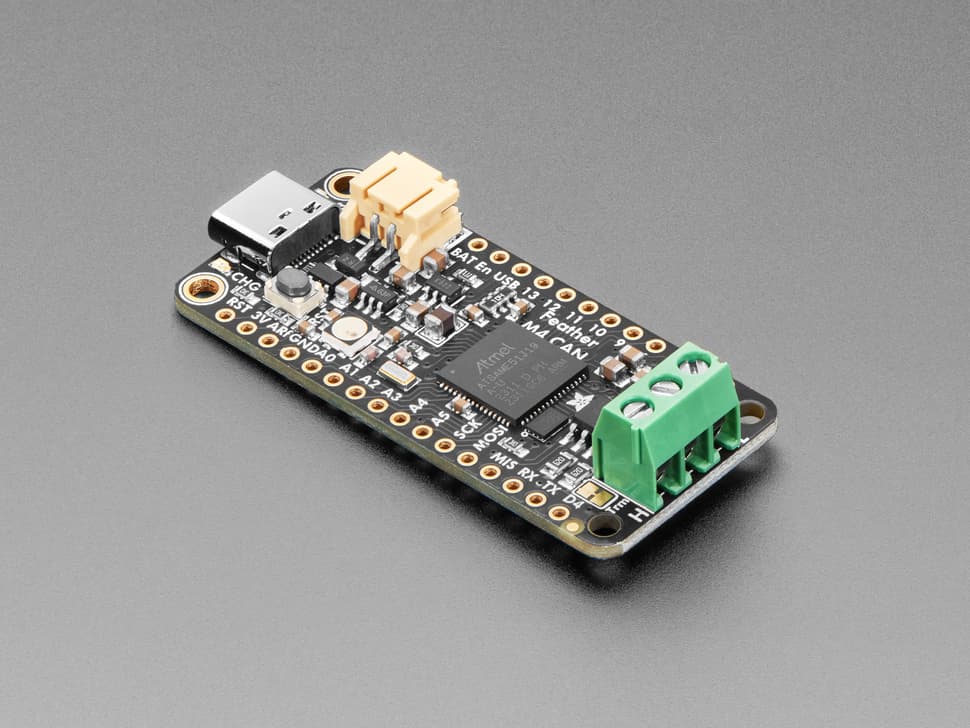
Adafruit Feather M4 CAN Express
CAN-bus-capable Feather with ATSAME51J19 ARM Cortex-M4F @ 120MHz, built-in CAN transceiver + 5V booster, USB-C, 21 GPIO, 2MB SPI Flash, dual DAC, and LiPo charging. Ideal for automotive and industrial CAN Bus projects.
$24.95
Tap any value to browse matching devices
Specifications
Certifications
Components
Microchip ATSAME51J19 ARM Cortex-M4F @ 120MHz, 512KB Flash, 192KB RAM, native CAN 2.0, USB.
Bus Interfaces
GPIO Map
Overview
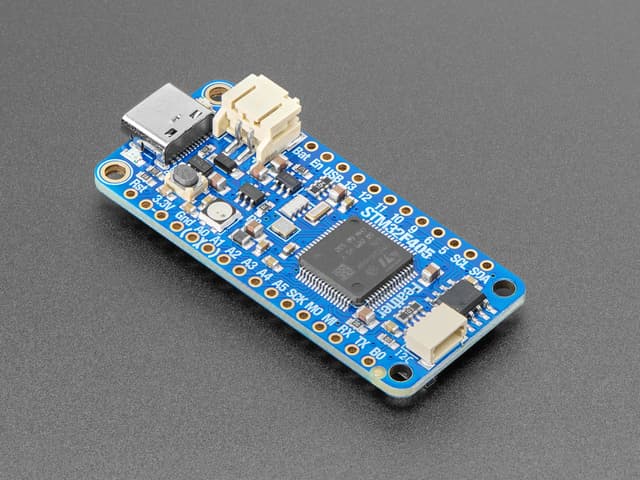
The Adafruit Feather M4 CAN Express brings native CAN bus connectivity to the Feather form factor for the first time. It is built around the Microchip ATSAME51J19 — an ARM Cortex-M4F running at 120MHz with a built-in CAN controller — and adds an onboard CAN transceiver and 5V booster circuit to drive the CAN bus directly without any external components. A screw terminal block provides the CAN H/L connection points, making integration into automotive and industrial networks straightforward.
The SAME51 differentiates itself from the SAMD51 used in other Adafruit Feathers by adding native CAN 2.0 support (both standard 11-bit and extended 29-bit frame formats) directly in silicon. Beyond CAN, the chip provides six hardware SERCOM modules configurable as SPI, I2C, or UART, plus I2S input and output, dual 12-bit DAC, and dual 12-bit ADC. The Feather M4 CAN adds 2MB of external SPI Flash for additional code and data storage.
Power management follows the standard Feather specification: USB-C for power and data, a built-in 100mA LiPoly charger, and a 3.3V regulator delivering up to 500mA peak. A 32.768 kHz crystal supports a real-time clock. An onboard mini NeoPixel provides visual status. The 5V CAN booster is generated internally so even USB-powered (5V) operation supports proper CAN signaling levels.
The board is programmed via the pre-loaded UF2 bootloader supporting both CircuitPython (with the canio module for CAN frame sending/receiving) and the Arduino IDE. Adafruit publishes a dedicated guide covering canio usage for automotive data logging, CAN-based motor controllers, and sensor networks.
Use Cases
3Industrial Automation
Boards designed or suitable for industrial control, automation, and embedded systems in harsh environments.
IoT
Internet of Things applications including connected sensors, actuators, and smart devices that communicate over WiFi, BLE, LoRa, or other wireless protocols.
Field Data Logger
Battery-powered device for recording sensor data, GPS coordinates, and environmental measurements in the field.
Where to Buy
Explore more of the directory — popular use cases, firmware, and specs to browse next.