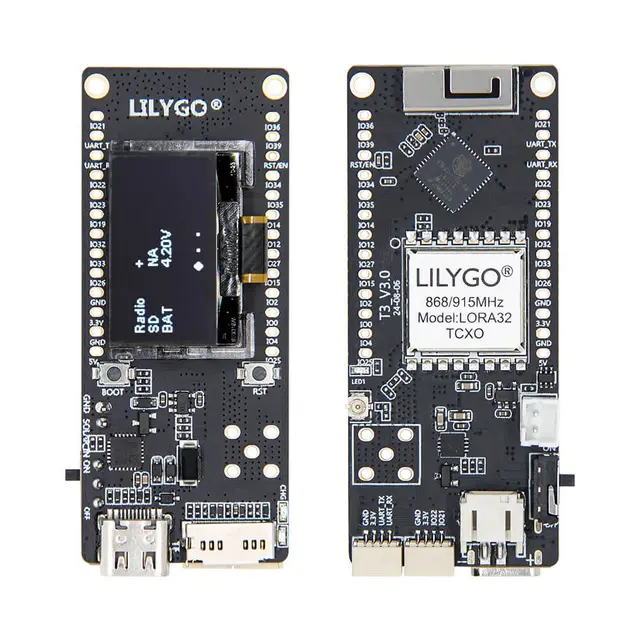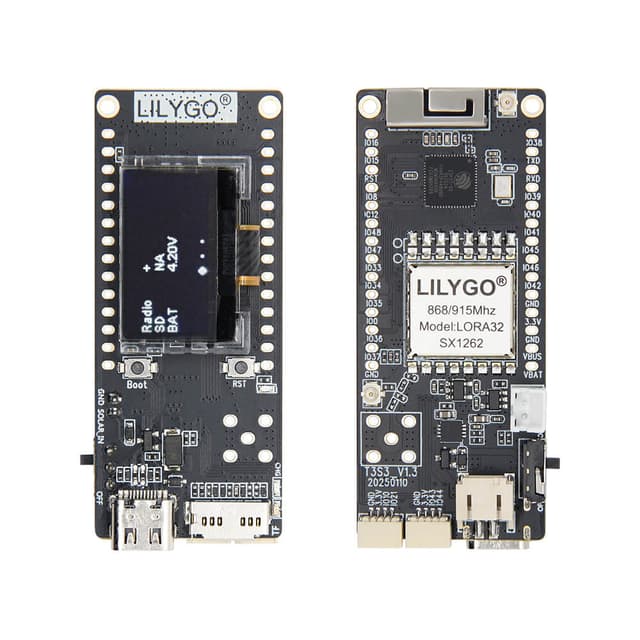
LILYGO T3 STM32
STM32WL55CCU6 LoRa development board with dual Cortex-M4 + M0+ cores, built-in LoRa/FSK/MSK radio at 433/868/915MHz, 0.96-inch SSD1315 OLED, 256KB Flash, 64KB RAM, and open-source Arduino/STM32CubeIDE firmware support.
$15.03
Tap any value to browse matching devices
Specifications
Components
Dual-core STM32WL with Cortex-M4 and Cortex-M0+ CPUs plus integrated sub-GHz LoRa/FSK/MSK/BPSK radio at 433/868/915MHz.
0.96-inch monochrome OLED at 128×64 resolution via SPI interface.
Bus Interfaces
Overview
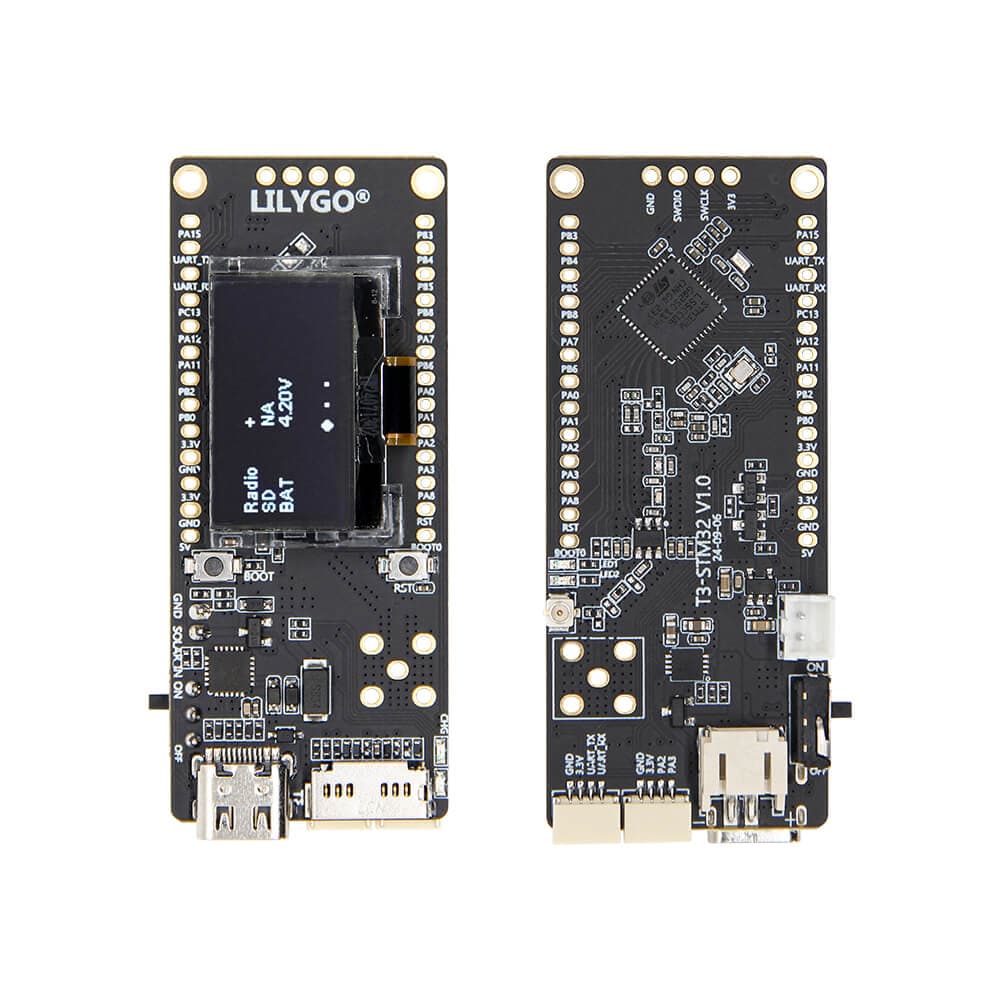
The LILYGO T3 STM32 is a unique LoRa development board built around the STMicroelectronics STM32WL55CCU6 — a dual-core SoC with Arm Cortex-M4 (application processor) and Cortex-M0+ (radio controller) cores. Unlike ESP32-based T3 boards, the STM32WL has the LoRa radio integrated directly on-chip rather than as a separate module. It supports LoRa, (G)FSK, (G)MSK, and BPSK modulation at 433/868/915MHz, making it compatible with LoRaWAN and custom LoRa protocols. The board includes 256KB Flash and 64KB SRAM, a 0.96-inch SSD1315 OLED display (128×64, SPI interface), and a TF card slot. Programmable via Arduino (STM32duino) or STM32CubeIDE, it is a compelling alternative for users who want a true integrated LoRa SoC without the ESP32 ecosystem, ideal for long-range sensor nodes and low-power LoRaWAN end devices.
Use Cases
5LoRa Mesh Networking
Building off-grid mesh communication networks using LoRa radio for text messaging, location sharing, and sensor data relay without cellular or internet infrastructure.
Off-Grid Communication
Text messaging and data exchange in areas without cellular or internet coverage.
IoT
Internet of Things applications including connected sensors, actuators, and smart devices that communicate over WiFi, BLE, LoRa, or other wireless protocols.
Environmental Monitoring
Monitoring environmental conditions like temperature, humidity, air quality, and weather data using remote sensors.
LoRa Messenger
Build an off-grid text messaging device using LoRa for range and low power.
Where to Buy
Explore more of the directory — popular use cases, firmware, and specs to browse next.