Pycom WiPy 3.0
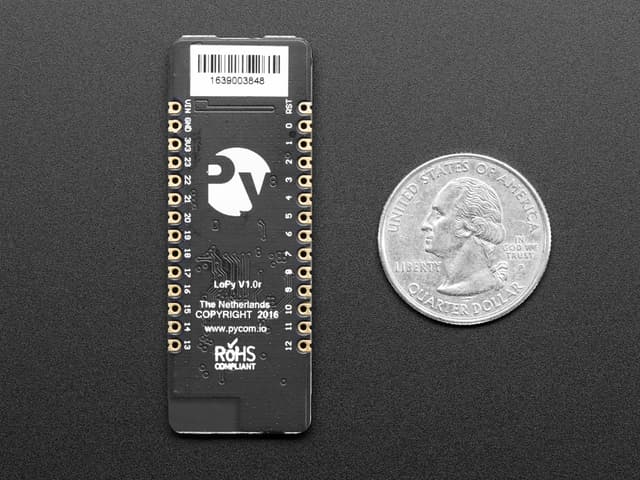
ESP32-based MicroPython IoT module with 802.11b/g/n WiFi, Bluetooth LE and Classic, 8MB flash, 4MB RAM, and ultra-low power ULP co-processor for deep-sleep GPIO monitoring at 25 µA.
$32.50
Tap any value to browse matching devices
Specifications
Components
Bus Interfaces
GPIO Map
Overview
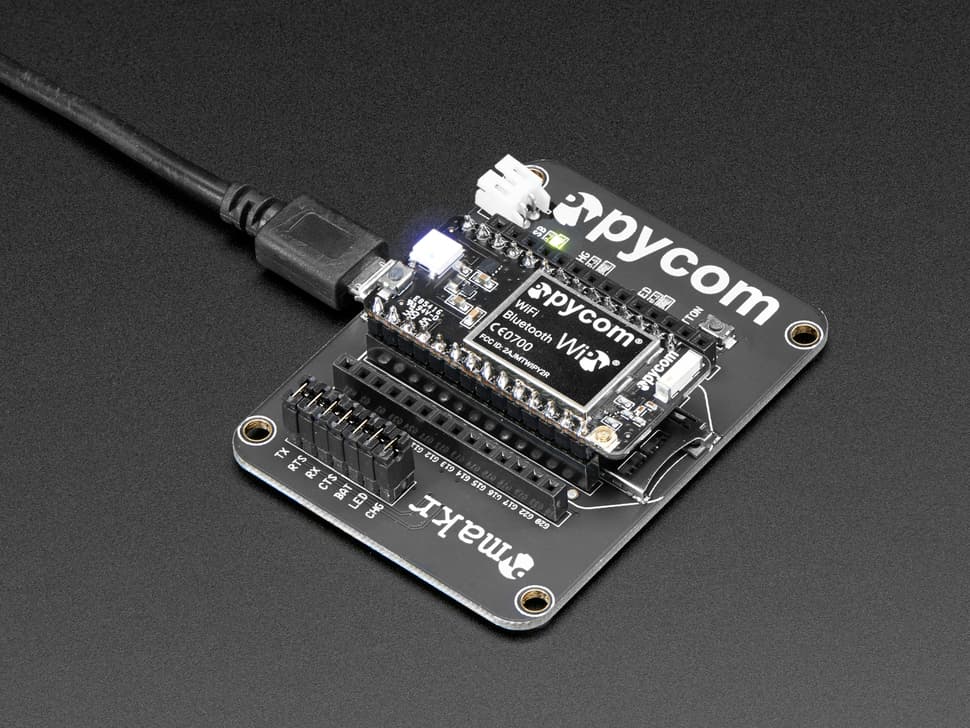
The Pycom WiPy 3.0 is a compact, MicroPython-native IoT development module built on the Espressif ESP32 chipset. It is designed to be 100% programmable in Python with multi-threading support, enabling rapid development of connected IoT applications without leaving the Python ecosystem.
The board features dual-core ESP32 processing with hardware floating-point acceleration, 802.11b/g/n WiFi with claimed 1km range, and both Bluetooth Low Energy and Classic Bluetooth. The upgraded 4MB RAM (from 512KB in WiPy 2.0) and 8MB external flash (from 4MB) give substantially more headroom for complex Python programs and large libraries.
The ULP (ultra-low power) co-processor can monitor GPIOs while the main CPU is in deep sleep, enabling power consumption of just 25 µA — critical for battery-powered IoT deployments. Up to 24 GPIO pins are available, along with 8 analog inputs (12-bit ADC), 2 UARTs, 2 SPI ports, I2C, I2S, and a microSD interface.
WPA Enterprise security and hardware SSL/TLS make the WiPy 3.0 suitable for enterprise IoT deployments. The board works with Pycom's Expansion Board for easy breadboarding and includes secure boot and encryption features from the ESP32 chipset.
Use Cases
4IoT
Internet of Things applications including connected sensors, actuators, and smart devices that communicate over WiFi, BLE, LoRa, or other wireless protocols.
IoT Sensor Node
Compact wireless sensor node for collecting and transmitting environmental or industrial data.
Prototyping
Rapid hardware prototyping and proof-of-concept development with breadboard-friendly form factors and accessible development environments.
Smart Home
Home automation devices for controlling lighting, climate, security, and appliances.
Where to Buy
Explore more of the directory — popular use cases, firmware, and specs to browse next.