PicoGlitcher V3
Open-source voltage glitching tool for hardware security research, based on Raspberry Pi Pico 2 (RP2350) with dual high-power MOSFETs, 4 selectable voltage levels, and adjustable Schmitt trigger inputs.
$54.00
Tap any value to browse matching devices
Specifications
Components
Dual-core ARM Cortex-M33 / RISC-V Hazard3 microcontroller at 150MHz with 520KB SRAM, providing high-speed glitch timing control.
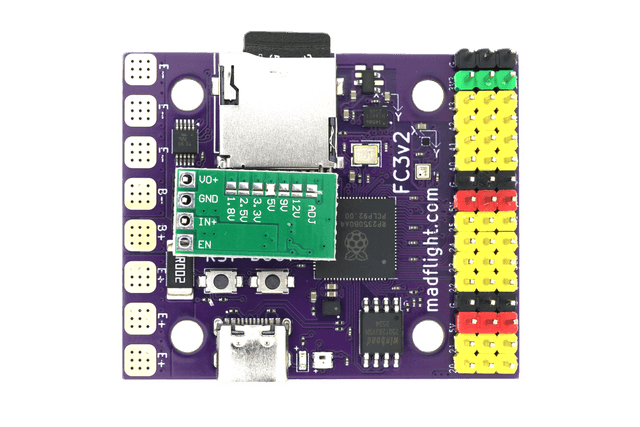
Two N-channel MOSFET transistors (IRF9410/NDS8434-compatible SOIC-8) capable of switching up to 66A for generating crowbar-style voltage glitches on target power rails.
Two Schmitt trigger input channels (EXT1, EXT2) with adjustable threshold, attenuation, and hysteresis via onboard potentiometers for reliable glitch triggering.
Two SN74LVC8T245 bidirectional voltage level shifters from Texas Instruments for translating signals between the RP2350 (3.3V) and target devices at 1.2V to 5V.
Analog multiplexer for rapid switching between four voltage outputs (1.2V, 1.8V, 3.3V, 5V) during fault injection operations.
Bus Interfaces
The PicoGlitcher V3 is an open-source voltage fault injection tool designed to make hardware security research accessible to hobbyists and professionals alike. Built around the Raspberry Pi Pico 2 with the RP2350 microcontroller, it provides higher clock speeds and improved timing accuracy compared to previous versions, enabling more precise glitch attacks against microcontrollers and secure elements. The board generates crowbar-style voltage glitches using two high-power MOSFETs capable of switching up to 66 amps, making it a powerful yet affordable alternative to professional tools like the ChipWhisperer Pro.
Version 3 introduces a selectable power supply with four voltage levels (1.2V, 1.8V, 3.3V, and 5V), allowing it to interface with a wide range of target microcontrollers. The improved Schmitt trigger inputs on the EXT1 and EXT2 channels feature adjustable threshold, attenuation, and hysteresis via onboard potentiometers, providing reliable triggering across different signal conditions. Level shifters based on the SN74LVC8T245 handle voltage translation between the RP2350 and the target device, while the multiplexing output stage enables rapid switching between voltage levels during glitch operations.
The PicoGlitcher is paired with the findus Python library, which provides a complete fault injection framework including parameter search, UART-based triggering, and automated glitch campaigns. The accompanying documentation at fault-injection-library.readthedocs.io includes detailed tutorials covering attacks against common microcontrollers such as STM8, STM32, and various ARM targets. Hardware design files including KiCad schematics and Fritzing diagrams are available in the GitHub repository under the GPL-3.0 license, making the entire platform fully open source from firmware to PCB layout.
Use Cases
4Hardware Security Research
Conducting security assessments on embedded hardware through techniques like fault injection, voltage glitching, and side-channel analysis.
Fault Injection
Performing voltage, clock, or electromagnetic fault injection attacks to test the resilience of microcontrollers and secure elements.
Voltage Glitching
Generating precisely timed voltage glitches to disrupt microcontroller operation and bypass security protections.
Penetration Testing
Security testing of embedded devices and IoT hardware to identify vulnerabilities through physical and electrical attacks.
Resources
Where to Buy
Available Software
1Explore more of the directory — popular use cases, firmware, and specs to browse next.