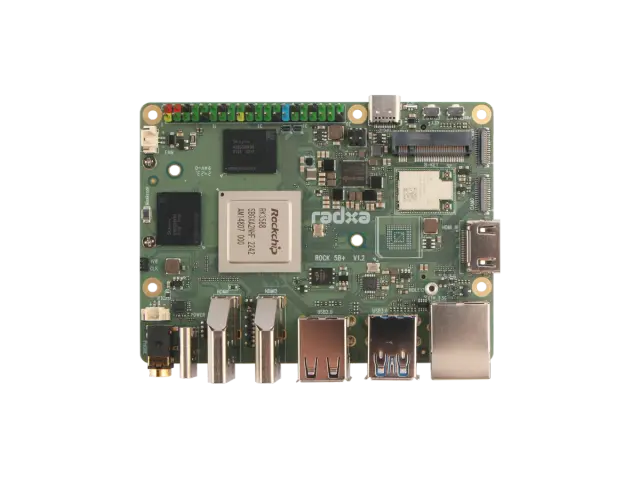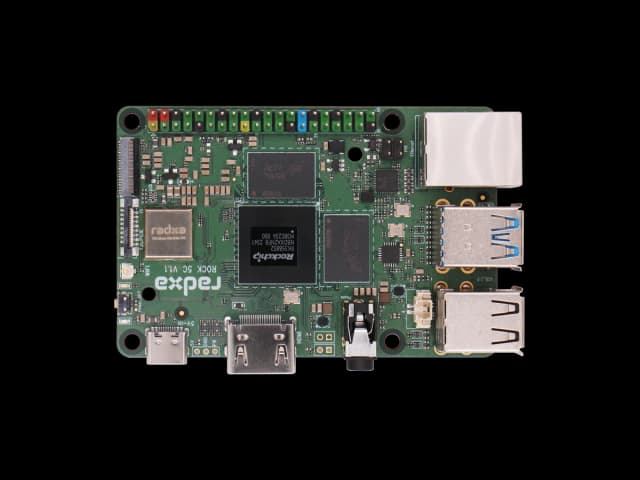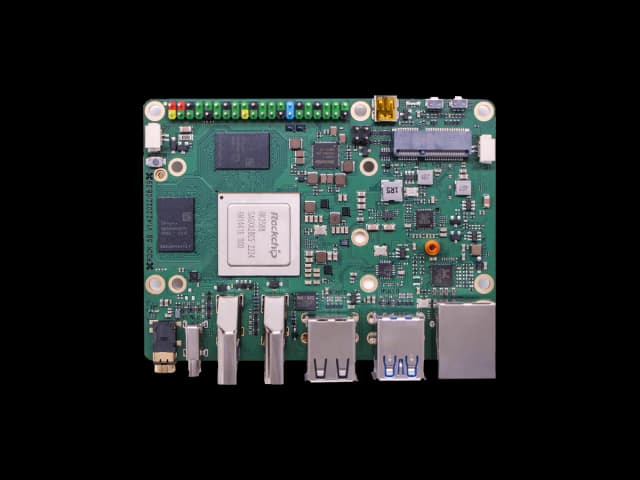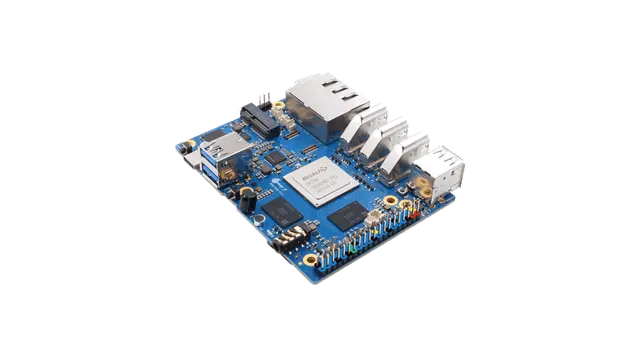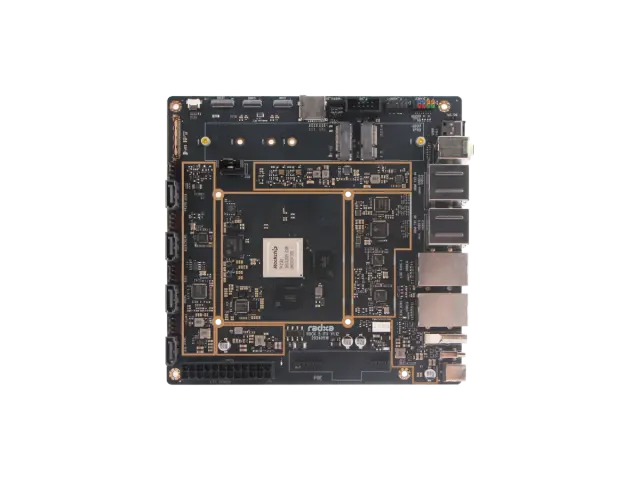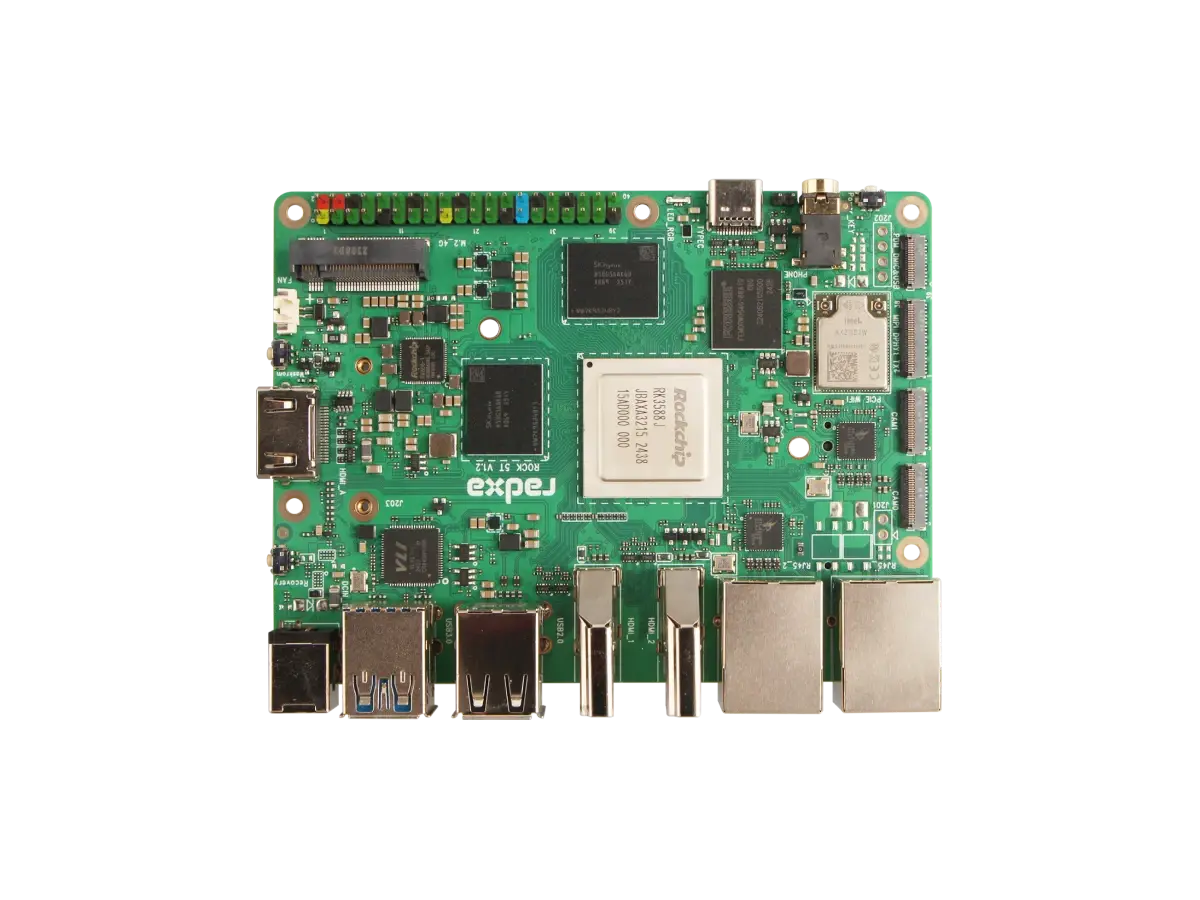
Radxa ROCK 5T
110×80mm RK3588 SBC with dual 2.5GbE, dual M.2 NVMe, WiFi 6, four independent display outputs, HDMI input, 4G/5G SIM slot, and up to 32GB LPDDR5 — the ROCK 5 ITX feature set in a standard SBC footprint.
$139.50
Tap any value to browse matching devices
Specifications
Components
Rockchip RK3588: 4× Cortex-A76 @ 2.4GHz + 4× Cortex-A55 @ 1.8GHz, Mali-G610 MP4 GPU, 6 TOPS NPU, 8K H.265/VP9 decode @ 60fps.
GPIO Map
Overview
The Radxa ROCK 5T condenses the feature set of Radxa's mini-ITX ROCK 5 ITX motherboard into a compact 110×80mm SBC format. It is powered by the Rockchip RK3588 with up to 32GB LPDDR5, dual 2.5 Gigabit Ethernet ports, dual M.2 Key-M NVMe slots (PCIe 3.0 x2 each), and an M.2 Key-B socket with Nano SIM slot for 4G LTE or 5G cellular.
Display capability is the standout: four independent simultaneous outputs — two HDMI 2.1 (including one 8K-capable), one DisplayPort via USB-C, and one MIPI DSI — plus one HDMI 2.0 input for video capture. This makes the ROCK 5T well suited for multi-monitor edge computing, digital signage, and broadcast/streaming applications where HDMI input is needed.
Networking combines dual 2.5GbE (ideal for router, firewall, and NAS workloads) with onboard WiFi 6 and Bluetooth 5.2. Optional eMMC (16–128GB) supplements the dual NVMe slots, and the USB-C port supports both data and DisplayPort Alt Mode.
Armbian, Debian, Ubuntu, and Android are supported with active image maintenance. The ROCK 5T is targeted at users who need the full RK3588 feature set — multi-display, multi-NVMe, multi-GbE, and cellular — in a standard SBC form factor rather than the larger mini-ITX ROCK 5 ITX.
Use Cases
8Home Server
Used as a low-power home server for file sharing, self-hosted apps, and local services — often running Docker, Home Assistant, or similar on Armbian/Debian/Ubuntu.
Home Server
Used as a low-power home server for file sharing, self-hosted apps, and local services — often running Docker, Home Assistant, or similar on Armbian/Debian/Ubuntu.
Digital Signage
Driving displays for advertising, information kiosks, or menu boards with 4K video and dynamic content.
Edge AI
On-device machine learning inference at the edge, without cloud dependency
Edge Computing
Processing sensor data locally at the edge before transmitting to cloud for reduced latency.
Home Lab Networking
Networking equipment for home lab environments including high-speed NICs, switches, and time servers.
ARM SBC Development
Used as an ARM Linux development and prototyping platform — running full Debian/Ubuntu for building and testing ARM-native software and embedded Linux applications.
Computer Vision
Image recognition, object detection, and ML inference using embedded cameras and AI-capable processors.
Resources
Where to Buy
Explore more of the directory — popular use cases, firmware, and specs to browse next.