Adafruit GEMMA v2
Tiny 27mm round sewable wearable microcontroller with ATtiny85 at 8 MHz, 3 GPIO, Micro USB programming, 3.3V power, and reverse-polarity protection — ideal for small LED and NeoPixel wearable projects.
$9.95
Tap any value to browse matching devices
Specifications
Components
8-bit AVR microcontroller at 8 MHz with 8KB flash, 512B SRAM, 512B EEPROM and 5 I/O pins
Bus Interfaces
GPIO Map
Overview
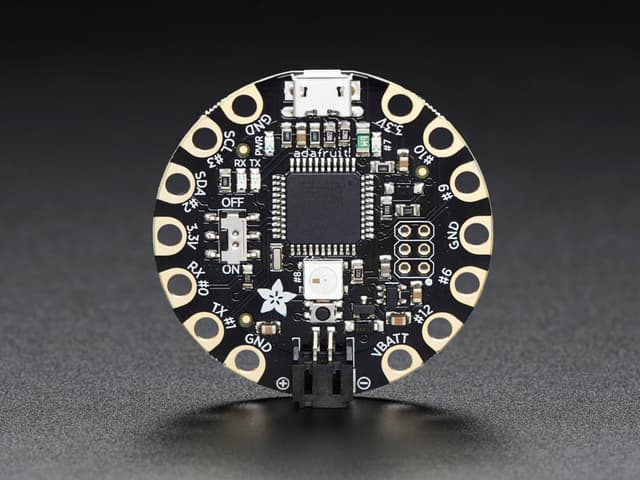
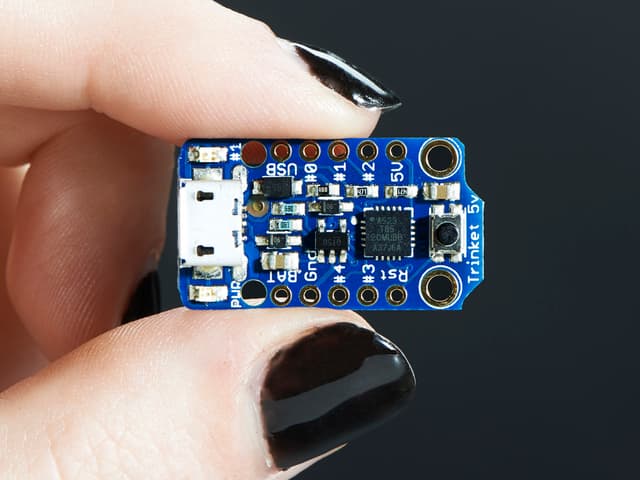
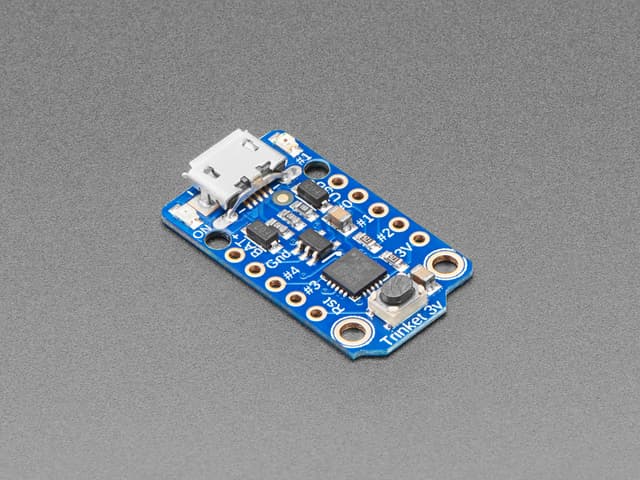
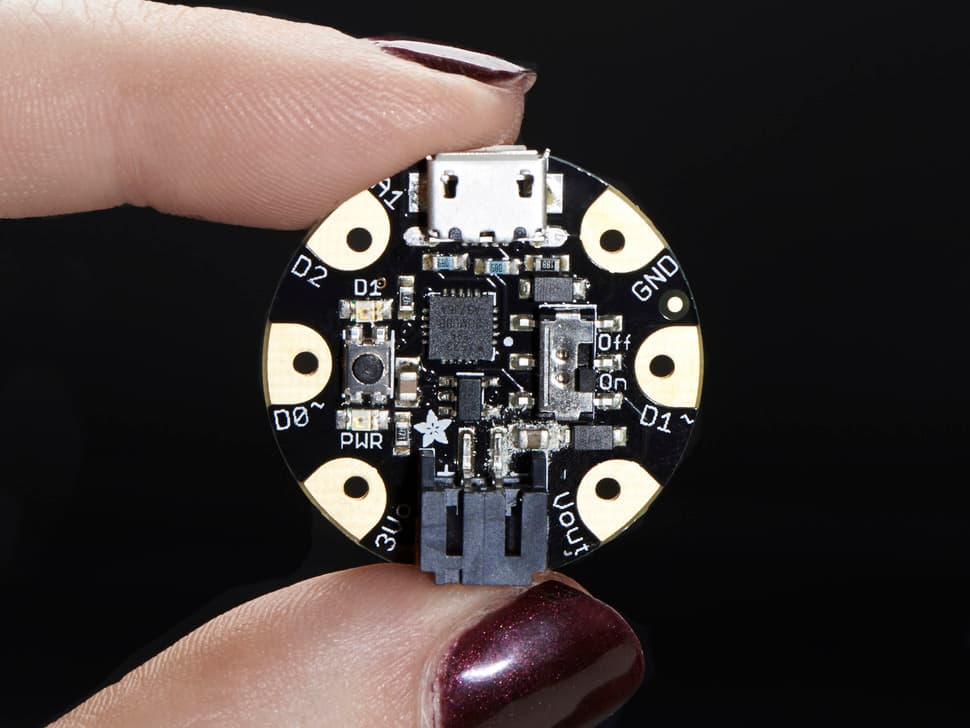
The Adafruit GEMMA v2 is a miniature sewable wearable microcontroller measuring just 27.98mm in diameter. Built around the Atmel ATtiny85, it provides a minimal yet functional platform for small LED, NeoPixel, and sensor-driven wearable projects. Version 2 updated the USB port from Mini-B to Micro-B and added an on/off switch for battery convenience.
The ATtiny85 runs at 8 MHz from its internal oscillator with 8KB of flash (approximately 5.25KB available for user code after the bootloader), 512 bytes of SRAM, and 512 bytes of EEPROM. Three GPIO pins are available for user code, with the remaining two reserved for USB bit-bang communication. All three user pins support PWM and analog input.
Power is managed by an ultra-low dropout 3.3V regulator rated for 150mA, accepting inputs up to 16V. Automatic power switching between USB and battery ensures seamless operation. A 9mA operating current draw extends battery life in portable applications. The board includes reverse-polarity protection, thermal protection, and a current-limit fuse on the USB port.
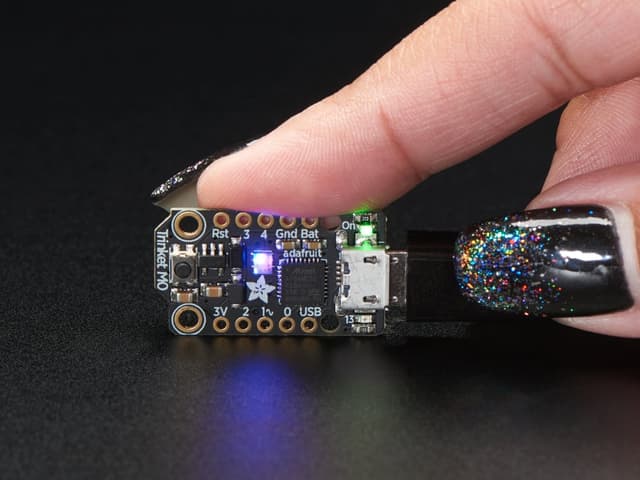
The GEMMA is Arduino IDE compatible through Adafruit's board support package. However, Adafruit notes that the bit-bang USB technique has compatibility issues with modern computers and recommends the GEMMA M0 for new designs requiring reliable USB programming.
Use Cases
4Where to Buy
Explore more of the directory — popular use cases, firmware, and specs to browse next.