Armachat FLIP
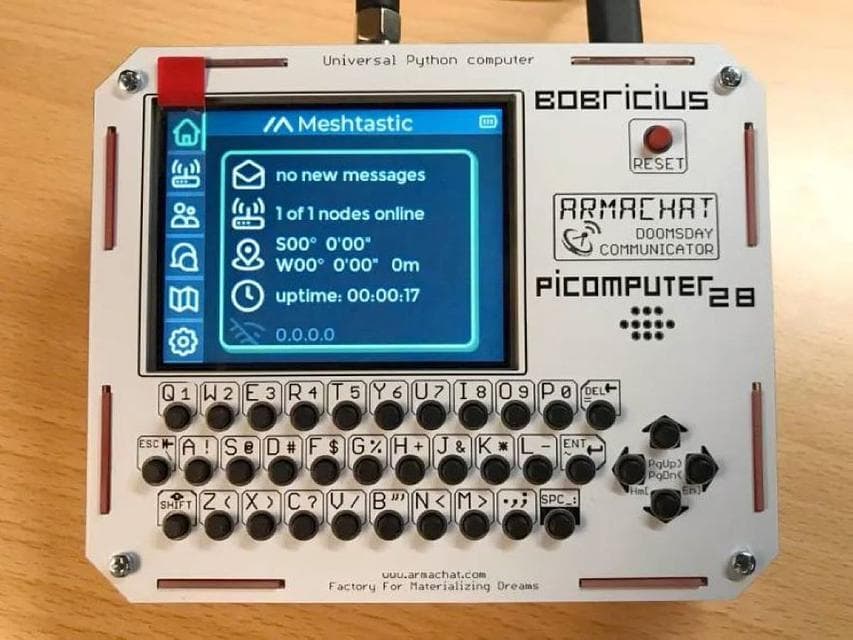
Pocket-sized open-source LoRa mesh messenger with ESP32-S3, RFM95 radio, 2.8" IPS display, and 36-key QWERTY keyboard. Runs Meshtastic and CircuitPython firmware for off-grid text communication.
$52.49
Tap any value to browse matching devices
Specifications
Components
Dual-core Xtensa LX7 @ 240MHz with WiFi and BLE 5.0
HopeRF LoRa transceiver (SX1276), 868/915MHz, +20dBm, -148dBm sensitivity
2.8" IPS LCD controller, 320x240 resolution, SPI interface
1A standalone linear Li-Ion battery charger with thermal regulation
Semtech LoRa transceiver IC inside RFM95 module, 137-1020MHz, 168dB max link budget
Bus Interfaces
GPIO Map
Overview
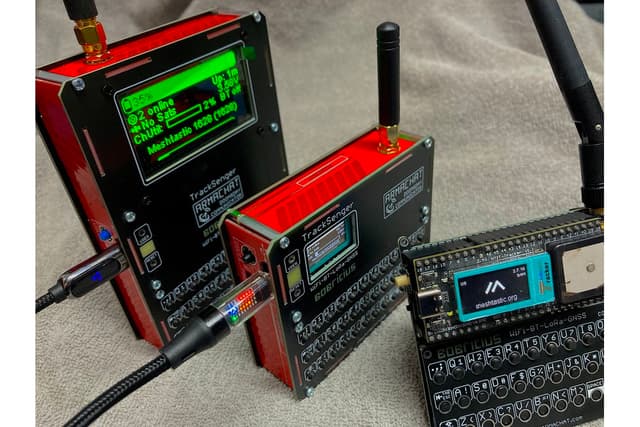
The Armachat FLIP is a pocket-sized "doomsday" LoRa mesh messenger designed by Slovak maker Bobricius for off-grid text communication without any cellular infrastructure. Built around an ESP32-S3 microcontroller and HopeRF RFM95 LoRa radio module (SX1276), it provides long-range mesh messaging with a standalone QWERTY keyboard and 2.8" IPS color display.
The device supports dual firmware: Meshtastic for compatibility with the broader mesh networking ecosystem, and the custom Armachat CircuitPython firmware with AES-256 encryption, delivery confirmation, and automatic message resending.
Hardware Design
The FLIP uses a compact PCB design with all components on a single board:
- ESP32-S3 dual-core Xtensa LX7 @ 240MHz with WiFi and BLE 5.0
- RFM95 (SX1276) LoRa transceiver at 868MHz (EU) or 915MHz (US) with +20dBm output power
- ST7789V 2.8" IPS LCD at 320x240 resolution
- 36-key QWERTY keyboard using Diptronic tactile switches (100gF/1N) in a 6x6 matrix
- TP4056 USB-C charging circuit for replaceable 18650 Li-ion battery
- Separate charging module design for easy repair and replacement
Pin Assignments
LoRa Radio (SPI)
| Signal | GPIO |
|---|---|
| CS | GP13 |
| SCK | GP10 |
| MOSI | GP11 |
| MISO | GP12 |
| IRQ | GP28 |
Display (SPI)
| Signal | GPIO |
|---|---|
| SCK | GP18 |
| MOSI | GP19 |
| DC | GP16 |
| CS | GP21 |
| Backlight | GP20 |
Keyboard Matrix (6x6)
- Columns: GP1, GP2, GP3, GP4, GP5, GP14
- Rows: GP6, GP9, GP15, GP8, GP7, GP22
Communication Range
At maximum power (SF12, 125kHz bandwidth):
- 700m at ground level
- 1.5km from 4m elevation
- 4.3km from 10m elevation (intermittent)
Firmware Options
Meshtastic
Standard Meshtastic firmware with BASE UI for standalone operation. Supports Bluetooth connection to phone apps for extended functionality. WiFi and Bluetooth noted as experimental on newer UI versions.
Armachat (CircuitPython)
Custom open-source firmware with features not available in Meshtastic:
- AES-256 encrypted messaging
- On-device message history and contact list
- Delivery confirmation with automatic resend
- Direct configuration via
/lib/config.py - Configurable LoRa parameters (frequency, spreading factor, bandwidth, coding rate)
Default LoRa Configuration
Frequency: 906.875 MHz (US) / 869.525 MHz (EU)
Bandwidth: 125 kHz
Coding Rate: 4/8
Spreading Factor: 12
Preamble Length: 32
TX Power: 15 dBm
Sync Word: 0x2B
Open Source
All firmware, schematics, and PCB designs are open source and available on GitHub. The CircuitPython firmware is fully transparent and user-modifiable.
Important Notes
This is an experimental device under active development, not a certified commercial product. The RFM95 radio module is not FCC/CE certified for commercial use. Intended for hobbyist, educational, and emergency preparedness applications.
Use Cases
5LoRa Mesh Networking
Building off-grid mesh communication networks using LoRa radio for text messaging, location sharing, and sensor data relay without cellular or internet infrastructure.
Off-Grid Communication
Text messaging and data exchange in areas without cellular or internet coverage.
LoRa Messenger
Build an off-grid text messaging device using LoRa for range and low power.
Portable Terminal
Handheld computing device with keyboard and display for field use and on-the-go interaction.
Emergency Communication
Off-grid emergency communication device for disaster response and outdoor safety scenarios.
Resources
Where to Buy
Explore more of the directory — popular use cases, firmware, and specs to browse next.