BeagleBone AI-64
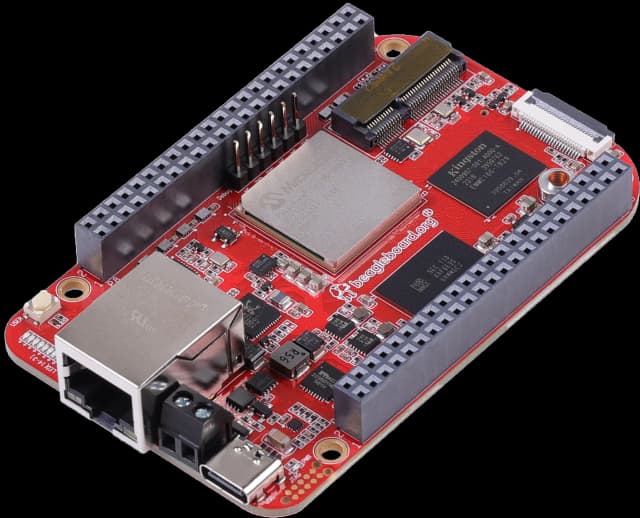
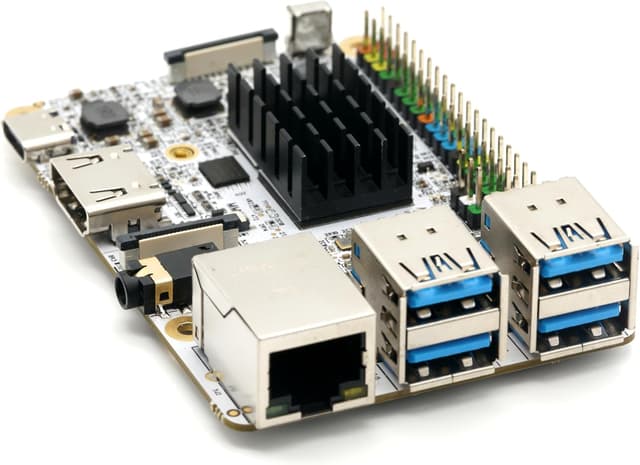
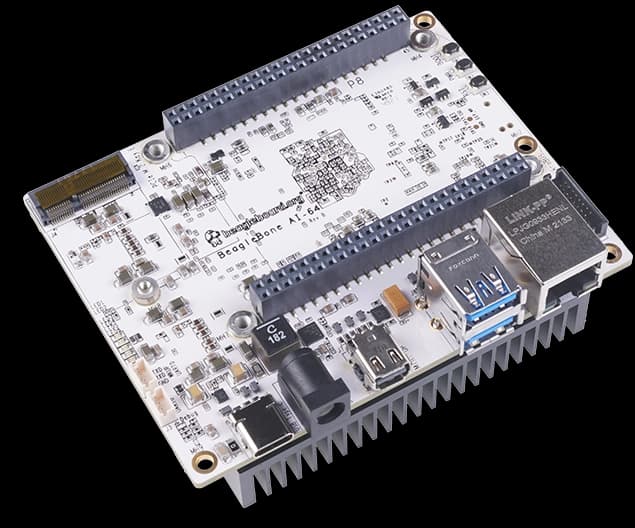
Powerful open-source AI/ML single board computer featuring TI TDA4VM SoC with dual Arm Cortex-A72 at 2.0 GHz, 8 TOPS deep-learning accelerator, C7x DSP, 4GB LPDDR4, 16GB eMMC, USB 3.0, Gigabit Ethernet, and BeagleBone cape compatibility.
$185.62
Tap any value to browse matching devices
Specifications
Components
Texas Instruments Jacinto TDA4VM with dual Arm Cortex-A72 at 2.0GHz, C7x DSP, 8 TOPS MMA deep-learning accelerator, vision processing accelerators, and six Cortex-R5F real-time MCUs
Imagination Technologies PowerVR Rogue 8XE GPU running at up to 750MHz delivering 96 GFLOPS and 6 Gpix/sec
4GB LPDDR4 RAM for high-bandwidth AI/ML workloads and multitasking
16GB eMMC flash with high-speed interface for OS and application storage
Bus Interfaces
Overview
BeagleBone AI-64 is the most powerful AI open-source platform in the BeagleBoard family. Built on a proven open source Linux approach, it brings massive computing power with the Texas Instruments TDA4VM SoC featuring dual 64-bit Arm Cortex-A72 cores, C7x DSP, and deep learning accelerators up to 8 TOPS.
Key Features
- AI/ML Acceleration: Deep-learning matrix multiply accelerator (MMA) up to 8 TOPS (8b) at 1.0 GHz
- Vision Processing: VPAC with ISP and multiple vision assist accelerators, plus DMPAC
- DSP Power: C7x DSP at 80 GFLOPS, 256 GOPS plus two C66x DSPs at 40 GFLOPS each
- Real-time Control: Six Arm Cortex-R5F MCUs at up to 1.0 GHz
- 3D Graphics: PowerVR Rogue 8XE GE8430 GPU at 750 MHz, 96 GFLOPS
- Cape Compatibility: BeagleBone Black header compatibility for expansion with existing capes
- MikroBus: Shuttle header for hundreds of Click sensors and actuators
Connectivity
- M.2 E-key PCIe connector for WiFi modules
- Gigabit Ethernet (RJ45)
- USB 3.0 Type-C (power + data) + 2x USB 3.0 Type-A
- Mini DisplayPort for monitors
- 2x 4-Lane CSI camera connectors
- 4-Lane DSI for flat-panel displays
- 2x UART debug + JTAG
Software Support
- Debian Linux (XFCE and Minimal images)
- Armbian Linux
- Full open-source toolchain
Use Cases
7ai-ml-development
Computer Vision
Image recognition, object detection, and ML inference using embedded cameras and AI-capable processors.
autonomous-robotics
drone-development
media-server
Edge Computing
Processing sensor data locally at the edge before transmitting to cloud for reduced latency.
Prototyping
Rapid hardware prototyping and proof-of-concept development with breadboard-friendly form factors and accessible development environments.
Resources
Where to Buy
Explore more of the directory — popular use cases, firmware, and specs to browse next.